
Spotlight On: Mike Tomon, President, Houston Texans
Key points:
- • The Texans’ new Toro District aims to expand the team’s footprint while creating a year-round community destination.
- • Houston’s global profile is set to rise as the Texans prepare for major events and international exposure.
- • The organization is investing in youth sports, technology, and fan engagement to fuel its next phase of growth.
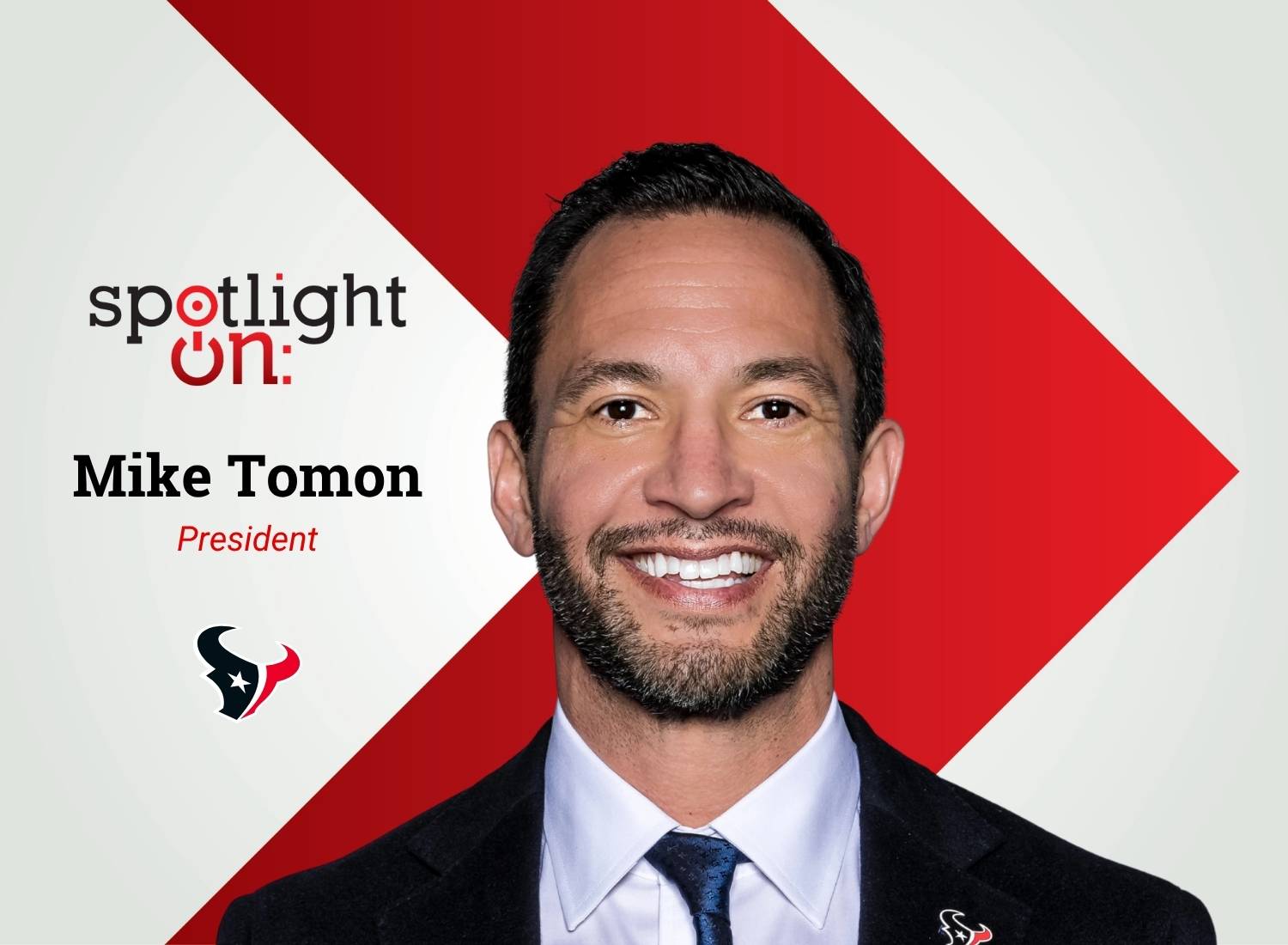 June 2026 — In an interview with Invest:, Mike Tomon, president of the Houston Texans, discussed the organization’s growth strategy, the planned Toro District, and the team’s role in Houston’s future. “We’re excited to represent the city of Houston on a world stage,” Tomon said.
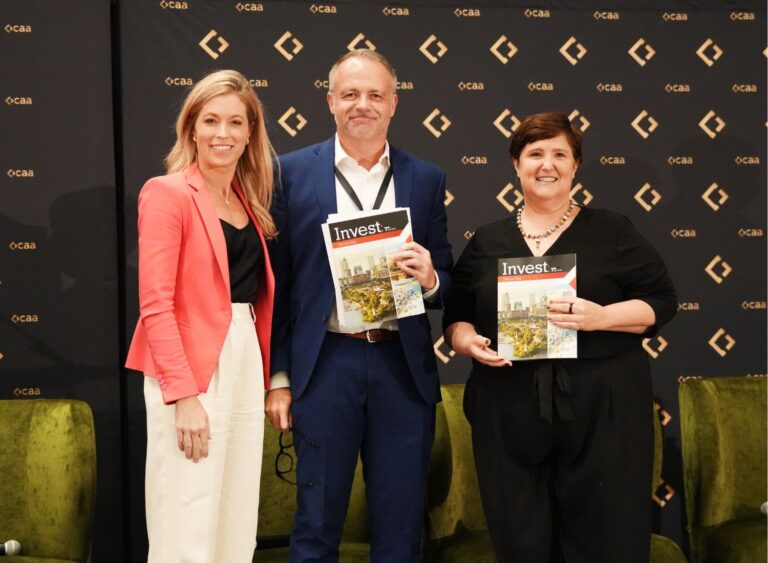
Join us at caa’s upcoming leadership summits! These premier events bring together hundreds of public and private sector leaders to discuss the challenges and opportunities for businesses and investors. Find the next summit in a city near you!
The Texans are in a transformative growth phase. What have been the biggest growth opportunities for the organization over the last year?
Transformational is a great term. Sometimes it is overused, but it is appropriate for the runway we have in front of us and what we have started to experience this year. This past year provided strong indicators about what the future holds for us as an organization.
We announced our new headquarters and training facility, moving to the 83-acre mixed-use Toro District. We also acquired LOVB Houston, a professional women’s volleyball team, which is another example of how we are creatively looking at the Texans ecosystem.
Part of our purpose is to inspire hope in Houston, and to us, that means making sports accessible to youth. LOVB Houston has a unique model, with the pro team at the top and connectivity all the way down to youth sports. That made sense for us.
We feel great about where the business is, and we know we can get better, so we are pushing to optimize our business. The training facility is probably one of the most indicative moments we had last year about our future and the transformation the Houston Texans are going through.
Can you share more about the plans for Toro District and how they came about?
It is a great statement on Houston, the business environment, and the economic activity here. We found ourselves in a fortunate position, with viable options from different parts of Harris County for where we could move our headquarters.
We started this journey a while ago by asking how we could optimize the opportunity in front of us and put our team in the best position to perform at the highest levels.
Part of that is making sure we are together. Right now, players, coaches, front office staff, and business operations are spread across different parts of Reliant Stadium. The stadium is also busy with Rodeo events, concerts, college football, soccer, and the World Cup coming soon. Those are great things, but they can create challenges for day-to-day operations.
From a real estate perspective, Bridgeland fit the fundamentals. Harris County is one of the fastest-growing counties in the country, and Bridgeland is one of the fastest-growing sectors within it.
From a business perspective, it made sense to expand our geographic reach. Reliant Stadium will remain where people see us at our biggest moments, but having another location where we can spend 350 days a year allows us to connect with another part of our fan base on a daily basis.
We are not a real estate development company, so finding the right partner was important. We needed a partner that understood sports and entertainment mixed-use districts and understood Houston. We found that with Howard Hughes.
What does Toro District bring from a community perspective?
That was a major driver in the conversation. Part of our purpose is inspiring hope in Houston. Another part is cultivating and delivering a world-class fan experience that links communities together.
In partnership with Precincts 3 and 4 and Commissioners Lesley Briones and Tom Ramsey, we focused on a community benefits package as part of this public-private partnership.
This is Houston, Texas, and nothing is bigger than Friday Night Lights. Local high schools will be able to showcase football games there, and the venue will also host graduations. We also looked at supporting disaster relief efforts by making sure the infrastructure can support the county when needed.
We are excited to introduce what we believe will be a first-of-its-kind sports apprenticeship and sports management program for local high school and college students.
Making football accessible is also important. The headquarters will feature indoor and outdoor flag football fields. Our She’s Next initiative, which supports girls’ flag football and pushes for it to become sanctioned at the high school level, is important to us.
What challenges are facing the sports business industry, and how are the Texans navigating them?
The sports industry evolves with society. One current challenge and opportunity is understanding AI: how it can benefit the sport, the customer experience, and daily business operations.
Our approach is aligned with the NFL. AI is a major initiative at the league level, and it is something we are focused on internally as well.
We created a cross-functional initiative internally called the Innovation Big Rock, which brings together teammates from across the organization to focus on projects like AI. We have explored different internal and external uses and started piloting how it can fit into daily operations.
We do not see AI as just the topic of the moment. We see it as a platform that can help drive the business in the future.
What trends are shaping the industry from a fan perspective?
Different demographics are converging around live entertainment content. Younger audiences are becoming more involved, and understanding how they like to consume content is important.
Where they get information and how they experience events is different across generations. For us, remaining relevant means speaking their language and making it easy to engage with the Houston Texans across platforms.
Understanding how fans want to consume content is almost a gating item to earning their fandom.
What opportunity do you see for the Texans to play a larger role in the city’s identity and economic development?
It starts with ownership and the stewardship that Cal and Hannah McNair have for the city. Their focus on inspiring hope in Houston and raising the city’s profile drives us.
We have transformational opportunities ahead of us with the Toro District and the future of the Reliant Park area.
There is an opportunity to raise Houston’s profile nationally and globally. The NFL continues to expand internationally, and we’re excited to represent the city of Houston on a world stage.
We are going to London this season, and representing Houston and the Texans brand globally is exciting. All of these opportunities, including Toro District and the future of Reliant Park, can contribute to the city’s long-term success.
In the next 10 years, what role do you hope the Texans will play in shaping the city off the field?
We are excited to play a leadership role. We take our stewardship for the city seriously because we love Houston and believe it has one of the most unique stages in the world.
Toro District can become a destination for a large part of the city on a 365-day-a-year basis. We also believe there is real value to unlock at Reliant Park alongside our partners at the Houston Livestock Show and Rodeo.
We have a unique leadership role because we represent something authentic to Houston: football and rodeo. When we think about our role over the next 10 years, we get excited about what is laid out in front of us.
Want more? Read the Invest: Houston report.