

AI adoption reshapes Georgia’s workforce
Key points:
- • Georgia is embracing AI adoption across K-12, higher education, and executive training to build a workforce prepared for technology-driven industries.
- • With 70% of the skills used in most jobs expected to change by 2030, Georgia’s expanding AI education programs are helping workers and business leaders prepare for a rapidly evolving workforce.
- • As AI reshapes workforce demands, Georgia’s investment in AI literacy positions the state to strengthen productivity, attract investment, and support long-term economic growth.
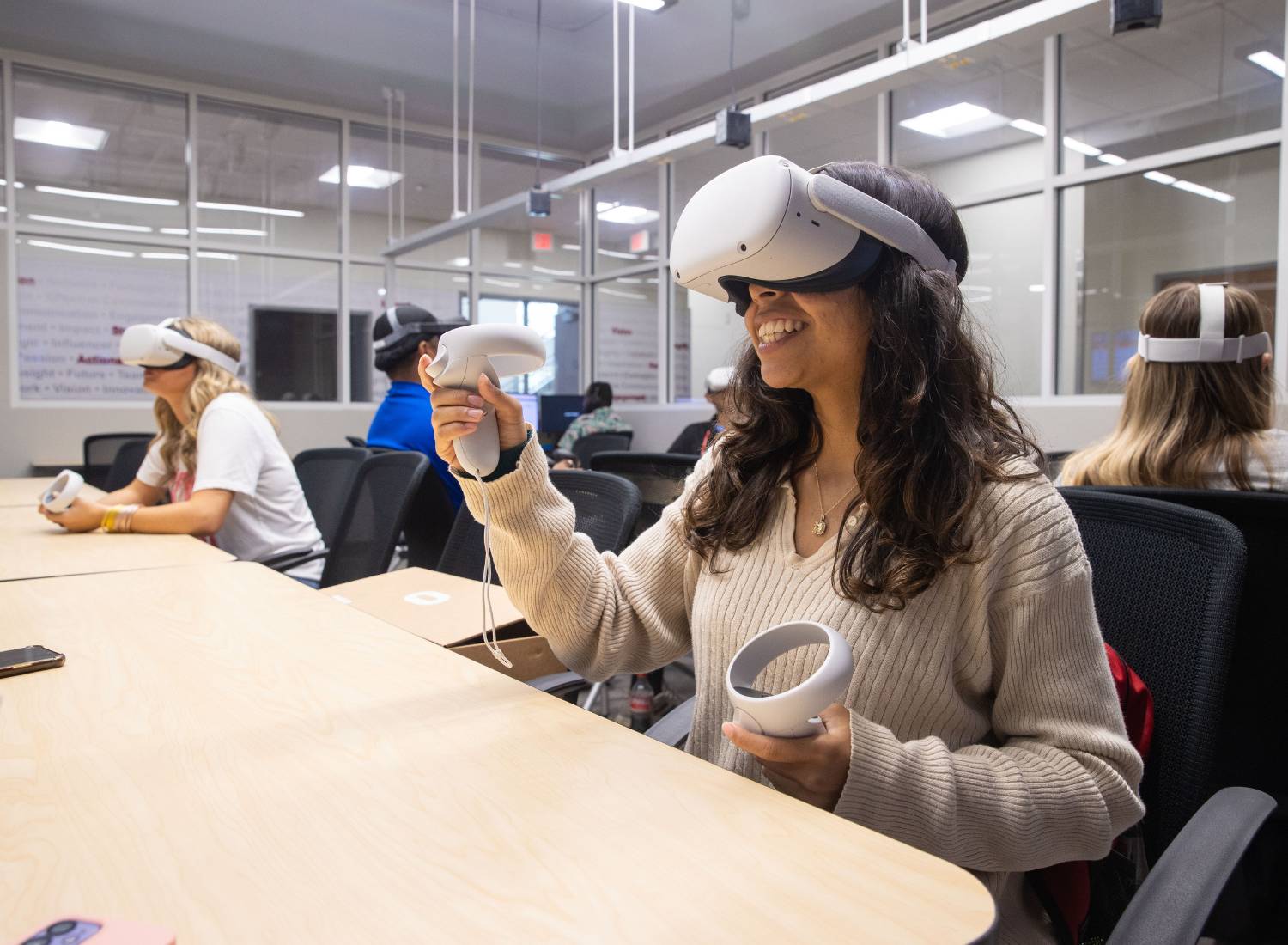 July 2026 — Nearly 60% of Georgia’s public school educators now use generative AI in their classrooms, and nine out of 10 report a positive impact on student learning. According to a recent report from the Georgia Department of Audits and Accounts, this rapid classroom adoption is creating a broader shift across the state. As AI adoption transforms local industries, Georgia’s schools and universities are expanding their focus from classroom applications to preparing students and professionals for an AI-driven workforce.
Join us at caa’s upcoming leadership summits! These premier events bring together hundreds of public and private sector leaders to discuss the challenges and opportunities for businesses and investors. Find the next summit in a city near you!
K-12 sets the tone
The state responded to the growing use of AI in classrooms by releasing voluntary guidance on ethical AI use in classrooms in June 2025. Built around seven core principles, the framework addresses issues such as academic integrity, data privacy, bias mitigation and continuous learning. The guidance also reflects concerns raised by educators who have been slower to adopt AI, including its potential impact on critical thinking, academic dishonesty and student reliance on the technology.
Clayton County Public Schools shows what that guidance looks like in practice. Interim Superintendent and CEO Douglas Hendrix said the district has a written AI policy and treats the technology as something to shape, not simply absorb.
“We do not want to simply take from technology. We want to guide it and use our brains to push it,” Hendrix said.
That approach includes a partnership with Colin Kaepernick on the AI storytelling platform Lumi, which lets students write and illustrate original stories. Hendrix said the goal is to use AI to amplify students’ ideas rather than the reverse.
READ MORE: AI in higher education: Questions every leader must ask
Universities double down
At the university level, Georgia Tech recently named David Joyner interim vice provost for AI in education, creating a leadership role focused on advancing AI-driven teaching, helping faculty and students develop AI tools responsibly, and expanding the university’s leadership in artificial intelligence.
The appointment comes as Georgia Tech continues to rank among the nation’s top AI institutions. The university placed third nationally for AI education and research in the 2025 University Magazine rankings. Its computer science program ranks No. 5 nationally in artificial intelligence in U.S. News & World Report’s graduate school rankings, while all undergraduate engineering programs rank in the top four.
Spelman College is also strengthening its AI leadership, naming robotics and AI researcher Ayanna Howard as its 12th president, effective Aug. 1. Howard, most recently dean of engineering at Ohio State University, previously co-founded Zyrobotics, an Atlanta-area company that develops AI-driven therapy tools for children. “At a time when technology, the workforce, and society are evolving rapidly, Spelman’s mission has never been more important. I look forward to building on the college’s legacy while honoring its tradition, values, and sisterhood,” Howard said in a press release.
Georgia College & State University is taking a broader approach with a new 100% online Master of Science in AI Strategy. Rather than training software engineers, the program is designed for professionals from any field who want to understand how AI can improve business operations, increase efficiency and drive ROI. The program comes as employers increasingly seek professionals who can both develop and apply AI across business functions. Demand for AI-related skills continues to grow nationwide, with the U.S. Bureau of Labor Statistics projecting computer and mathematical occupations to grow 10.1% from 2024 to 2034, driven in part by demand for the continued development of AI solutions and an increasing amount of data available for analysis.
READ MORE: 7 Hopes for Higher Education in 2026
Executives are enrolling
The importance of reskilling extends well beyond campus gates, with the World Economic Forum estimating that 59% of the global workforce will require training by 2030 as AI and other structural shifts reshape work. Across the Atlanta MSA, a growing supply of executive and continuing education AI courses is targeting managers and senior leaders as employers prepare for a future in which 70% of the skills used in most jobs are expected to change by the end of the decade, according to LinkedIn.
With 59.2% of residents age 25 and older holding a bachelor’s degree or higher, Atlanta has a strong foundation for workforce adaptation. The harder task for employers is converting that educational advantage into practical AI capability across finance, operations and management. As skill requirements change, executive education and internal training are becoming less of a supplemental benefit and more of a workforce strategy.
These initiatives signal a broader shift in how Georgia is approaching workforce development. Rather than treating AI as a specialized technical discipline, schools, colleges, and executive education providers are embedding AI literacy across the talent pipeline, preparing students and professionals to use the technology regardless of industry or role.
According to the OECD, the greatest return from AI will come from building workforce skills that translate new technologies into productivity and economic growth. For employers, the opportunity extends beyond filling today’s positions. As AI becomes embedded in virtually every business function, regions that consistently produce workers who can adapt alongside technology will be better positioned to attract investment and remain competitive.
Main photo credit: University of West Georgia
Want more? Read the Focus: Atlanta report.