
Michael Maurino, Executive Director, Westshore Alliance
 July 2026 — Invest: spoke with Michael Maurino, executive director of Westshore Alliance, about how infrastructure and land-use reform are converging to redefine Westshore’s growth. “The combination of a major infrastructure project with the Westshore Interchange and updated land-use and future land-use planning standards will allow Westshore to become the mixed-use district it was always envisioned to be,” Maurino said.
What major changes over the past year most impacted the Westshore Alliance, and in what ways?
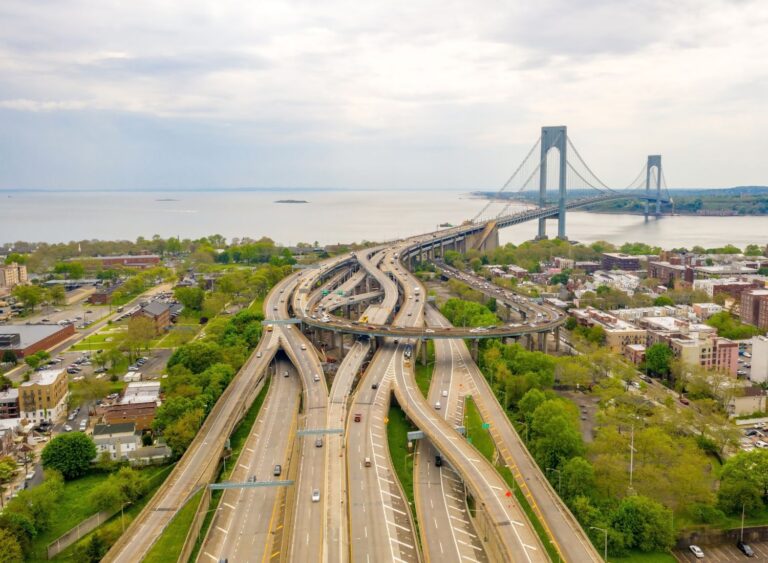
The completion of the Howard Frankland Bridge and the reconstruction of the Westshore Interchange were the biggest changes over the past year. The redevelopment of the interchange will allow for the redevelopment of Westshore. When that happens, it creates the opportunity for a true mixed-use district.
At the same time, the city of Tampa is in the process of changing its land-use code and future land-use planning to encourage more mixed use, which Westshore needs. What we were able to do as the Westshore Alliance was convince the city of Tampa that Westshore should have the same development potential as downtown Tampa, with the only restriction being the height limits as a result of Tampa International Airport.
The combination of a major infrastructure project with the Westshore Interchange and updated land-use and future land-use planning standards will allow Westshore to become the mixed-use district it was always envisioned to be. It will enable developers to move forward through a much easier process than they had previously, because the rules will better match what the market is actually trying to build.
What makes Westshore uniquely competitive, and why do companies continue to choose it as a center of activity?
Westshore is a regional hub. About a third of the people who work in Westshore do not live in Hillsborough County. They’re coming from Pasco, Pinellas, and the rest of the region. There’s still growth potential up the Veterans Expressway and Suncoast Parkway corridor, and many people moving into those communities work in Westshore. That residential growth continues to support demand for the district.
Westshore is also an international hub because of the airport. Many businesses locate here because they can drive five minutes, get on an airplane, and get to Europe, Mexico, or South America. We’ve seen that especially over the last few years, with more companies locating here because of that convenience.
Johnson & Johnson moved its office to Westshore because it has offices not only in the Northeast but also in Central and South America, and they wanted employees to be able to fly in and out on a regular basis. GEICO located in Westshore because they have access to the entire region from a talent perspective. That ends up being the draw: being not just a hub for the Tampa Bay region but a hub for the west coast of Florida. The growth occurring outside of Hillsborough County can access Westshore a lot easier than some other places in the community.
Which strategic priorities do you expect will have the most immediate impact on business attraction?
The biggest immediate impact will come from completing the land-use and future land-use planning work and getting it approved by the City Council, likely in the first half of this year. One longtime member told me this may be the most important thing the Westshore Alliance has ever done.
We were able to take what developers know the potential is and memorialize it into the code. Now the code reflects what the market is going to demand going forward, rather than the other way around. We’ve been able to flip that, and from a competitiveness perspective, Westshore is now on the same level as everybody else, with the exception of the airport height limits.
That shift connects to the other priorities people associate with Westshore, like walkability, beautification, and transportation. If we have more mixed use, it creates more need for walkability, which then leads into beautification. Walkability also leads to the need for more transit, because you have the grid that supports both pedestrian access and transit use. We remain a regional hub, so we also have a strong highway network that will become stronger over the next several years, but we still have to plan beyond highways.
Resilience is also part of the business attraction story. We were able to demonstrate that the modern buildings in Westshore, especially those built after the changes that followed Hurricane Charley, were constructed in a way that helped them withstand major storms. Even with significant weather events, Westshore did not see the same type of storm surge and street flooding that other parts of the community saw. That performance reinforces to elected officials and investors that development can sustain challenges going forward, and the codes should reflect that reality.
We also have parcels today where residential has not been allowed even outside certain flight-path considerations. Going forward, that won’t occur. We’ve been able to leverage the disadvantage of height restrictions into a positive by directing growth into places where we can realistically support commercial, hospitality, retail, and residential on the same parcel.
What challenges is Westshore facing as it continues to evolve?
Like other parts of Florida and the country, there are always challenges related to financing and interest rates, as well as the availability of talent and materials. Those factors can hold projects up, including major redevelopment conversations like Westshore Plaza.
At the same time, we’ve seen projects execute successfully, with Midtown Tampa continuing to move through its plan by adding more retail, residential, and commercial components. Another example is MetWest, across from International Plaza, where the residential piece is now being built as the final component of the larger development.
One of the things we remind members is that you can look at an empty parcel and assume nothing is happening, but behind the scenes there is often years of work assembling multiple uses on a site. Mixed-use projects frequently require multiple developers and multiple financing streams. When those pieces align, the project can move quickly from the outside perspective, but it typically has a long planning runway.
Water Street is a good example of that dynamic in the Tampa market. People look at it now and think it happened overnight, but major mixed-use districts are multiyear efforts. The timeline can be frustrating in the moment, but it often produces a higher-quality product when it is finished.
Looking ahead, what are your top goals and priorities for the Alliance over the next two to three years?
A major priority is making sure the Westshore Interchange goes forward the way it has always been planned, including the street-level and pedestrian connections that support a true district, not just a highway project. About a half million square feet of office space was taken to build the new interchange, so we have to make up for that through redevelopment and mixed-use opportunities.
That is where the mixed-use land-use planning and entitlement work comes in. We’re working with our members and bringing those priorities to the city of Tampa to ensure that not only the future land-use code is updated, but that existing caps on entitlements in the Westshore District are removed so the market determines what is possible, rather than the code limiting outcomes.
We also recognize that the interchange is close to the end of major highway expansion. The question becomes what comes after that. If we want something in place by 2035, we need to think about it now. That is where the transit component comes in, including coordination with Tampa International Airport and the concept of connecting the airport to a regional transportation hub. We support ideas like an airport people mover or similar systems that can be more cost-effective than traditional commuter rail but still create meaningful connections.
Finally, we continue to watch the possibility of the Tampa Bay Rays considering Westshore for a future stadium site. Professional sports can create real economic development, and baseball in particular shapes a neighborhood differently because it brings activity consistently across the season. If that conversation advances, it raises questions about financing, infrastructure, and mobility, including how to handle major crowds without the kind of public parking supply found in some downtown areas. It could accelerate projects we are already planning for, but the most important thing is that the Rays remain in the Tampa market. If they consider Hillsborough County, Westshore is positioned as a prime site.