
Spotlight On: Kate Condliffe, CEO & Co-Founder, Diana Health
Key points:
- • Diana Health is expanding access to women’s healthcare through a collaborative care model.
- • Team-based care and digital tools are improving outcomes and the patient experience.
- • The company is partnering with hospitals to build more sustainable women’s health services.
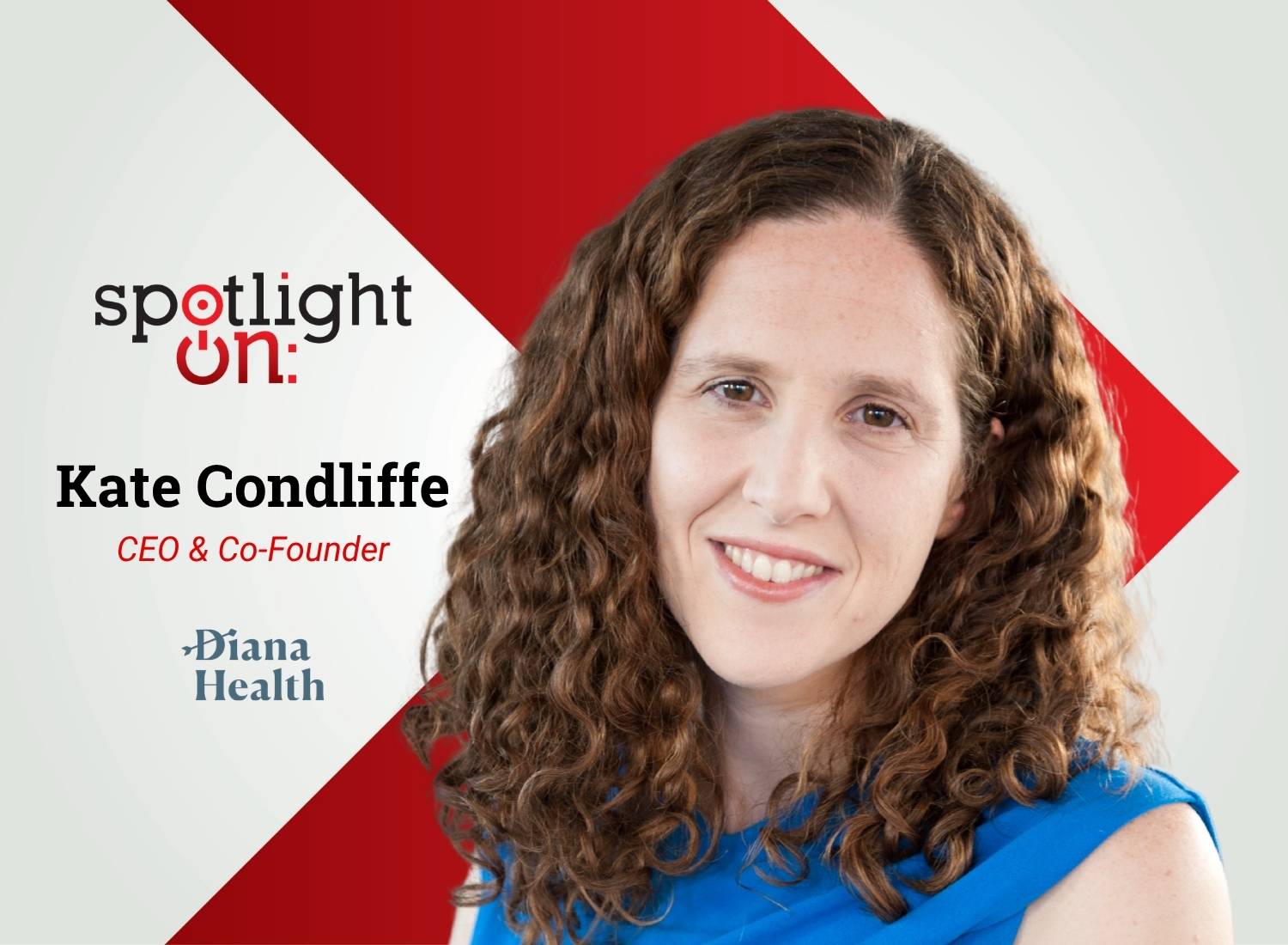 August 2026 — Invest: spoke with Kate Condliffe, CEO and co-founder of Diana Health, about the company’s expansion in Florida, its collaborative approach to women’s healthcare, and the importance of redesigning care delivery to improve access and outcomes. “This isn’t just a clinical event. This is a life change,” Condliffe said.
Join us at caa’s upcoming leadership summits! These premier events bring together hundreds of public and private sector leaders to discuss the challenges and opportunities for businesses and investors. Find the next summit in a city near you!
Can you provide an overview of Diana Health and what its growth says about women’s healthcare in the United States?
Diana Health is a modern network of women’s health practices. We work exclusively in partnership with hospitals and health systems, so it is a B2B and B2C model.
We help hospitals reimagine and restructure their women’s health programs by embedding certified nurse midwives alongside OB-GYNs — in outpatient practices and on Labor & Delivery — creating a team-based model that delivers individualized, whole-health, compassionate care while improving outcomes, lowering costs, and ensuring the long-term sustainability of services.
The company launched four years ago as a mission-driven organization. Today, we are active in nine markets, serve about 80,000 women and families, and have seen strong results in both outcomes and patient experience.
What made Northeast Florida an attractive market for Diana Health?
Jacksonville is a population-dense, high-growth area, yet from a women’s health perspective, we see supply constraints, access gaps, and quality-of-care gaps.
The way women’s health programs have been structured over decades does not allow for the kind of care many women are looking for. Care is often delivered through a one-to-one relationship between a patient and an obstetrician. Obstetricians are critical, but they are also covering a busy 24/7 service while managing large patient volumes.
In that environment, it is difficult to spend the time with patients that is needed to deliver truly individualized care. That is the problem we are trying to solve, and it is a major reason we were drawn to the Jacksonville market.
What milestones or impact are you seeing from your work in Florida?
Our goal is to improve outcomes and the patient experience, while lowering system costs and setting up commercially viable programs for our hospital partners. For example, in Jacksonville, we have reduced NICU admission rates by more than 20%. We are making meaningful improvements in clinical outcomes that translate to approximately $1,000 of savings per pregnant member for payers.
We have also seen strong engagement from patients. About half of our patients travel more than 30 minutes to receive care, which reflects both the access challenges that exist and the demand for a different care experience.
Our model engages women earlier, sees them more frequently about a broader range of whole-health issues, and combines in-person care with virtual services to improve convenience and continuity.
How does Diana Health’s collaborative care model change the future of maternity care?
According to ACOG, the United States is up to 22,000 OB-GYNs short of where we need to be in the coming years. Midwifery-led care is important not only because of the benefits it provides patients, but also because it helps ensure long-term access to care.
In our model, Certified Nurse Midwives work alongside OB-GYNs. Midwives provide much of the routine care, while obstetricians engage when clinically necessary or when requested by patients.
We also take a team-based approach that includes behavioral health specialists, licensed clinical social workers, registered dietitians, health coaches, care navigators, and health educators. That broader team allows us to deliver more personalized care while creating a sustainable workforce model.
What challenges are affecting women’s health today?
The biggest challenges in the women’s health space today are the misalignment between the care model that we know works, the reimbursement structure, and the MD-centric service delivery system that has been built over decades.
The good news is that we are at a phoenix-rises-out-of-the-ashes moment. We are at such a point of acuity in terms of the workforce crisis and the economics around women’s health that health systems, payers, and provider groups are willing to redesign care delivery in a way that has the potential to align interests across stakeholders.
That is important because pregnancy, birth, menopause, and other major transitions are not simply clinical events. They are life moments that affect every aspect of a woman’s life.
This isn’t just a clinical event. This is a life change. Engaging with the social realities women face, including behavioral health and other challenges, is essential to delivering high-quality care.
How does Diana Health work with hospitals and other institutions to expand services and education?
Hospitals are our closest partners. When we enter a market, we work together to create a vision for women’s services that reflects the needs of the community and sets that hospital’s women’s program up for long-term success.
Our belief is that in this area of health, the hospitals that succeed economically will be those that outperform from a patient experience and clinical outcomes perspective. A key part of that is community outreach and education.
A major part of that process is listening. In every market we enter, we conduct community listening sessions to understand local experiences, challenges, and priorities before building programs.
We also provide educational programming around topics such as sexual health, reproductive health, nutrition, and sleep. Our approach is grounded in meeting women where they are and responding to the specific needs of each community.
How can digital tools improve the patient experience and expand access to care?
They are game-changing. We use technology to reduce administrative burden and allow providers to focus more fully on the patient in front of them. Technology also helps us use clinical data more effectively so providers can better understand and respond to individual patient needs.
In addition, digital tools support remote access to care, making services more convenient and accessible for women who may face geographic or scheduling barriers.
How does Diana Health’s recent $55 million raise support the organization’s growth strategy?
The investment enables us to continue expanding access to care in additional communities and building our digital infrastructure.
We have growth plans in Florida, Texas, and Tennessee, and the funding allows us to support those efforts while continuing to innovate.
It also supports our expansion into additional areas of women’s health. While our early focus was maternal health, we have expanded into areas such as menopausal care and PCOS (now PMOS), and we expect to continue broadening our services.
What role do you hope Diana Health will play in women’s healthcare over the next five years?
It is an exciting time in women’s health, and the landscape is changing quickly.
Our focus is to ensure there are high-quality access points and centers of excellence in communities across the country. We believe in hybrid care models that combine virtual and in-person services, but local healthcare infrastructure remains essential.
As one of my colleagues likes to say, you cannot have a baby through a screen. Virtual care can enhance access, but it cannot replace the local services that communities depend on.
For us, success means helping communities build sustainable women’s health services while supporting women and families through some of the most important moments of their lives.
Is there anything else you would like to add?
For women’s health, one of the biggest challenges has always been economics. The care models that work have existed for a long time, but the business structures have not always supported them.
What is exciting about this moment is that we now have an opportunity to better align care delivery and business models in a way that supports both access and long-term sustainability.
Want more? Read the Invest: Jacksonville report.