
Spotlight On: Nick Primrose, Board Chair, St. Augustine Airport Authority
Key points:
- • The airport is expanding to meet growing business and general aviation demand.
- • Long-term planning includes advanced air mobility and aerospace growth.
- • Regional partnerships are strengthening transportation and workforce development.
 July 2026 — In an interview with Invest:, Nick Primrose, board chair of the St. Augustine Airport Authority, discussed rising aviation demand, long-term infrastructure planning, and the airport’s role in regional mobility. “We want to make sure that we meet the urban air mobility opportunities and demands that the region will have,” Primrose said.
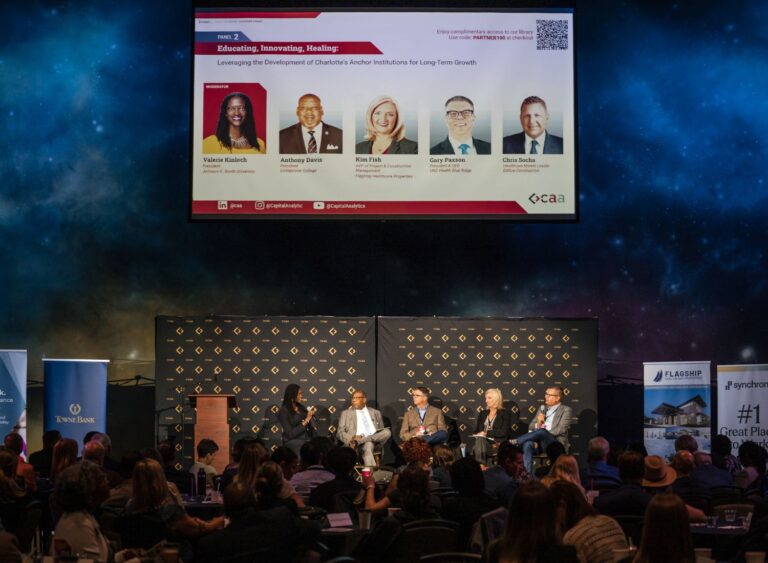
Join us at caa’s upcoming leadership summits! These premier events bring together hundreds of public and private sector leaders to discuss the challenges and opportunities for businesses and investors. Find the next summit in a city near you!
What milestones stood out for the Airport Authority over the past year?
The biggest milestones are twofold. The first was the opening of new T-hangars for general aviation users and hobby pilots. The addition addressed a major supply need as demand for general aviation continues to increase.
The second is our ongoing Hawkeye View Lane expansion project on the east side of the airport. That expansion will allow us to add corporate hangars, a maintenance, repair, and overhaul facility, and aerospace manufacturing opportunities. Right now, the grant funding, permitting, and planning underway are positioning us to potentially break ground next year on utilities, road infrastructure, and possibly some early-stage vertical construction.
How has aviation demand shifted across general aviation, leisure, and business travel?
We are definitely seeing increased demand for general aviation, but also for corporate and business travel. St. Johns County is an emerging economy with high-net-worth individuals, and businesses are moving their headquarters into Northeast Florida. Having an airport that can facilitate larger corporate and business jets is incredibly important.
Because of our runway length, the airport can accommodate larger personal and corporate jets that some regional airports cannot handle. That is a major part of our long-term planning. We want to ensure we are meeting executive and business travel needs not only for St. Johns County but for the broader Northeast Florida region.
Tourism is also a major driver. We have world-class events such as The Players Championship, the St. Augustine Amphitheatre, and Nights of Lights during the holiday season. Those attractions bring visitors from all over, and having an airport that can support both business and tourism demand is critical.
How is the airport preparing for the future of aviation?
One of the unique things our airport is doing is planning for the future of aviation travel. We are in the process of bringing on a consultant to help us plan for advanced air mobility and eVTOL (electric vertical takeoff and landing) aircraft. It may not happen next year or in the next three years, but over the next five, 10, and 25 years, eVTOL will become part of aviation planning. We want to make sure that we meet the urban air mobility opportunities and demands that the region will have. We are studying what we can do today to prepare for that future.
Manufacturing is another important area. Many people do not think about airports in terms of manufacturing, but the St. Augustine Airport is home to Northrop Grumman, which builds military aircraft on our property for the U.S. government and allied governments. We are looking at ways to expand the manufacturing space the airport can offer to aviation and aerospace companies, which will create above-average wage jobs and economic impact for the region.
What are the Authority’s priorities when planning infrastructure over the long term?
We look at historic trends in flights, population growth, and projected demand to determine how to expand infrastructure. That includes building more T-hangars for general aviation and more corporate hangars for business travel.
We also need maintenance and repair operations to support the aircraft coming into the airport, so we are evaluating how to expand our footprint and ensure we can support future demand.
On the eVTOL side, we have to think about dedicated infrastructure for this new form of transportation. That includes smaller passenger terminals, charging stations, and related facilities. From my perspective, we must always evaluate what the next five, 10, or 20 years will look like in terms of flights, manufacturing, and airport activity.
One of the airport’s advantages is having undeveloped land that could support future aerospace businesses or suppliers serving the aerospace sector. We are considering how to use that land strategically to support aviation and aerospace growth.
How does logistics influence the airport’s planning?
Northeast Florida is a logistics hub because of its location. From here, you can quickly access Central and South Florida, but also the Southeast and Midwest United States. The region benefits from intersecting rail lines, major highways, ports, and large distribution centers.
Strong logistics infrastructure opens the door for other industries because businesses value speed to market and low operating costs. Quick access to rail, road, and ports makes the region attractive for manufacturing and distribution operations.
How is the Authority approaching workforce development?
I wear a few different hats. In addition to serving on the Airport Authority, I also serve as vice chair of the St. Johns River State College Board, which serves Clay, Putnam, and St. Johns counties.
That gives me the opportunity to help connect the state college system with airport businesses and broader regional economic needs. Workforce development is incredibly important, and partnerships between high schools, trade schools, colleges, and private industry are necessary to ensure we are preparing people for the jobs being created.
Another major opportunity is the veteran population in Northeast Florida. Veterans bring leadership skills, discipline, and experience, and we should be looking at how to support retraining opportunities and help connect our amazing veterans with workforce needs across aviation, logistics, and manufacturing.
What are the biggest challenges facing the Airport Authority?
Funding is definitely one of the biggest challenges. General aviation does not create a positive return on investment necessary for long-term maintenance, repair, and new infrastructure. We need to make sure we have the resources needed to invest in infrastructure and grow.
Another challenge is creating a cohesive vision for the future and aligning partners behind that vision. Whether that involves creating an aviation academy, expanding Northrop Grumman’s manufacturing presence, or recruiting additional manufacturers, collaboration and execution are critical.
Housing is another major issue. Workers at the airport and nearby businesses often cannot afford to live in St. Johns County, so many are commuting 45 minutes to an hour each day. That affects quality of life and economic competitiveness. If you price out critical workers in the community—police officers, firefighters, teachers, and blue-collar employees—you will destroy your own workforce and create dangerous shortages.
Anyone who opposes workforce housing in these communities is actively harming the region and our way of life. Ignoring this reality is not just shortsighted; it’s reckless and negatively impacts public safety, education, and economic vitality.
If we want airports, manufacturers, and businesses to succeed, housing has to be part of the conversation.
What opportunities do you see for the Authority within the broader transportation ecosystem?
One opportunity involves the undeveloped property adjacent to the FEC rail line west of US1. That creates possibilities for businesses that can benefit from both aerospace access and rail connectivity.
There is also an opportunity for stronger collaboration between regional airports. It is not necessarily about competing for business but understanding which opportunities are the best fit for each airport and working together across the region.
Advanced air mobility will connect all of these transportation modes in new ways. Someone could land at Jacksonville International Airport, take an eVTOL to our airport, and then continue to their destination by car. Manufacturing equipment could move between facilities, airports, and hospitals through connected transportation systems.
All of these transportation modes will become more integrated as advanced air mobility evolves, which is why long-term planning and collaboration are so important today.
Want more? Read the Invest: Jacksonville report.