
Midterm aftermath: Texas exporters face USMCA comment deadline
The votes are in. What comes next for business? This article is part of a four-part caa series exploring the post-election outlook for taxes, research funding, trade and growth across key regional markets.
Key points:
- • Mexico and Canada bought a combined $159.5 billion in Texas goods in 2025, more than a third of the state’s goods exports.
- • Businesses have until Jan. 12, 2027, to submit comments ahead of the next USMCA review.
- • The midterms changed who represents Texas in Washington and who leads the state in Austin. The three national governments conduct the trade review.
 November 2026 — Texas companies have 160 billion reasons to keep betting on North America. After selling $159.5 billion in goods to Mexico and Canada last year, companies negotiating their next supply contracts and considering new investments have an opportunity to tell federal trade officials which parts of the North American trading relationship need attention.
Join us at caa’s upcoming leadership summits! These premier events bring together hundreds of public and private sector leaders to discuss the challenges and opportunities for businesses and investors. Find the next summit in a city near you!
The Office of the U.S. Trade Representative (USTR) is accepting comments through Jan. 12, 2027, ahead of the next review of the United States-Mexico-Canada Agreement (USMCA). For Texas cross-border trade, the stakes extend from Houston’s shipping terminals to Dallas-Fort Worth distribution centers and San Antonio’s automotive suppliers.
The deadline does not signal the agreement’s expiration or an automatic tariff change. It gives businesses a forum to document costs and obstacles that can influence where they source products, hold inventory and commit capital.
A trading relationship worth protecting
Mexico bought $124.7 billion in Texas goods in 2025, about 28% of the state’s worldwide goods exports, according to USTR. Canada purchased another $34.8 billion. Together, the two markets accounted for more than a third of Texas’ $448.2 billion in goods exports.
The relationship also supports businesses importing materials, parts and finished products. A manufacturer’s exposure can sit several steps back in its supply chain, even when its immediate supplier operates in Texas.
The scale of that activity continues to grow. The Bureau of Transportation Statistics valued U.S.–Mexico freight at $94.3 billion in August, up 26.7% from a year earlier. That national figure covers both directions and all transportation modes; it is not a measure of Texas shipments alone. It nevertheless shows the value of commerce moving through a relationship central to the state’s economy.
The agreement continues, the review does too
The three countries held their first joint review in July, when Washington declined to extend USMCA for a new 16-year term. The agreement remains in force, with its current term scheduled to end July 1, 2036, unless extended. Annual reviews will continue until the countries agree to an extension or the term expires.
That process creates a recurring policy question for companies making investments intended to last well beyond a single review cycle.
November’s midterm elections also changed Texas’ political representation. Gina Hinojosa won the governor’s race and James Talarico won a U.S. Senate seat. Those results change who advocates for the state’s priorities, while the federal administration continues to represent the U.S. in the trade review.
READ MORE: After the midterms, what’s next for taxes and trade?
Different stakes across Texas
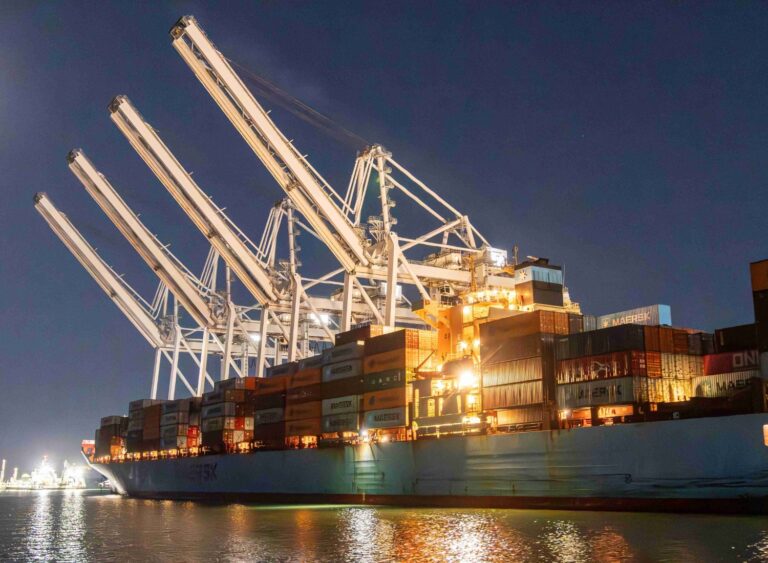
In Houston, the trade discussion intersects with an active shipping market. Port Houston handled 376,419 twenty-foot equivalent units at its public terminals in September, up 11% from a year earlier. Loaded imports increased 16%.
For companies using those routes, reliability can be as important as the freight rate. An unexpected clearance delay can add storage costs, disrupt a production schedule or put a customer delivery at risk. The financial effect depends on the cargo and the commitments attached to it.
In Dallas-Fort Worth, AllianceTexas connects industrial and distribution facilities with BNSF’s intermodal network. Companies distributing imported products must balance dependable deliveries against the cash and warehouse space required to carry additional inventory. Holding more stock can provide protection against disruption, but it also increases financing costs and exposure to changing demand.
San Antonio’s automotive industry faces decisions over a longer horizon. Toyota’s announced $3.6 billion investment includes a second assembly line scheduled to begin operating in 2030, creating more than 2,000 jobs. The company also plans to transfer Tacoma production from Baja California to San Antonio over approximately four years.
READ MORE: Toyota’s deal signals new era for San Antonio investment
That announcement predates the midterms but illustrates the scale and duration of investment decisions suppliers make across an integrated North American production network.
USMCA’s automotive rules of origin determine eligibility for the agreement’s duty-free treatment. Potential revisions therefore matter to suppliers evaluating tooling, production locations and the documentation needed to establish where inputs originate.
A deadline for evidence
Texas businesses can use the comment process to connect policy concerns with actual operating costs. Records of repeated documentation delays, additional inventory requirements or sourcing constraints can give trade officials a clearer picture than a general appeal for certainty.
For Texas cross-border trade, January is a chance to influence the policy discussion. The next contract is where businesses decide how much uncertainty they can absorb.
Top image provided by Port Houston
Read more in this series:
Midterm aftermath:
North Carolina income tax cap puts growth costs in focus
What Federal research funding deadline means for lab budgets
Florida tax relief redraws the cost of development
Related: How speed is driving foreign direct investment in the South
Want more? Read the Invest: reports.