Spotlight On: Maggie Vo, Managing Partner & CIO, Fuel Venture Capital
Key points:
- • Fuel Venture Capital is reshaping its investment strategy around AI-native opportunities.
- • Miami remains central as the firm expands its reach into San Francisco.
- • Physical AI is emerging as a major frontier for venture investment.
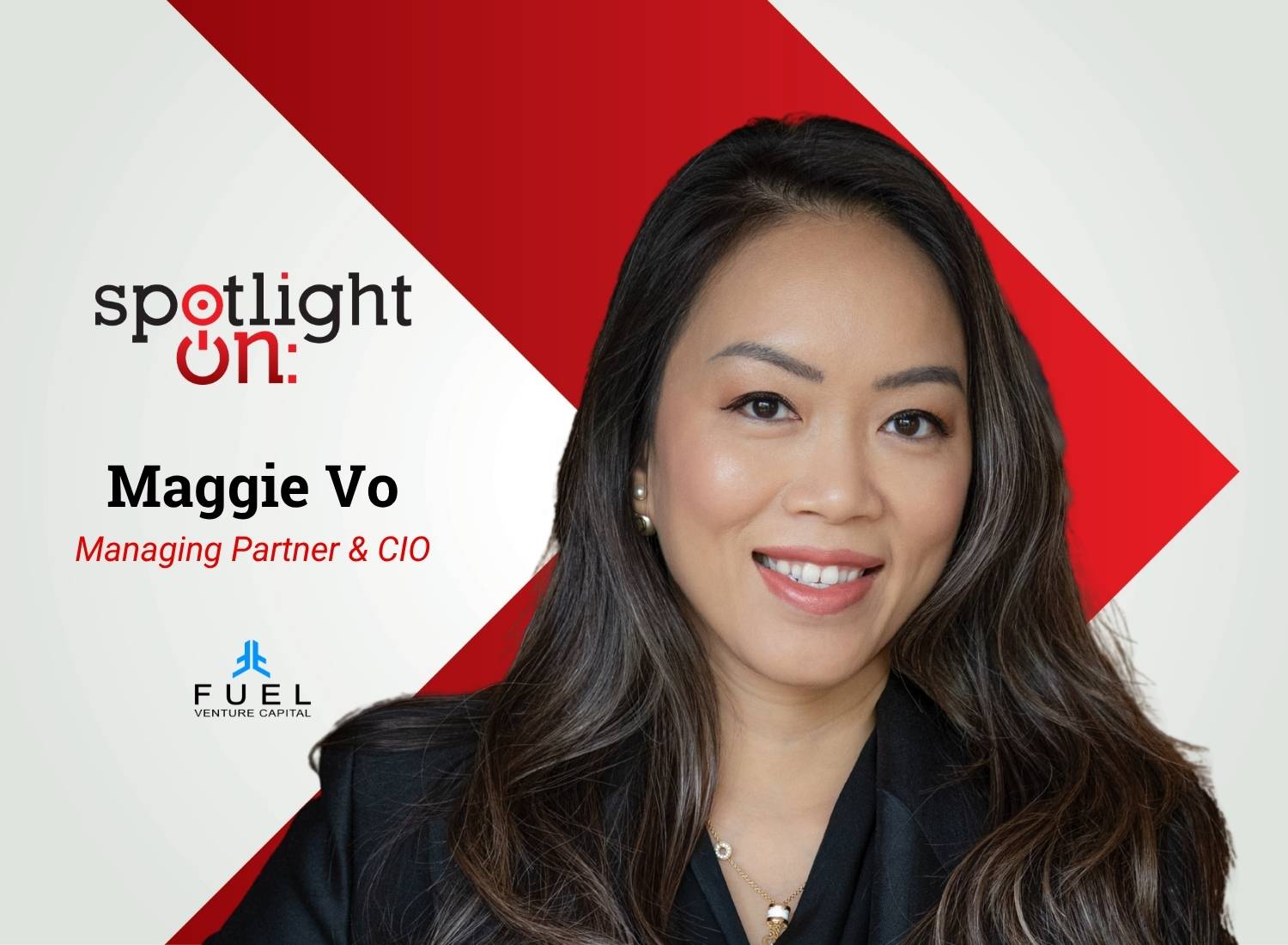 August 2026 — In an interview with Invest:, Maggie Vo, managing partner and chief investment officer at Fuel Venture Capital, discussed how the firm is evolving its strategy amid the rise of artificial intelligence while staying anchored in Miami’s startup ecosystem. “We are one of the earlier venture firms to build in Miami with the conviction that technology could democratize access and opportunity,” she said.
Join us at the Invest: Miami 11th Edition Leadership Summit! This premier event brings together hundreds of Miami’s business and regional leaders to discuss the challenges and opportunities for businesses and investors. Buy your ticket now!
How does Fuel Venture Capital’s founder-focused, investor-driven philosophy shape the way you select and support portfolio companies?
That philosophy is at the center of how we operate. Fuel Venture Capital was established in 2018, and we are one of the earlier venture firms to build in Miami with the conviction that technology could democratize access and opportunity. We believed from the beginning that founders no longer had to be in Silicon Valley to build disruptive tech companies. They could build in Miami or anywhere else, and we wanted to help make that possible.
Over time, we have grown significantly. We started with one office and one fund, and now we have five funds and more than $500 million in assets under management. That growth did not happen by accident. It came from staying disciplined about who we serve and what role we play. At the end of the day, investors entrust us with capital, and our responsibility is to identify founders and companies worth backing, then help them build successful businesses. That means we have to think about both sides of the equation all the time.
That balance has become even more important as the market has shifted. In 2025, we spent a lot of time reflecting and recalibrating. AI changed the environment in a profound way. It changed how people work, where they live, and where innovation is happening. We recognized that if the center of gravity for AI was intensifying in San Francisco, then we needed to be there as well. So we expanded there and added a new general partner who brings both top-tier venture experience and founder experience. That matters because it strengthens our ability to understand founders from the inside while continuing to serve investor interests. That is what founder-focused and investor-driven means in practice.
How is the AI shift changing your investment strategy?
AI has forced every venture firm to reassess its assumptions, and we are no exception. We took that seriously. For our latest flagship fund, we built a stronger AI thesis directly into the strategy. In the past, our sectors were more traditionally defined around fintech, marketplaces, and enterprise software as a service. Those sectors still matter, but now we are looking at them through a new AI-native lens.
One of the changes was formally adding a “Disrupt AI” category to the fund. That allows us to pursue companies that are not just using AI as an add-on, but that are fundamentally shaped by it. We have been able to gain access to a select group of high-quality AI companies in San Francisco and bring those otherwise difficult-to-access opportunities to our investors.
We are especially excited about emerging areas like vibe coding and AI-native development platforms. In the past, translating an idea into a product required assembling engineering teams and navigating lengthy development cycles. Today, AI has made it possible for non-developers to build applications, workflows, and internal tools without deep coding expertise. That expands the addressable market from serving developers alone to empowering anyone who wants to build.
We recently invested in Replit, one of the leading platforms in the vibecoding category. The company has demonstrated exceptional momentum, growing revenue approximately 25x YoY, forming an enterprise partnership with Google, and launching a consumer-facing application. This momentum enables Replit to close a recent financing at a $9B valuation, representing a 2.8x uptick in just five months.
What we believe at Fuel, and what the data continues to validate, is that AI multiplies human potential. It does not replace people; it enables individuals to operate with exponential leverage. We call this “human at scale”: backing companies that give ordinary people extraordinary capability through AI. That is where durable, defensible value is built.
How are you scaling the firm while maintaining discipline in early-stage investing?
We are intentional about the kind of team we build. Everyone on the team is carefully selected, and we look for people who can wear multiple hats. In a venture firm, especially one that wants to stay lean and effective, you cannot afford to have highly siloed people who only do one thing. We want people who can think across functions, whether that is investment analysis, founder support, fundraising, or strategic thinking.
In many ways, AI has made that even more possible. It allows individuals to go beyond being narrowly specialized. Instead of thinking in terms of someone who only has one deep skill, we are encouraging people to use AI to broaden their capabilities. They should be able to leverage the AI tools to analyze data, prepare for meetings, support diligence, and contribute across the platform. That helps us do more with less, but I want to be clear that the goal is not simply cost-cutting. The real goal is to drive more value and more revenue.
That same thinking applies to our portfolio companies. We encourage them to use AI not just to reduce expenses, but to rethink their business models and accelerate growth. In an AI-enabled environment, the marginal cost of building and testing has dropped dramatically. The companies that win are not necessarily the ones with the best initial ideas — they’re the ones running the most experiments and learning the fastest to expand what they can accomplish, not just streamline what they were already doing.
Which sectors do you believe are most likely to produce the next breakout companies?
Beyond our core focus, one area we are increasingly excited about is Physical AI—the extension of artificial intelligence from purely digital workflows into real-world environments.
In the digital realm, GenAI has already driven meaningful productivity gains across sales, marketing, coding, healthcare, and legal functions—primarily through software-based applications like text generation, copilots, and data analysis. The next frontier is AI crossing into the physical world, where intelligence is embedded directly into machines and operational systems.
We are seeing a shift from basic automation to cognitive automation—AI-driven robotics and intelligent systems that can perceive, decide, and act in real-world environments. This is beginning to transform industries such as manufacturing, logistics, and transportation by streamlining workflows, improving efficiency, and enhancing safety.
As AI matures, we believe the biggest opportunities will emerge at this intersection of software and the physical world. Companies enabling intelligent robotics, autonomous operations, and AI-powered industrial workflows represent a natural extension of our thesis: AI multiplying human capability—not just on screens, but across the real economy.
How are you balancing your expansion into San Francisco with your commitment to Miami?
That balance is important to us. We may be expanding, but we are still deeply anchored in Miami. That is our home. That is where we started, and it remains central to our identity. And we are proud of what we have built here. It is also important to grow, to learn from other ecosystems, and to bring back insight and opportunity.
Our expansion into San Francisco is not a departure from Miami. It is a way to strengthen what we can offer to Miami. It gives our investors access to top-tier AI opportunities, and our founders access to a broader network, greater knowledge, and more pathways to large follow-on rounds.
What is your outlook for Fuel Venture Capital over the next few years?
I am excited about where Fuel is headed. We are scaling our team, expanding our footprint from the East Coast to the West Coast, and deliberately building a firm capable of operating at an institutional scale to serve both founders and investors at the highest level. We aim to position ourselves at the center of the AI-driven transformation.
To us, AI is not simply a technological innovation; it represents a supercycle comparable in magnitude to the internet. As a result, we are working diligently with both founders and investors to ensure they do not miss this platform shift—one we believe will define the next decade, in which early, thoughtful company building and disciplined investing are essential to creating generational wealth.
Our vision extends beyond capital deployment. We are currently building innovative financial products designed to broaden participation in the innovation economy across a wider set of stakeholders. On the company-building side, we believe value creation should not accrue solely to founders; employees who help build transformational technology companies should also have meaningful pathways to participate in that success. On the investing side, access to the creative economy should not be limited to institutions and large allocators; all investors deserve a seat at the table. Fuel continues to evolve beyond a traditional venture structure into an innovation-focused investment house that offers scaled access to private market opportunities, and we believe the best is still ahead of us.
Want more? Read the Invest: Miami report.