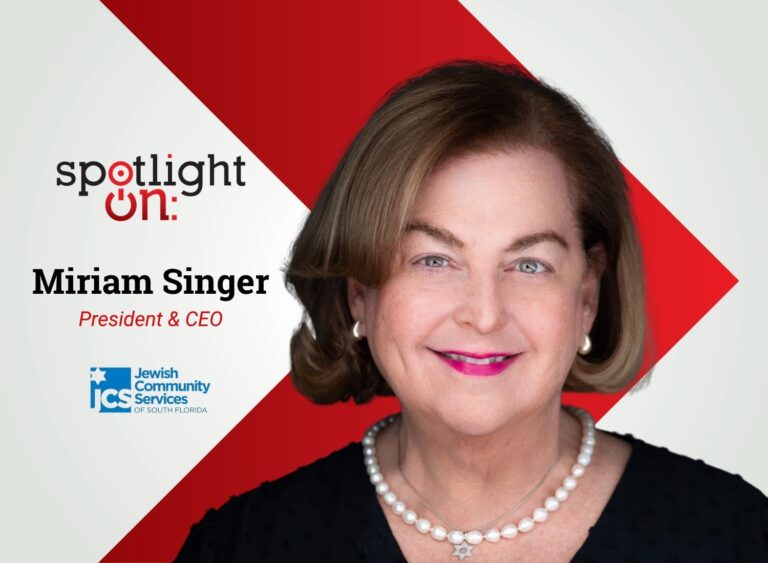





Toba Niazi, MD, Chief – Neurosurgery & Co-Medical Director – Neuroscience Institute, Nicklaus Children’s Hospital
 Invest: spoke with Dr. Toba Niazi, chief of the section of neurosurgery, director of the division of neurosurgery, and co-medical director of the Neuroscience Institute, and medical director of neuro-oncology surgical services at Nicklaus Children’s Hospital. Dr. Niazi discussed the long-term vision for the Neuroscience Institute, surgical innovation, and research. “Research is really important. It’s how we move the needle forward,” Dr. Niazi said.
How are you shaping the long-term vision of the Neuroscience Institute as it continues to grow as a nationally recognized center for pediatric neurosurgery?
At the Nicklaus Children’s Hospital Neuroscience Institute, we take care of the brain, spinal cord, spine, and peripheral nerves. We want patients and families to understand that if they have a spinal cord tumor or a spine problem, this is the right place for them.
We perform the highest volume of pediatric neurosurgical cases in the Southeast, and we have an epilepsy program that is probably one of the oldest in the country – 45 years. We were one of the first programs in the country to offer epilepsy surgery to pediatric patients and evaluate how we could prevent and cure seizures when there is a focal or lesional area for epilepsy.
Over time, we have continued to evolve. Previously, we would do craniotomies and place a large grid on the brain to figure out where the seizures were coming from. Now, it has become more boutique. We can use small incisions and robot-guided placement of stereo electroencephalogram leads. Patients can go home the day after those leads are taken out, instead of undergoing a large craniotomy to see if there is a focal seizure focus.
The same is true in our neuro-oncology program. We are leaders in the Southeast in treating the largest number of brain and spinal cord tumors in children. We have fully integrated multidisciplinary teams for both epilepsy and neuro-oncology, including nutritionists, neuropsychologists, oncologists, neuro-oncologists, epileptologists, and other specialists. These teams meet weekly to discuss patients and determine the next best steps.
We are also focused on technological innovation, including robotics and MR-guided focused ultrasound. Our focus is to stay abreast of innovation and research, educate ourselves, and remain leaders in this field so patients receive the best care possible without having to leave their backyard.
How are technologies such as minimally invasive surgery, intraoperative MRI, and robotic systems changing the way pediatric brain and spinal conditions are treated?
Innovations are important, but it is not one-size-fits-all. There are cases where we cannot offer a minimally invasive option because of survival considerations, anatomy, or the nature of the condition. The priority is ensuring that the physicians and care team choose the appropriate intervention for each patient. We cannot allow ourselves to be blinded by new technology.
That said, these technologies are incredible and absolutely have a role. For example, I perform surgery to remove tumors from the pituitary area through the nose. Traditionally, that was only done in adults because children’s nasal passages are much smaller. When we were using microscopes, it was often impossible to look through a child’s nose because there was not enough space. Now we have endoscopes the size of a piece of spaghetti that allow us to operate through the nose.
These advances allow patients to leave the hospital more quickly, have smaller incisions, recover faster, and reduce injury to important structures of the brain or spinal cord.
How does innovative research, such as focused ultrasound for difficult tumors, translate into real-world improvements for patients and families?
Research is really important. It’s how we move the needle forward. Research is highly regulated in pediatrics. Phase 1 is about safety. Phases 2 and 3 involve dosage and efficacy. Before anything else, we need to determine whether something is safe.
For example, we are one of the first centers to evaluate whether high-frequency focused ultrasound is safe for patients with hypothalamic hamartoma. Safety comes first, including the safety profile of the device, the safety profile of any drug dosing, and then whether it actually works.
It is important that we are involved in this innovative research. I am hopeful that by being part of Phase 1, 2, and 3 clinical trials, we can help bring better options to children. We recently participated in a gene therapy trial for Rett syndrome involving intrathecal and intraventricular administration of gene therapy. But research takes years, sometimes decades, before we see the fruits of that labor and before something becomes FDA-approved.
If patients are not willing to participate in clinical trials and research protocols, we cannot move the field forward. We need to see what works, what is safe, and what is effective without unacceptable side effects. We are fortunate to have the ability to do that here, and I am hopeful that continued research will lead to more minimally invasive options so we can put patients through less rather than more.
What are the biggest challenges in managing such a wide spectrum of neurological disorders in children?
One of the reasons many of us went into pediatric neurosurgery is that we are not siloed. In adult neurosurgery, physicians are often separated into cranial neurosurgery or spine neurosurgery. The beauty of pediatric neurosurgery is the breadth of patients and conditions we treat.
One day, I can be doing a brain tumor resection, and another day, I can be fusing the cervical spine in a patient with a craniocervical abnormality and associated weakness or paralysis. As we have grown, our team has also developed more focused areas of expertise. One of my colleagues has devoted herself to brachial plexus care, for example.
We have the expertise and training to do this work, and we are committed to treating the whole child with any neurological or neurosurgical condition that comes through our doors. We are treating a wide breadth of conditions, and we are also getting better and better at each of them.
How do you balance technological precision with surgical judgment in high-stakes pediatric cases?
I did a brain tumor surgery recently on a 12-month-old, and technologies such as functional MRI and diffusion tensor imaging help us understand the safe areas to enter the brain and avoid the unsafe areas. They help us prevent significant postoperative neurological deficits.
These tools are adjuncts that help us provide the best care possible. Intraoperative MRI has become a standard of care. I am a firm believer that if a center does not have an intraoperative MRI, it should not be taking care of children with brain tumors or spinal cord tumors. We need to set a better and higher standard for patient care and guide these patients to centers with high volumes and technological advancements.
At the same time, none of these technologies can replace the judgment of the surgeon. They are all adjuncts that help us make the best decisions about how to approach surgery, but they cannot replace surgical judgment and expertise.
How is your team personalizing treatment plans for children with conditions such as cerebral palsy, movement disorders, or congenital spinal abnormalities?
We were one of the first centers to implant deep brain stimulators in children with dystonia. In certain conditions, including DYT1, patients can go into dystonic crisis, develop rhabdomyolysis, and end up in the ICU. To see a child who is completely nonfunctional and then use robotic technology, functional mapping, and diffusion tensor imaging to place deep brain stimulator leads within millimeters of where they need to be is incredible.
Each technology allows us to tailor care. With selective dorsal rhizotomy surgery for patients with cerebral palsy, we have been able to perform super-selective procedures and address the specific nerves affected. That creates a more tailored approach and helps patients become more ambulatory more quickly.
It goes back to the expertise of our team. We have four neurosurgeons here, and we are all subspecialists in different areas. We have specialists in epilepsy, neuro-oncology, hydrocephalus, craniofacial care, and brachial plexus care. We are all adept at the core areas of pediatric neurosurgery, including hydrocephalus, spinal dysraphism, myelomeningocele, trauma, subdurals, and congenital abnormalities. But having someone champion each subspecialty and become an expert in that field is the way of the future. That is how we tailor care and achieve the best long-term outcomes for our patients.