
New Jersey small business news: One-stop wellness
Key points:
- • Hackensack Meridian’s new 36,000-square-foot Freehold center is its seventh wellness facility.
- • The Juniper Plaza location already offers care from primary care to vascular surgery under one roof.
- • HMH’s wellness network has included builds ranging from $30 to $200 million since 2022.
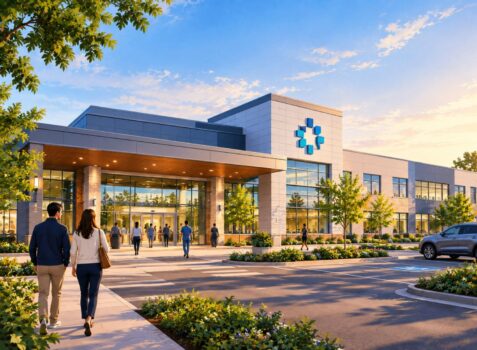 September 2026 — New Jersey small business news centers on a single building in Freehold that now offers everything from a primary care checkup to vascular surgery consultation, and it is quickly becoming the model Hackensack Meridian Health wants to replicate across the state.
Join us at caa’s upcoming leadership summits! These premier events bring together hundreds of public and private sector leaders to discuss the challenges and opportunities for businesses and investors. Find the next summit in a city near you!
The health system’s newest wellness center, a 36,000-square-foot facility at Juniper Plaza, celebrated its ribbon-cutting Aug. 27, NJBIZ reported, marking the seventh such multispecialty facility HMH has opened as part of a statewide build-out that began four years ago.
The Freehold location puts HMH’s one-stop model in Monmouth County, an area of the state where the health system already competes for patients against several other regional hospital networks, making the breadth of specialties on offer as much a competitive differentiator as a convenience feature.
The Freehold center already houses chiropractic medicine, general surgery, imaging services including X-rays, ultrasounds and bone density tests, neurology, OBGYN, occupational and physical therapy, primary care, rheumatology, speech therapy and vascular surgery — a specialty list broad enough to cover most of what a typical patient would otherwise need several separate practices, and several separate appointments, to access. HMH has said it plans to add behavioral health practices, endocrinology, mammography services and an on-site laboratory for diagnostic assessments in the months ahead, extending the single-location model even further.
Robert Garrett, HMH’s chief executive officer, framed the strategy around convenience as much as clinical breadth. “We know our patients lead busy lives, and accessing healthcare should be as simple and convenient as possible,” Garrett said, a rationale that chief operating officer Mark Sparta backed with a specific behavioral statistic: more than 90% of adults admit to delaying or skipping routine checkups, he said, and consolidating specialties under one roof is meant to remove the scheduling friction that drives much of that avoidance.
Daniel Varga, HMH’s chief physician executive, and Michael Geiger, senior vice president of ambulatory care and network development, were also on hand for the opening, underscoring how central the wellness center strategy has become to the system’s broader ambulatory care planning rather than a side project run out of a single department.
HMH building pattern
The Freehold opening extends a building pattern HMH has repeated at a range of price points and scales since the wellness center strategy began four years ago in Eatontown: a facility in Clark opened in 2023, followed by a $79 million project in Clifton, a $30 million build in Paramus, a location in West Milford, and the system’s largest wellness investment yet, a $200 million center at MetroPark in Woodbridge that opened this past April.
HMH has not disclosed the investment figure for the Freehold facility, but its position within that broader range of spending — from $30 million to $200 million per site — suggests the health system is treating the model as a core, ongoing capital priority rather than a one-off experiment.
The strategy mirrors a broader shift among large hospital systems nationally, which have increasingly moved specialty and diagnostic care out of hospital campuses and into standalone, multi-specialty outpatient centers closer to where patients live, a model that lowers costs relative to hospital-based care while capturing referral volume before it goes to a competing system.
New Jersey’s dense suburban geography, with multiple population centers spread across a relatively compact state, makes the model particularly suited to HMH’s footprint: rather than building a small number of large flagship hospitals, the system can blanket commuting corridors like the one running through Freehold with facilities patients can reach without a long drive.
That geographic logic also explains why HMH’s builds have varied so widely in size and cost — a smaller commuting corridor can support a modest facility like the $30 million Paramus location, while a hub like MetroPark in Woodbridge, positioned along a major transit corridor, justified the $200 million investment the system made there instead.
HMH’s plan to layer behavioral health, endocrinology, mammography and lab services onto the Freehold site over the coming months will determine whether the facility can actually deliver the same-visit convenience its executives are promising, or whether demand outpaces the specialists available on-site. With an eighth wellness center likely to follow the pattern set by Eatontown, Clark, Clifton, Paramus, West Milford, Woodbridge, and now Freehold, New Jersey health systems and real estate developers alike will be watching where HMH decides its next commuting corridor needs coverage.
Want more? Read the Invest: New Jersey reports.