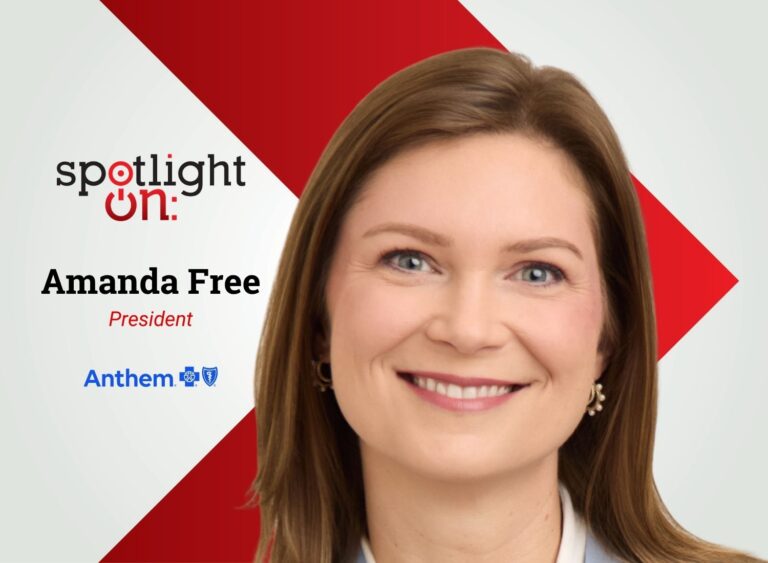
Spotlight On: Amanda Free, President, Anthem Blue Cross and Blue Shield of Georgia
Key points:
- • Preventive and value-based care are central to improving affordability.
- • Digital tools are creating a more personalized, connected member experience.
- • Whole-person care addresses health needs beyond the healthcare system.
 September 2026 — Focus: spoke with Amanda Free, president of Anthem Blue Cross and Blue Shield of Georgia, about improving healthcare affordability, expanding preventive and whole-person care, and using technology to create a more connected member experience. “We always say it’s about getting members connected to the right care at the right time, in the right setting, at a cost that they can afford,” Free said.
Join us at caa’s upcoming leadership summits! These premier events bring together hundreds of public and private sector leaders to discuss the challenges and opportunities for businesses and investors. Find the next summit in a city near you!
How is Anthem working to make healthcare more affordable for Georgia families and businesses as costs continue to rise?
It is definitely the elephant in the room. It is the conversation we have every day with employers and people in our community. I’m proud of the work we’ve done to partner with providers in the community and expand our value-based partnerships. That creates a better-connected experience for members, allows us to share data, and helps ensure members receive preventive care. It also means providers are rewarded for keeping people healthy, not just treating people who are sick.
What investments are you making in preventive care that could improve health outcomes and reduce costs over the long term?
We’re partnering with primary care physicians across the state to expand access and create plan designs that allow members to seek primary care through lower-cost arrangements. We’re also sharing information about those options through Sydney Health, our digital app for members. We want to ensure members receive notifications about gaps in care and understand the care options available to them, both virtually and in person.
Anthem emphasizes whole-person care that integrates physical, behavioral, and social health. What does that look like in practice?
We don’t exist in silos. If something is happening at home, if someone lacks access to healthy food in the community, or if something is affecting that person’s mental health, all those factors are connected. It seems obvious when we talk about it, but our systems have not necessarily been connected in the past.
We’re working to bring those resources together and examine our population based on what we know, including information about the communities where people live and the types of care they receive. That helps us identify where gaps may exist. We use the Sydney app to ensure members have information about all the resources available to them.
We also have partnerships with Food As Medicine programs that promote connected care, along with access to virtual behavioral health resources at low or no cost.
How is Anthem adapting its products, provider networks, and services to meet the changing needs of Georgia’s growing and aging population?
We distribute our commercial products through both employers and the individual market. On the individual side, we are in every county in the state, and I believe we are the only carrier with that statewide presence. We view that as a responsibility.
We also have strong partnerships with providers across Georgia. Whether we reach members through individual Affordable Care Act products or through small or large group employers, we’re designing products, networks, and solutions that meet members where they are.
How are virtual care, mobile apps, and personalized digital services improving the member experience?
The member experience is critical to creating trust in our industry, and transparency will help build that trust. Technology simplifies administrative processes and helps us improve customer service. When members call, our associates have more information available to help them.
Artificial intelligence can also help us identify gaps faster than a person might independently. It can bring data together for our associates as they assist members and help us provide information that is relevant to each person. Instead of sending generic communications, we can provide information tailored to individual members.
Sydney is the No. 1-rated health app in the App Store, and we’re proud of the investments we continue to make in the member experience. It is the front door to everything we’re building and bringing together. We all have information at our fingertips through our phones, and Sydney is a valuable tool for connecting members with care and information.
How is Anthem addressing social drivers of health, including transportation, nutrition, and housing?
We have built our Whole Health Index, which captures relevant data, identifies gaps, and helps us identify community partnerships that can close those gaps. We have more work to do, but we are building the platform and continuing to develop those partnerships. We’re also putting that commitment into action through the Anthem Blue Cross and Blue Shield Foundation, investing in Georgia organizations that are addressing needs such as food insecurity, maternal health, and behavioral health. For example, we’re supporting Food as Medicine programs with Wholesome Wave Georgia and Augusta Locally Grown that connect nutrition with better health outcomes.
Which innovations or trends will have the greatest impact on healthcare access, affordability, and quality over the next few years?
I think AI and transparency will bring many of these efforts together. They allow us to break down a very complex system into something people can navigate more easily. It is about connecting the different points of care and making recommendations so members understand how to move through the system and receive the quality care they need.
We always say it’s about getting members connected to the right care at the right time, in the right setting, at a cost that they can afford. We’re also beginning to highlight predictive costs for members through the Sydney app, providing greater transparency about what they can expect to pay when they receive a service or attend an appointment.
What are your priorities as president, and which opportunities most excite you?
My priority is building relationships and connections, or strengthening the relationships and connections that already exist across the state. I’m a lifelong Georgian, so this state is important to me. We cannot tackle these complex issues without strong relationships and connections. We have to do it together; it is not something I can solve by sitting alone in a room.
I’m taking time to meet with provider systems, people throughout our communities, and organizations such as chambers of commerce. Building those relationships helps us better understand what people are looking for. We can then develop solutions based on those needs.
What is Anthem’s role in improving the health and well-being of Georgia’s communities, and how will you measure success?
Success is ultimately measured by the health of our communities. That also means investing beyond the healthcare system in community organizations that are addressing the factors that influence health every day. Georgia’s economic growth does not happen without healthy people. When people can access the care they need, we can improve their overall health so they are not constantly accessing acute care. Instead, they can maintain preventive care and manage their health more effectively. That is how success will be measured, and it is the overall vision for how we connect and help solve this challenge in Georgia.
What is the primary challenge to advancing that vision?
Rising costs are real. We see that in utilization and in pharmaceuticals entering the market after significant research and development. These treatments can do wonderful things, and the innovation is incredible, but it also comes with a price tag.
That’s why affordability has to be about more than managing costs after someone becomes sick. We have to help people stay healthier through preventive care and earlier intervention, while also making it easier for them to understand their options and choose the right care for their needs. When we can connect someone to primary care or another appropriate setting instead of a higher-cost setting like the emergency room, we can improve both the experience and affordability.
Ultimately, addressing rising healthcare costs requires all of us to work together to improve health outcomes and make care more affordable and easier to navigate.
Want more? Read the Focus: Atlanta report.