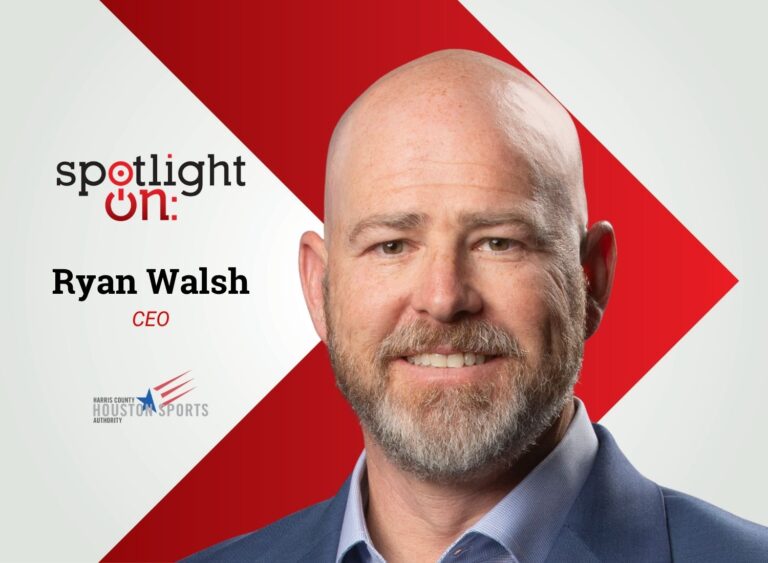
Spotlight On: Ryan Walsh, CEO, Harris County-Houston Sports Authority
Key points:
- • Houston’s packed sports calendar requires extensive regional coordination.
- • Major events are generating significant economic opportunities for local businesses.
- • Global visibility is strengthening Houston’s position for future sporting events.
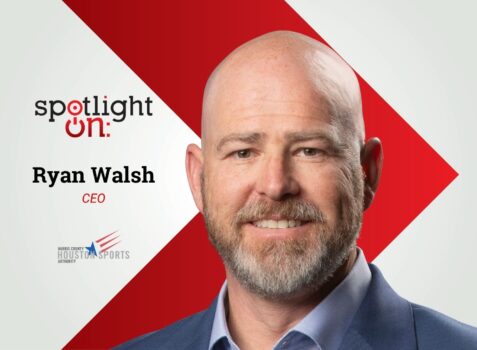 September 2026 — Invest: spoke with Ryan Walsh, CEO of the Harris County–Houston Sports Authority, about Houston’s packed 2026 sports calendar, the partnerships required to deliver major events at scale, and the long-term opportunity to turn global visibility into what comes next. “Houston does big events, and we do them really, really well,” Walsh said.
Join us at the Invest: Houston 3rd Edition Leadership Summit! This premier event brings together hundreds of Houston’s business and regional leaders to discuss the challenges and opportunities for businesses and investors. Buy your ticket now!
What are your top operational priorities right now?
Our top operational priority is making sure every event on the calendar is executed at the highest level. Even before the World Cup, March is stacked with major moments, from the World Baseball Classic and NCAA tournament play to the rodeo, Astros opening day, and a full slate of home games and other events.
For us, it’s about delivering phenomenal fan experiences while also representing Houston in the best possible light. These events are often the first and strongest impression visitors have of the city, so operations and hospitality have to move together: safe, smooth, welcoming, and memorable. The goal is to consistently demonstrate that Houston is a premier global destination for sports.
What are the biggest risks or challenges you are focused on managing?
The biggest challenge is coordination. We have to ensure we have the resources we need and that all our ducks are in a row across a wide set of partners and stakeholders. Houston does big events, and we do them really, really well, and there’s a reason that we do them well.
Whether it’s public safety agencies or organizations like METRO and Houston First, success comes from staying aligned on logistics, timing, communications, and clearly defined responsibilities. Looking ahead, pacing is also critical: finishing one major event and being ready for the next, while keeping an eye on which events we want to attract in the years ahead. We’re always thinking beyond the next few months and trying to position Houston as a reliable, experienced host city that future event owners trust to deliver at scale.
How are you working with venue partners to ensure a consistent world-class experience across the region?
We work closely with venue partners, as well as the teams and tenants who call those venues home. For the World Cup, the central partnership is with NRG Stadium, including the Sports and Convention Corporation, ASM Global, the Houston Texans, and the rodeo.
For the World Baseball Classic, it’s coordination with Daikin Park and the Astros. For the NCAA tournament at Toyota Center, it’s supporting the venue and host institution so the event runs smoothly. Each venue has its own footprint, staffing model, and operating rhythm, so our role is to connect the right people early and establish clear expectations across security, transportation, fan services, media, and overall guest experience.
We also focus on consistency in the details that visitors will notice the most, from entry and security flow to signage, staffing, and the overall feel of event day. When you have multiple major events happening in a short window, you need repeatable playbooks, strong communication channels, and the ability to adapt quickly when something changes.
What new investments in infrastructure or technology are most important to staying competitive for global events?
The foundation is world-class venues, and we’re always looking for ways to improve them. Each major venue is different, so there isn’t a one-size-fits-all upgrade. The real work is the ongoing conversations with teams, tenants, and operators about what can be improved, what fans expect next, and how technology continues to shape the experience.
Beyond what’s happening inside the building, the visitor experience also depends on how easily people can navigate the region, how information is communicated, and how quickly issues are resolved. Staying competitive means constantly asking: what’s next, and how do we prepare for it in a way that fits each venue and each event?
How are you making sure local and small businesses benefit from the upcoming wave of major events?
Small businesses are the backbone of any city, and we want these events to feel like Houston’s events. Community engagement matters on both the fan side and the business side, and our goal is to make sure the benefits extend well beyond the venues themselves.
One of the tools we leverage is our Buy Houston – By Houston vendor program, which helps local and small businesses across Houston and Harris County register to receive notifications about RFPs and procurement opportunities tied to major events. As part of our World Cup efforts, this platform connects vendors to opportunities within their specific categories, from food and beverage, equipment rentals, temporary infrastructure, and other services. The more we can integrate local vendors into the event ecosystem, the more these moments generate meaningful and visible economic impact in the community.
How will you measure whether this year is a true success for Houston?
Houston has hosted more major events than any other U.S. city since 2004, and the Sports Authority measures success through both execution and impact. Since 2019, the events we’ve brought to Houston have generated approximately $1.2 billion in economic impact, and the World Cup alone was projected to generate about $1.5 billion.
When you look at the broader calendar, it’s realistic that the region could reach just shy of $2 billion in annual sports-event impact. That’s significant for any metropolitan area.
But success isn’t only financial. It’s also global perception: how Houston is experienced by visitors, how the city performs under the spotlight, and whether that momentum helps bring the next wave of major events to Houston.
What is Houston’s strongest advantage today, and where do you still need to improve?
Houston’s strongest advantage is Houston itself, from the venues and teams to the city’s proven ability to deliver when it hosts big moments. We have a track record, and the level of collaboration across partners allows us to execute at a high level, which matters to event owners who cannot afford operational surprises.
Where we can improve is making sure the experience works just as well for international visitors as it does for domestic travelers. Houston is a large, spread-out city, and many international guests are accustomed to more compact city centers and more robust public transportation systems.
Post-event learnings will help us identify opportunities to improve mobility, wayfinding, and the overall ease of navigating the city during peak periods. There’s always room to improve, and we want to keep raising the bar.
Looking beyond this year, what are your key goals and priorities for the Sports Authority and for the region?
My goal is to keep expanding the Sports Authority’s ability to serve as a resource, both for the community and for the teams and major stakeholders across Houston sports. That includes supporting the rodeo, the Texans, the Rockets, the Astros, the Dynamo and Dash, and others in ways that strengthen Houston’s event readiness year after year.
We also want to keep shining a light on Houston as a premier global destination for sports and for visitors. Houston’s hospitality, diversity, and cultural depth are real advantages, and continuing to show the world what the city offers is part of how we keep building what comes next, not just for one season, but as a long-term strategy.
Want more? Read the Invest: Houston report.