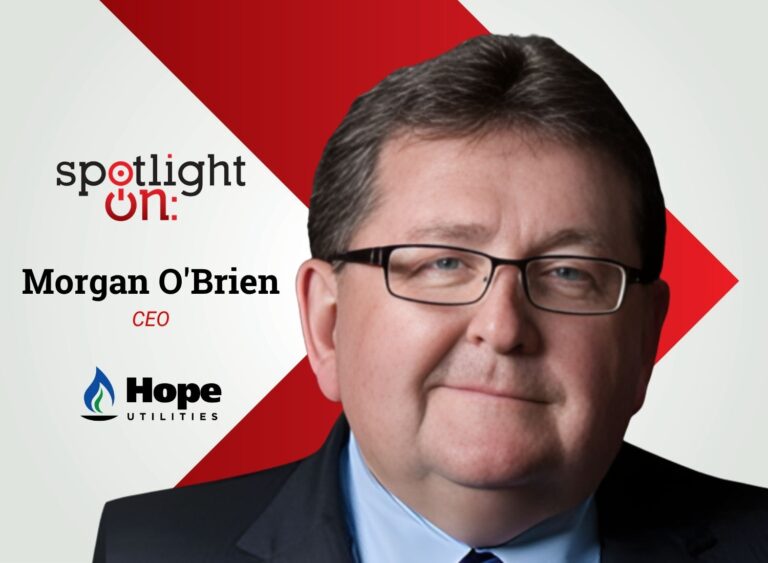

Spotlight On: Morgan O’Brien, CEO, Hope Utilities
Key points:
- • Infrastructure investment is supporting economic development and local job creation.
- • Workforce programs are creating pathways to family-sustaining utility careers.
- • Strategic partnerships are expanding energy access without increasing customer rates.
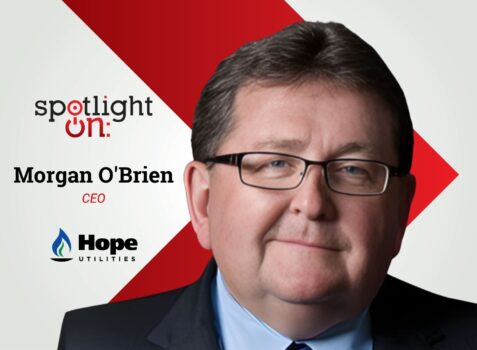 September 2026 — Invest: spoke with Morgan O’Brien, CEO of Hope Utilities, about the company’s purpose-driven growth, workforce development, infrastructure investment, and role in supporting economic development across its service territories. “Ultimately, a vibrant community is a compelling business case for an infrastructure company. For utilities, helping create that vibrancy strengthens the business case even further,” O’Brien said.
Join us at caa’s upcoming leadership summits! These premier events bring together hundreds of public and private sector leaders to discuss the challenges and opportunities for businesses and investors. Find the next summit in a city near you!
What advantages does Hope Utilities’ diversified model provide, and how does it position the company for future growth?
Everything here starts with our purpose. The core of our business is Hope Gas in West Virginia, which is 128 years old. About 80% of our assets and businesses are in West Virginia. We are in other states, and that provides additional growth opportunities.
We started this journey by saying we wanted to build the most valuable business we could. To define that, I had a simple mantra: At some point, we are going to have a business leader, a family, or an individual impacted by our business say, “I can’t imagine what West Virginia would be like without Hope Gas.”
We want to create that valuable brand in the areas where we operate. Our employees live in these communities. As a gas and water utility, your pipes are literally the roots in the ground, but our people really are the roots of our business.
We looked to our employees as to what our corporate values should be. We simply asked: What are the values you see when you look in the mirror? We ended up with three unusual corporate values: faith, family, and integrity. We asked people why they came to work, and the answer was to make our communities better and create better places for the next generation.
As an energy infrastructure company, we can play an important role in economic development by helping the governor and business leaders bring new businesses and jobs to the communities we serve. We also support businesses within our service territory by requiring pipeline contractors in West Virginia and Ohio to hire locally and pay family-sustaining wages.
When we started, there was no purposeful procurement. The company spends a great deal of money, but we know that to have an impact, we must be purposeful in our approach. Last year, we had over 1,100 West Virginians from the building trades laying pipe in the Mountain State. This year, we will have even more people employed from those areas doing work for us.
We are doing more than keeping people warm in the wintertime. We are helping communities and creating jobs. We have also started Hope Academy, partnering with West Virginia vocational and technical programs throughout the state. Students in southern West Virginia will be able to go to high school in the morning, go to a vo-tech school, learn from a retired Hope Gas employee, work summer jobs with our crews, and ultimately enter an apprenticeship program.
Southern West Virginia historically had meaningful blue-collar jobs in the coal industry. As that industry declined, economic challenges have arisen. We are trying to create a doorway that says you do not have to leave where your family is. You can enter a growing industry with family-sustaining job opportunities. These opportunities are sparking real hope for the future for families that have not had much hope.
How is Hope Utilities balancing the need to modernize aging systems while keeping service safe, reliable, and affordable?
We have developed a brand, particularly in West Virginia, around creating local benefits from our investments. Right now, the country is saying we need more energy. Smartphones and the need for more data are creating a dire need to build data centers, but there is debate around whether local communities see the benefits. These data centers require large volumes of energy and need to be reliable with great resiliency.
We recently announced a project in Mason County, West Virginia, with the governor. The project would bring natural gas access to an area that currently lacks it. With the governor’s support, a data center planned for the area is willing to fund three major pipelines to serve its energy needs.
Hope can build the pipelines, put West Virginians to work, and create excess capacity to serve others in the community. By the first quarter of next year, we expect to provide natural gas access without raising customer rates because the data center will fund the infrastructure. This approach represents hundreds of millions of dollars in local investment that otherwise could have affected rates.
Five small industrial manufacturers that want to locate in Mason County will now be able to move forward and create jobs. Right up the road is one of the largest steel plants being built in the United States by Nucor Steel. Until now, the lack of natural gas had also limited residential development, but the data center project will enable us to serve new homes and businesses.
What could be seen as a controversial investment is opening a huge door. It will create jobs, opportunities for others to invest, housing, and development without raising rates for customers. The governor believes this model can work and be replicated.
We are also building pipelines for new power plants to help meet electric needs. Every time we build a pipeline, we ask what other doors we can open, whether for new manufacturing plants, residential development, or customers who do not have access to gas to heat their homes in winter.
Ultimately, a vibrant community is a compelling business case for an infrastructure company. For utilities, helping create that vibrancy strengthens the business case even further.
What are the biggest operational challenges facing the industry today, and how is Hope preparing for them?
We start and end with doing things the right way. If you want to provide the best, safest service to customers and create a more valuable business, that is incredibly important.
People and relationships are really important. When customers are facing challenges, we try to meet with them in person rather than rely on Microsoft Teams calls. Some are already at a breaking point because of broader economic pressures, and while we may not be the source of every challenge, higher rates or additional costs can make their situation more difficult.
We are trying to create a culture that says we need to sit down and help those people. Maybe we align ourselves with them and say: Let’s see if we can get through the next few months or the next year, and we will work with you to help you get to the other side. I am not sure we are going to succeed every time, but the economic challenges businesses are feeling impact jobs, communities, and standards of living.
For us, it is about thinking long term and being a partner to our customers. The same applies to individuals who, for no reason of their own, find themselves unable to afford their bills. We remind ourselves what our values are, who we are, and that this is a long-term business.
That may mean making decisions others would not make in the short term. In the long run, our employees feel better about doing the right thing, and in some cases, we can help customers and companies get to the other side.
We are living in a day when most people and most businesses cannot afford more for just about anything. Energy has commodity costs related to it. My team works hard to think creatively about how to minimize rate increases. When we do, and there are impacts, we connect with those customers as best we can and try to work with them.
Cybersecurity and technical challenges are real, and we have trained people doing everything they can. But I think the world we are in today is defined by economic challenges facing ordinary people and small businesses. Helping them get through this period is one of the most important things we can do.
Everything we do comes back to remembering who the people who work here are, what their values are, and how we can help people navigate challenges and come out stronger on the other side. We are well on our journey to making our company become that special “value” for the communities we serve that we set out in our purpose and mission statement.
Want more? Read the Invest: Pittsburgh report.