
Curiosity Lab turns Peachtree Corners into a testbed
Key points:
- • Curiosity Lab is turning Peachtree Corners into a real-world testbed, with a three-mile corridor and infrastructure serving more than 14,000 vehicles daily.
- • Companies are actively deploying technology at the lab, including Arrive AI’s autonomous delivery demonstration and LEOTEK’s AI-powered traffic signal system in 2026.
- • Peachtree Corners is moving from testing to commercialization, offering companies $25,000–$250,000 to deploy and validate autonomous mobility technologies on public roads.
 October 2026 — Technology may be advancing faster than the cities where it is expected to operate. Peachtree Corners is taking a different approach: rather than waiting for emerging technologies to become ready for the real world, the city has turned part of its own infrastructure into a testing environment for the companies developing them.
Join us at caa’s upcoming leadership summits! These premier events bring together hundreds of public and private sector leaders to discuss the challenges and opportunities for businesses and investors. Find the next summit in a city near you!
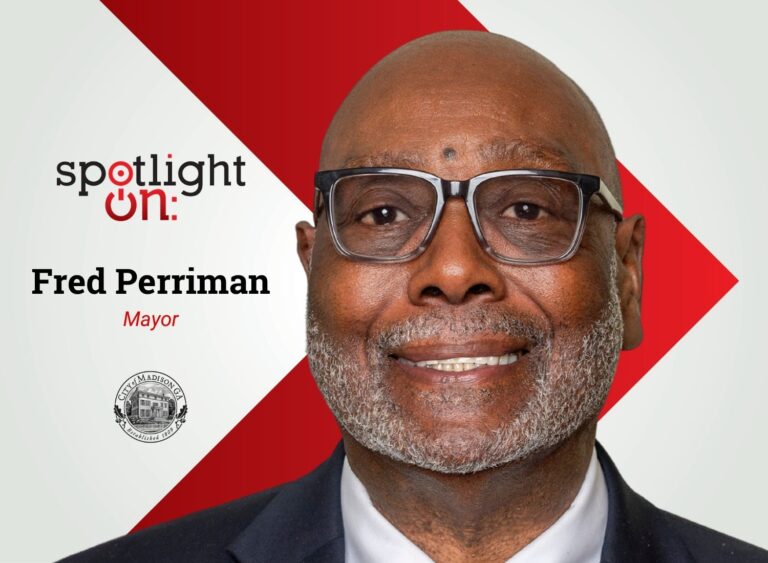
“Companies can test technologies in a real-world environment. We own the streets, sidewalks, streetlights, and infrastructure within the test area, which allows companies to move quickly from concept to testing,” Mike Mason, mayor of Peachtree Corners, told Focus:.
A city as testbed
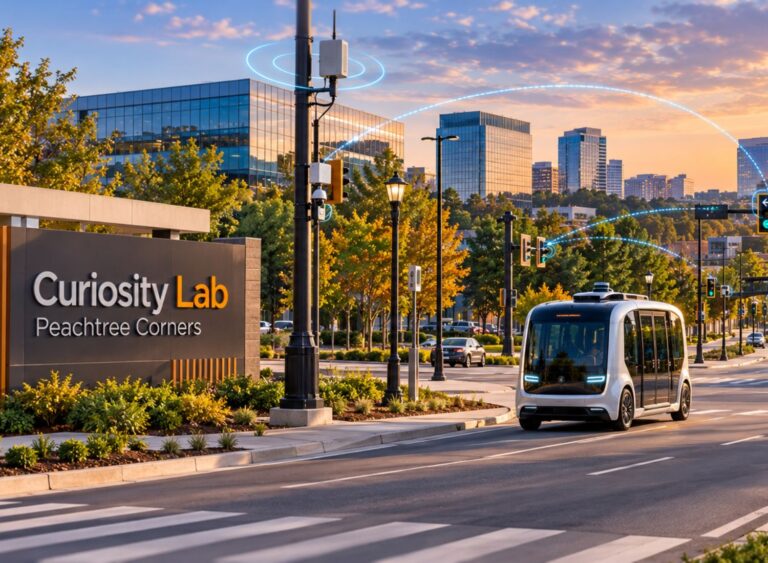
Through Curiosity Lab, owned and operated by the City of Peachtree Corners, companies working in autonomous mobility, robotics, connected infrastructure, and other emerging technologies can test their products under real-world conditions. The city-owned living laboratory includes a three-mile test corridor equipped with 5G connectivity, C-V2X communication, intelligent traffic signals, sensors, and an IoT control room. The corridor connects to public roads carrying more than 14,000 vehicles each day, giving companies an opportunity to evaluate their technologies in live traffic rather than a controlled simulation.
The model is attracting companies from across the technology sector. In Feb. 2026, Arrive AI conducted a live demonstration of its autonomous package delivery system at Curiosity Lab, bringing together representatives from the company, T-Mobile’s local team, Curiosity Lab, and the City of Peachtree Corners. The demonstration was designed to show how Arrive AI’s ground-based robot and drone delivery network could operate in real-world city conditions. It followed Arrive AI’s June 2025 announcement of a partnership with Peachtree Corners and its entry into Curiosity Lab’s ecosystem, including the deployment of its AI-powered Arrive Points at the Innovation Center.
LEOTEK followed with the deployment of its Interlux AI Traffic Signal System, which combines multimodal sensing, edge computing, and C-V2X technology to evaluate intelligent intersections under live traffic conditions. The company is exploring how the system can connect with Curiosity Lab’s broader infrastructure as it works toward expanding AI-powered traffic signals from individual intersections to corridors and citywide networks.
From testing to commercialization
Curiosity Lab’s role is also expanding beyond providing companies with a place to experiment. In July 2026, Peachtree Corners launched its Autonomous Mobility Program, offering selected companies between $25,000 and $250,000 to deploy and validate autonomous mobility technologies on the city’s nearly four-mile route.
The program is targeting autonomous passenger shuttles, delivery vehicles, logistics platforms, robotic mobility systems and other technologies that are ready for real-world deployment or early-stage scaling. Rather than another controlled testing environment, the initiative is intended to help companies validate products under actual operating conditions while building relationships with customers, partners and investors.
After a year-long expansion of the city’s autonomous route, the program added capacity for new deployments. Its broader goal, according to Curiosity Lab, is to help emerging technologies move from testing toward practical use in cities. Companies can develop and test products in an operating urban environment, gather data from those deployments, and explore how the technology could work at a larger scale.
A growing technology ecosystem
Curiosity Lab is looking to attract a broader mix of technology businesses while building enough concentration across its four focus areas for participants to find the resources needed to move forward, including access to infrastructure, data, potential customers, partners, and capital. The organization describes that approach as a way to build a disciplined technology ecosystem that supports long-term business growth and economic vitality in Peachtree Corners.
“We have welcomed cybersecurity startups, technology companies, and international delegations interested in seeing how the model works.” Mason said, “What we can do is position ourselves as a business-friendly community with a high quality of life, good schools, strong neighborhoods, and amenities that attract both residents and employers.”
The city’s broader appeal includes quality of life as well as its technology infrastructure. In Niche’s 2026 rankings, Peachtree Corners placed No. 6 among the best places to live in Gwinnett County and No. 17 among Atlanta-area suburbs for young professionals, offering a more current measure of its appeal to both residents and employers.
The more meaningful test for Peachtree Corners will be whether companies that come to Curiosity Lab to deploy and validate technology choose to build, grow, and remain in the city. Curiosity Lab’s long-term value will depend on its ability to support that progression.
Want more? Read the Focus: Atlanta report.