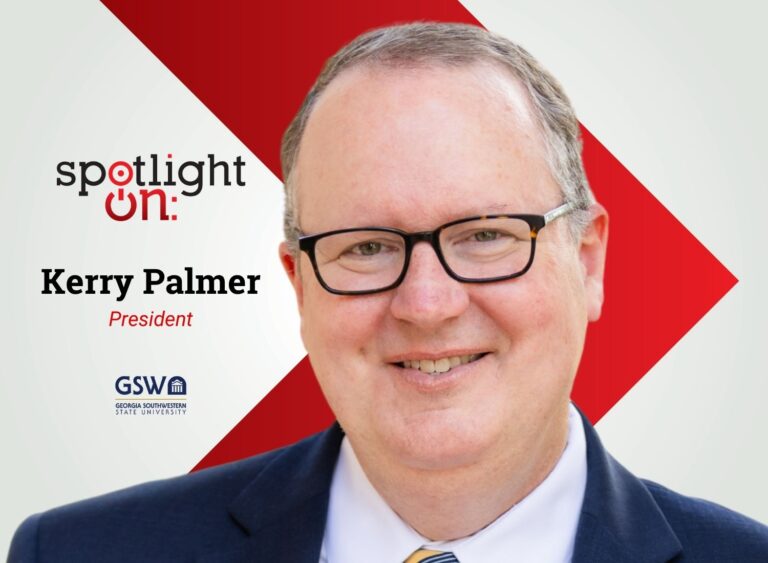
Spotlight On: Kerry Palmer, President, Georgia Southwestern State University
Key points:
- • Graduate enrollment growth is expanding opportunities for working adults.
- • Regional partnerships are aligning academic programs with workforce needs.
- • Student retention, affordability, and career readiness remain central priorities.
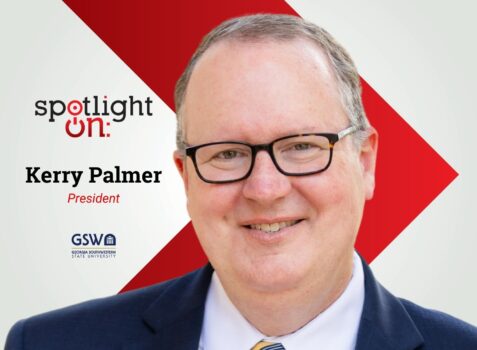 October 2026 — In an interview with Focus:, Kerry Palmer, president of Georgia Southwestern State University, discussed enrollment growth, regional partnerships, student retention, and what success should look like going forward. “Our return on investment is not profit; it is the growth and development of this region,” Palmer said.
Join us at caa’s upcoming leadership summits! These premier events bring together hundreds of public and private sector leaders to discuss the challenges and opportunities for businesses and investors. Find the next summit in a city near you!
What are GSW’s strengths, and where are its opportunities?
GSW is a special place. It serves an important role in an underserved region of Georgia. The institution works hard to make students feel they are part of a family from the moment they arrive. We bring in between 450 and 500 freshmen each fall, and half of our students are first-generation. We give them several days of highly engaging activities because many need help learning how to be college students and building a sense of belonging.
That commitment is also visible among employees. About 40% of our staff are GSW alumni, creating a deep connection to the institution. Our opportunities and challenges include increased competition for traditional undergraduates and very strong growth in graduate programs. Graduate enrollment is up 27%, which creates an obligation to maintain the quality and service that produced that growth while considering new programs that meet regional needs.
What is driving enrollment growth?
Last year, enrollment passed 4,000, and we expect to remain relatively consistent with last year’s record level. Recent growth has been more dramatic, so we expected the pace to moderate.
Working adults are driving much of the momentum. They need high-quality master’s and education specialist degrees that are primarily online, carry a solid reputation, remain affordable, and allow them to keep working. Our education specialist program has about 260 students enrolled this year. Nursing is also drawing substantial interest.
That demand makes us consider what comes next. We could explore a doctorate in education with a specialty relevant to this region or a doctorate in nursing practice. We should also develop more certificate programs for working adults. The principle is simple: Find a need and meet the need. We have to understand what industry in this part of Georgia requires and build programs that help the region grow.
How could the partnership with Phoebe Putney Health System strengthen Southwest Georgia?
The Phoebe partnership can be transformational for Phoebe, GSW, and, most importantly, Southwest Georgia. Our main responsibility is to help make the region a great place to live, raise a family, and locate a business. Education is pivotal, but businesses also consider the quality of the local healthcare system.
Phoebe Sumter Medical Center provides excellent care, and great nurses help make the region attractive. Rather than only telling employers which programs we already offer, I ask what programs they need us to have. Respiratory therapy is one example. The region has a significant need, and GSW does not currently offer that program. Through the Phoebe partnership, we plan to start one.
We have broken ground on a state-of-the-art natural sciences building, Jeanette C. Mix Hall. It will support prerequisites for respiratory therapy and other programs. We want to show employers that they can locate in Sumter County and find high-quality healthcare supported by a four-year institution with a strong nursing reputation.
How does GSW support local schools and broader economic development?
A strong K-12 system is also essential to regional growth. We have a respected College of Education that prepares teachers and administrators. My background includes more than 20 years in K-12 education.
I want GSW to work with Sumter County, Schley County, Lee County, and other systems across the region to develop leadership. That includes superintendents, principals, and district personnel, but it should also include school boards. Board members are elected and may receive limited training in governance. We can help systems build strong governance practices and leadership that make schools in those systems places where strong teachers want to work.
GSW also contributes directly as a major employer, supporting the community through our employees, contracted services, good jobs, benefits, and retirement programs. However, we cannot be stagnant. We need to grow our influence and remain relevant. We should not maintain programs simply because we have always offered them. Our return on investment is not profit; it is the growth and development of this region.
What is your approach to student retention and degree completion?
Leaders need to keep their strategic hats on. The objective cannot be to recruit as many freshmen as possible without considering whether they are prepared for a four-year degree. We are an access institution, but we must carefully admit students who can complete a degree with the support we provide. Once we accept a student, we are duty-bound to do everything in our power to keep that student.
Our robust freshman experience program has helped us retain close to 90% of freshmen from fall 2025 to spring 2026. The next challenge is sophomore year, when many institutions lose students. We are building an aggressive second-year experience program, which will require investment. Once students reach the third year and enter their majors, they are more likely to persist.
We will not deliver for Southwest Georgia unless students cross the finish line. That responsibility begins on day one. Some students may be better served initially by a technical or two-year pathway, and placing them where they can succeed is better than admitting them into a program they are unlikely to finish. We also have to ensure that students do not graduate from programs that will not lead to work.
Why are relevance and affordability central to GSW’s mission?
Every academic investment should answer a regional need. We need to prepare people for work that exists and help employers build the talent they require. Relevance also means listening closely enough to change programs when industry, technology, or workforce demand changes.
Affordability requires good stewardship. We do not need an overgrown administration; we need the structure required to serve students well while keeping costs down. For many students and families, attending GSW is a stretch. Growth is healthier when we retain more of the students we recruit and help them graduate rather than concentrating only on a larger incoming class.
What capabilities should every GSW graduate develop?
Industry partners tell us that graduates often arrive with book knowledge and a solid understanding of their field but need stronger people and life skills. We are going to enhance what is required of students in terms of professional competencies and build them into the curriculum. A GSW graduate should be able to look someone in the eye, shake a hand, speak clearly, and give a presentation. We should not assume those abilities will develop on their own.
Basic personal finance and other life skills are also important, particularly for first-generation students who may not have received that guidance at home. Our size is a superpower. With about 4,000 students, including many online graduate students, we can provide undergraduates with an extraordinary experience.
That experience should include internships, overseas travel, and exposure to accomplished leaders. Many students come from within 50 miles of Americus. We need to bring the world to them and take them to the world. We are developing a graduate profile that begins with the qualities a GSW graduate should possess and then builds the educational experience around that destination.
What would success look like over the next several years?
We are implementing a strategic plan, which was developed before I arrived, and it focuses on people and fundamentals: serving students and serving the region. Success will require us to admit that something that worked for many years no longer works. Higher education must become more nimble and able to pivot when technology or regional needs change.
The institutions that thrive will be able to change direction relatively quickly while remaining grounded in their mission. For GSW, that means preparing the workers Southwest Georgia needs, improving retention and completion, developing relevant programs, and giving students a world-class education that extends beyond classroom knowledge. We should begin with the end in mind and ensure that every choice moves students and the region toward that outcome.
Want more? Read the Focus: Atlanta report.