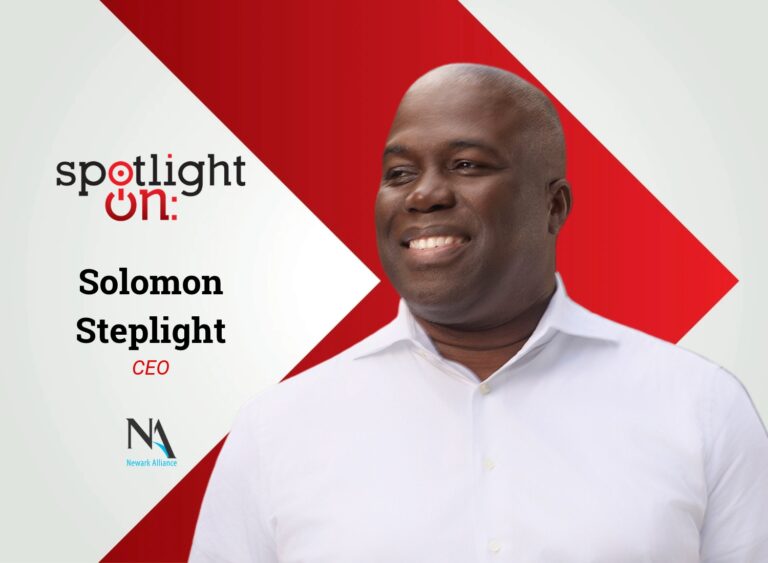

Spotlight On: Solomon Steplight, CEO, Newark Alliance
Key points:
- • Alliance aims to connect $3.5 billion AirTrain investment with downtown.
- • Newark Alliance connects students to member-company internships, apprenticeships, and jobs.
- • Skilled trades and cybersecurity are Newark’s biggest workforce gaps.
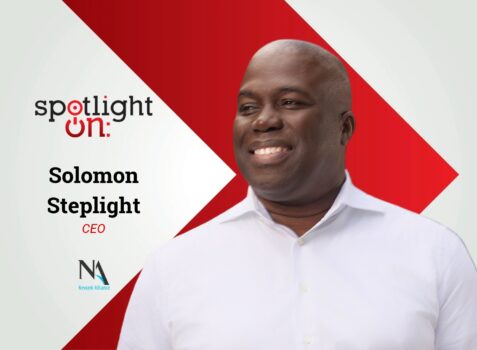 November 2026 — In an interview with Invest:, Solomon Steplight, CEO of Newark Alliance, discussed connecting Newark’s infrastructure investments to neighborhood opportunity, rethinking workforce pipelines, and preserving the people who give the city its character. “I think partnerships are the secret ingredient in Newark’s ability to make this transformation,” Steplight said.
Join us at caa’s upcoming leadership summits! These premier events bring together hundreds of public and private sector leaders to discuss the challenges and opportunities for businesses and investors. Find the next summit in a city near you!
What are your priorities as you begin leading Newark Alliance?
I was born in Newark, and throughout my career, I’ve seen many versions of the city. In taking this job, I want to talk about Newark from a different perspective. At Newark Alliance, we’re organizing our work around four strategic priorities: expanding economic opportunity, improving quality of place, accelerating innovation, and using data to drive better investment decisions.
Every initiative we undertake should help residents, businesses, and institutions capture more value from Newark’s growth. We’re close to New York City, with an international airport, an international port that’s the country’s third-largest, interstate highways and rail, and the backbone of the internet running through our center city. The metropolitan statistical area encompassing New York City and Newark has a GDP approaching $2.3 trillion a year. We have an opportunity to leverage economic strength and connectivity to create opportunities across Newark’s neighborhoods. That’s where the partnerships that define Newark Alliance come into focus.
How does your small business support program connect businesses with growth?
Our program helps new and existing businesses grow by providing gap financing and connecting them to customers and new markets. The question isn’t whether investment is coming. It is whether Newark-based residents and businesses are positioned to participate in that investment through jobs, contracts, entrepreneurship, and ownership. Over time, development will create more residential density, which will benefit those businesses.
There’s also a real opportunity for connecting those investments with downtown. The Port Authority has announced a $3.5 billion investment in the AirTrain system. There’s a multibillion-dollar airport investment underway, and Lionsgate Studios Newark is being developed. A great deal of investment is happening on the south side of Newark and connecting that with downtown creates opportunities for local businesses.
How can Newark connect technology and logistics growth with residents’ needs?
My background shapes how I think about that. Newark can make this connection by expanding its workforce development initiatives under the guidance of corporate and anchor partners. We are connecting Newark students directly to internships, apprenticeships, and employment opportunities with Newark Alliance member companies, ensuring that world-class employers and local talent are connected earlier and more intentionally. Our residents need the skills and access to the employment opportunities that the local investment in technology and logistics will create.
I earned undergraduate and master’s degrees in mechanical engineering, focusing on autonomous robots and machine learning, so I have a particular perspective on technology and the logistics we’re discussing. I also served as COO and CFO of Girls Who Code, which focused on developing middle and high school girls interested in computer science. Along with my work with Braven, I see how those organizations created talent pipelines that help corporate human resources and marketing departments find talent and efficiently address their objectives. The density of Newark’s talent pool combined with easy-to-access career pathways will give local businesses a competitive advantage. As national priorities and economies change, we need to revisit the pipelines that fuel growth.
Every Newark resident and visitor should be aware of the opportunities that exist here. Companies are looking for talent, infrastructure, affordable real estate, and low-cost transportation or service delivery. Newark’s proximity to New York City and the world, our universities, and our logistics network give us an enormous advantage. We’re committed to raising awareness, upskilling and training people, and supporting businesses that want to participate. The pieces already exist; our focus is reconnecting them into a pipeline that supports growth.
Where do you see the biggest workforce gaps and opportunities?
The biggest workforce gaps are in skilled trades and cybersecurity. When I began working at Girls Who Code in 2014, I noticed that many cities and states had outdated definitions of computer science. The AP Computer Science exam was based on a language many new companies no longer used, so earning a five didn’t necessarily prepare someone to walk into a job. As we move toward an intelligence-driven economy and prepare for what I think will be the next wave of energy production, construction, and robotics, we need changes in higher education, workforce development organizations, and K-12 education.
We must rethink what prepares people for the future. There’s tremendous demand for electricians and plumbers, both because of housing needs and their importance to the technology economy. We also need people who understand philosophy, English, and history. As machines become capable of thinking, employees need strong critical and computational thinking skills. An interdisciplinary approach matters more than it may have been ten or fifteen years ago. I’m excited to work with our education and workforce partners to help people direct their careers toward something meaningful to them.
What are Alliance members discussing about the innovation economy?
They’re considering what the cost of compute means for everyday operations and for funders. The ripple effects touch mission statements, fundraising, hiring, and how organizations deliver products and services. Our members include some of Newark’s largest and most impactful institutions and companies, and the city is a member and represented on our board. We have frank conversations about what changing economic priorities mean for housing, food insecurity, job attainment, and business retention. This shift is touching every part of our economy.
How do partnerships help turn investment into broader opportunity?
I think partnerships are the secret ingredient in Newark’s ability to make this transformation. Those relationships extend beyond our membership into the wider Newark community. In conversations, things get lost in translation. The reasons might be cultural, technical, unfamiliar technology, or simply a bad day. The strength of our network, including our anchor institution and food insecurity work, is that someone at the table can provide a definition or context and keep the work moving. In isolation, a misunderstanding can make people defensive or cause them to pull back, and the work stops. Through our partnerships, we reach every resident and can bring people along by overcoming obstacles collectively.
What challenges must Newark address as investment increases?
Newark isn’t a city on New York City’s scale, but it’s a global city with extraordinary connections. We must continue to address affordable housing, workforce development, and business attraction initiatives while protecting the cultural elements that make Newark distinct. We’ve seen cities lose that character around the world. We need to keep our vibrant, culturally rich communities right here and involved.
The city is fully committed to this and knows our residents have the talent to succeed. The challenge is helping people recognize the value and translate yesterday’s skills into what they’ll need tomorrow. That affects affordability, housing, food insecurity, homelessness, and quality of life — from public safety and open space to downtown events, canopy creation, landscaping, and renovating green spaces.
We also need investors to understand the value of these efforts. Some want substantial returns with minimal risk, and we need to show why this work is an important leverage point for the capital they want to commit. NJIT, Rutgers-Newark, and other universities sit near downtown, with proximity to the port and Penn Station. We have underused buildings and infrastructure. There’s an opportunity for investors to find value while the people already here benefit from and help drive that activity.
What opportunities will guide the Alliance over the next two to three years?
We have an opportunity to become the city’s convener of economic intelligence. By bringing together data from corporations, nonprofits, institutions, and government, Newark can make smarter decisions about investment, workforce, and community outcomes. The goal is to capture more economic value created here in our neighborhoods. Major airport and station investments bring more people through those facilities. Investment in parks, water systems, and public infrastructure can benefit more residents. We want every person in every neighborhood to realize more of that value, whether through a job, housing, improved quality of life, or greater food security.
People need to understand how investment outside their door translates into daily life. In markets and data, successful patterns attract people looking to create wealth and value. But outliers can hold unexpected opportunities precisely because they don’t fit the usual pattern. I hope people eventually recognize why they underestimated Newark. We may not fit their conventional picture of a global city or a place undergoing transformation, but we belong in that conversation. That outlier status could mean outsized returns in someone’s future.
Want more? Read the Invest: New Jersey report.