

Face Off: Capital flows into North Texas healthcare
Key points:
- • North Texas’ population has grown 11% since 2020, and hospital systems are responding with billions of dollars in new hospitals, added capacity, and specialty-care facilities.
- • Hubert Zajicek describes how venture capital and international companies can build a life sciences hub, while Jay deVenny describes what delivery takes amid that growth.
- • Healthcare systems are adding capacity, including expansion project from Parkland Health and Texas Health Resources.
 October 2026 — North Texas healthcare investment is accelerating as population growth drives demand for hospital capacity, specialty care and life sciences investment. Workforce and insurance pressures are emerging alongside that expansion.
Join us at caa’s upcoming leadership summits! These premier events bring together hundreds of public and private sector leaders to discuss the challenges and opportunities for businesses and investors. Find the next summit in a city near you!
The Dallas-Fort Worth-Arlington metro area reached 8.5 million residents in 2025, up 11.0% from April 2020, Census Bureau estimates show. It gained about 270,000 residents through net domestic migration over that period more than any other U.S. metro area.
Healthcare systems are adding capacity. Parkland Health is adding 112 beds at Parkland Memorial Hospital bringing it to more than 980 licensed beds. Texas Health Resources plans a 60-bed hospital in north McKinney, expected to open in early 2029, with room to double.
Larger investments are reshaping the region’s healthcare footprint. UT Southwestern and Children’s Health topped out the 552-bed Moody Children’s Hospital in September, part of a $5 billion pediatric campus scheduled to open in 2031. Also, according to Medical City Healthcare, they will invest about $1.7 billion in the market over five years. Medical City Healthcare currently operates 22 North Texas hospitals.
Capital is also moving into research and life sciences. Texas voters approved creation of a $3 billion dementia research fund in 2025. Novartis broke ground in May on its first Texas manufacturing facility, a radioligand therapy plant in Denton. Health Wildcatters has invested in 130 startups over 13 years.
Invest: spoke with Hubert Zajicek, CEO of Health Wildcatters, and Jay deVenny, CEO of Medical City Dallas, about demand, investment and what it will take to sustain North Texas healthcare growth.
What is driving North Texas healthcare growth?
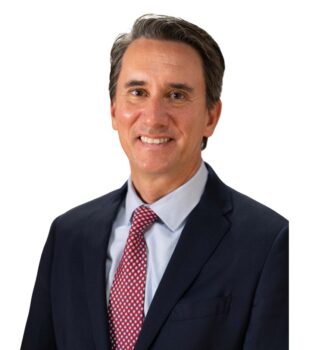 Hubert Zajicek: North Texas is a large, wealthy region with an educated workforce, low barriers to starting a company, lower overhead, at-will employment, and a comparatively low cost of living. When we began, we received a few dozen applications for 10 places. We now receive almost 600 applications for those 10 places.
Dallas-Fort Worth has roughly the population of Austria, and that scale matters. Sometimes a new treatment needs 100 patients with a particular condition, which requires a metropolitan area with millions of residents.
 Jay deVenny: North Texas remains in a strong position because it has some of the country’s fastest population growth. Demand for healthcare remains high, and we continue to improve so we can care for patients and accommodate the region’s expansion.
Healthcare is one of the region’s largest economic sectors and employers. Medical City Dallas alone employs more than 3,000 people. Population growth, including growth among residents 65 and older, means demand for healthcare will not decline.
Where is capital going, and where does the region still need more?
Zajicek: We have to be realistic about the established strengths of other cities. San Francisco remains a world leader in venture capital and technology startups, while Boston is a leader in biotech and life science research. Dallas is not yet established as a life science hub in the same way, but it has critical mass and is growing.
Over the next 12 months, our goal is to increase our reach from the current 103 VC firms to 200, expanding access to capital, strategic connections, and investment opportunities for healthcare innovators.
deVenny: HCA and Medical City Healthcare operate 22 hospitals in North Texas and are investing about $1.7 billion in the market over five years. We made a $77 million investment in a 33,000-square-foot ICU and step-down unit for the Pediatric Congenital Heart Center.
Freestanding ERs are an important access point. We have one located in Garland today and plan to add more in medical deserts — areas without healthcare within a close radius to our main facility.
What will North Texas need to support continued healthcare growth?
Zajicek: Dallas has 10 to 12 hospital systems competing across the region. For a startup seeking a pilot with a health system, this creates 10 or 12 opportunities. If one system is not a fit, another may be.
They are now looking for efficiency and considering whether they can be the first in the region to offer a new service, cancer treatment, or way of addressing a healthcare problem.
UT Southwestern adds another level of research strength, with nearly 600 labs and significant grant funding. The proximity of so many researchers, providers, systems, patients, and investors creates competition and opportunities for breakthroughs.
deVenny: Workforce availability is one of healthcare’s biggest challenges. After COVID, many nurses left bedside care for outpatient clinics and other roles. Our parent company, HCA Healthcare, is helping build a pipeline through nursing schools and education programs.
Employees who begin as patient care technicians, sitters, or in other positions may aspire to become nurses. We have upskilling programs and can help place eligible colleagues in nursing school, giving them a path to grow within the organization, often at no cost to them.
Our medical residency program continues to expand. Medical City Healthcare has more than 300 residents and fellows across 10 campuses. As we add beds and capacity, we must retain and recruit the nurses needed to staff them.
AI is important to the further growth of our organization. One current application helps populate nursing schedules. The system can evaluate historical patient volumes, trends, staffing ratios, and the number of nurses needed on a floor on a particular day. It then pre-populates a schedule that leaders can edit instead of building the entire schedule manually.
What could shape the region’s next phase of healthcare growth?
Zajicek: We also see a significant opportunity to attract more international startups to Texas and further position Dallas and North Texas as a growing hub for biotechnology and health innovation. Over the next two months, Health Wildcatters will welcome delegations from Japan, the Netherlands, Belgium, and Sweden, advancing cross-border collaboration, investment, and market expansion. Our goal is to attract at least 10 European company headquarters to Pegasus Park by 2028.
deVenny: One of the biggest changes this year has been the number of people without insurance coverage. The enhanced premium tax credit was not continued in Washington at the beginning of the year. Without the credits, a significant part of the population can no longer afford those plans.
Higher costs for goods and fuel can lead people to delay healthcare. We then see patients when they are more ill, even though it would be better to help them earlier and potentially before hospitalization.
Want more? Read the Invest: Dallas-Fort Worth report.