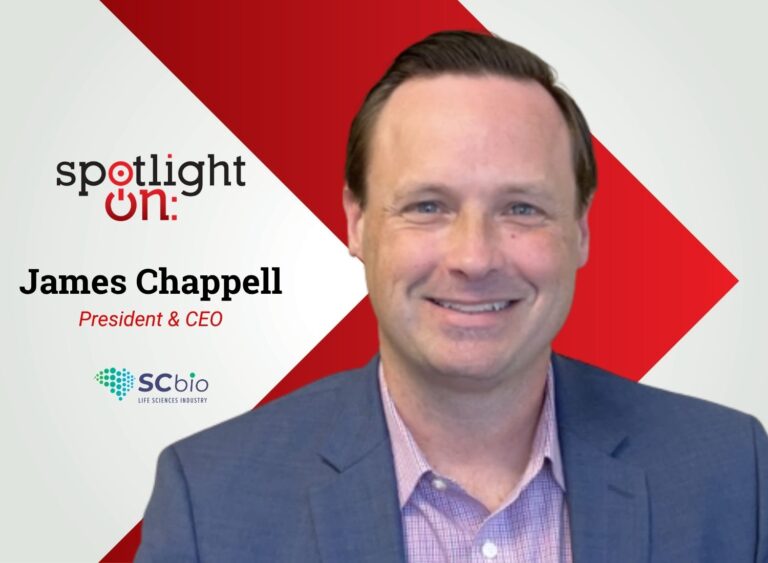
Jean-Luc Caous, President, Project Management Institute South Florida
 Invest: sat down with Jean-Luc Caous, president of Project Management Institute South Florida, to discuss member engagement, mentorship, and how the organization is evolving alongside the project management profession. “It is really about keeping that full engagement circle to make sure we are providing what members are looking for, with networking and educational opportunities,” Caous said.
What strategies do you use to measure the real impact of your programs on members’ careers and leadership development?
It is about connecting with the members. When people join, there is a big initiative to welcome them. A lot of people are joining because many organizations require the Project Management Professional (PMP) certification, and they learn about our chapter through training classes and professors. We want to give them a more personalized welcome, not just a welcome email, so that when they join an organization that is not for profit and run by volunteers, they feel a sense of belonging.
We ask what they are looking for, whether it is education or support to pursue certification, so they can line up a career. We are big on networking events, where we look to connect members with different organizations. Our sponsors include recruiters, and we are also looking to link to the business community. In the next few months, I am looking to connect with chambers of commerce to see what skill sets companies are looking for and keep that aligned with what project managers are developing.
It is about keeping that full engagement circle to make sure we are providing what members are looking for, with networking and educational opportunities. We are also partnering with universities so that we can align and find resources for members to attend project management programs or certification boot camps.
With more than 3,000 members across multiple countries, how do you keep engagement high and make members feel personally connected to the chapter?
That is the big challenge, especially the personal connection. This year, we started a monthly Open House (onboarding) where everyone who joined in the last 30 days gets a personal welcome. We use a slide deck curated by PMI Global to personalize the experience.
It describes what the chapter is about, how many members there are, what industries they are in, and how many are certified. It also shows how the board operates and how the chapter functions like a traditional business, with different divisions. Those roles are opportunities for members to grow their skill sets if they choose to volunteer.
Volunteering is key to propelling your career and networking. The onboarding also shows how being engaged connects you to people at the national level and, for those in leadership roles, even globally. From my experience, I have built relationships across industries and countries through that involvement, and I want to share that with new members.
How do you decide which initiatives deliver the most value in today’s evolving project management environment?
We are reevaluating that based on members’ needs. We look at historical data, outcomes, and surveys conducted by PMI Global to align with what people are looking for.
We have had to adapt. We used to have more formal events, but now there is a more dynamic and younger community stepping in. They are looking for networking that is less formal, but more engaging and personal. We are adapting our events to align with that.
How are your partnerships with universities helping bridge the gap between academic learning and real-world project experience?
With universities, we focus on students in project management programs. We are building relationships with institutions across the region, including Florida International University, Florida Atlantic University, Nova Southeastern, Florida Memorial University, and Palm Beach State College. We bring the PMI framework into it, not just knowledge areas, but a broader perspective. Running a project is not just about time, budget, and scope. It is about being strategic and understanding how your project aligns from an executive perspective.
We help students build that perspective so they are aligned with what employers and executives are looking for when they graduate.
How is the chapter helping members stay ahead of technological disruption, including AI?
That is a challenge. We bring knowledge based on what we hear from recruiting firms, since they see what companies are experiencing. We then share that through events and newsletters.
AI is a big disruptor, but it is about retooling how you use it. It is not replacing your job, but helping remove more mundane tasks so you can think more strategically. That is the framework we are bringing to members. We pair this lens with power-skills training delivered through service partners like Academy Leadership, because the human side of project work — collaborative leadership, communication, decision-making — is being reshaped just as much as the technical side.
What gaps in the project management talent pipeline are you trying to solve right now?
Mentoring is a big one. There are many newcomers and younger professionals, and also people like me who are later in our careers. That creates an opportunity to share experience and perspective.
It is a popular program. We actually have more difficulty finding mentors than mentees. These relationships often continue beyond the program and become long-term professional connections. Beyond mentoring, we are expanding our Project Management Conference to include a stronger presence from staffing partners, and we are piloting a Recruiter Coffee Chat that gives members more direct access to local hiring managers.
What industries or project types stand out most in South Florida?
Based on the region, construction is prominent. Healthcare is an area I am targeting. Energy and utilities are also significant, with Florida Power & Light. Transportation and logistics are important, with the Port of Miami and American Airlines.
Financial services are also strong, with companies like AutoNation, JPMorgan Chase, and American Express having a presence. These industries have many project managers and provide opportunities to showcase impactful projects.
Looking ahead, what are your top strategic priorities?
Our top three strategic priorities for 2026 are increasing and retaining membership, increasing and retaining volunteers, and enhancing our strategic community and business partnerships.
A big aspect of that is connecting people. It’s about connecting people on a personal level, and the successful project they deliver creates that personal touch.
One initiative is improving how the chapter operates. We are project managers, but we do not use a formalized methodology to manage the full portfolio. Since we are volunteers, there is an opportunity to partner with an organization that provides tools so we can learn and build a portfolio like a world-class organization. That directly supports our volunteer retention goal: the more professional our internal operations, the more our volunteers grow as leaders and the longer they stay engaged.
That creates personal growth and helps build something that future members can continue to develop.
Is there anything else you would like to highlight?
Everything is about connecting people, personalizing the experience, and creating a place to grow. We are all volunteers, but it is an opportunity to develop. In your own organization, you may not have the chance to be at the executive level, but here you can. Anybody can step into leadership and define their career path. We are that stepping stone and can connect you to the wider world and get the opportunity to achieve your goals.