
 December 2025 — The architectural and development industries face significant challenges as economic shifts, particularly rising interest rates, create a cautious environment for new projects. This has led to a clear divide in the market, with larger developers weathering the storm more easily than their smaller counterparts. “The smaller ones are a little bit more hesitant to initiate new projects until they have a better understanding of what they believe the future will be,” Keith Michels, co-founder of architecture and planning firm Michels & Waldron Associates, told Invest:.
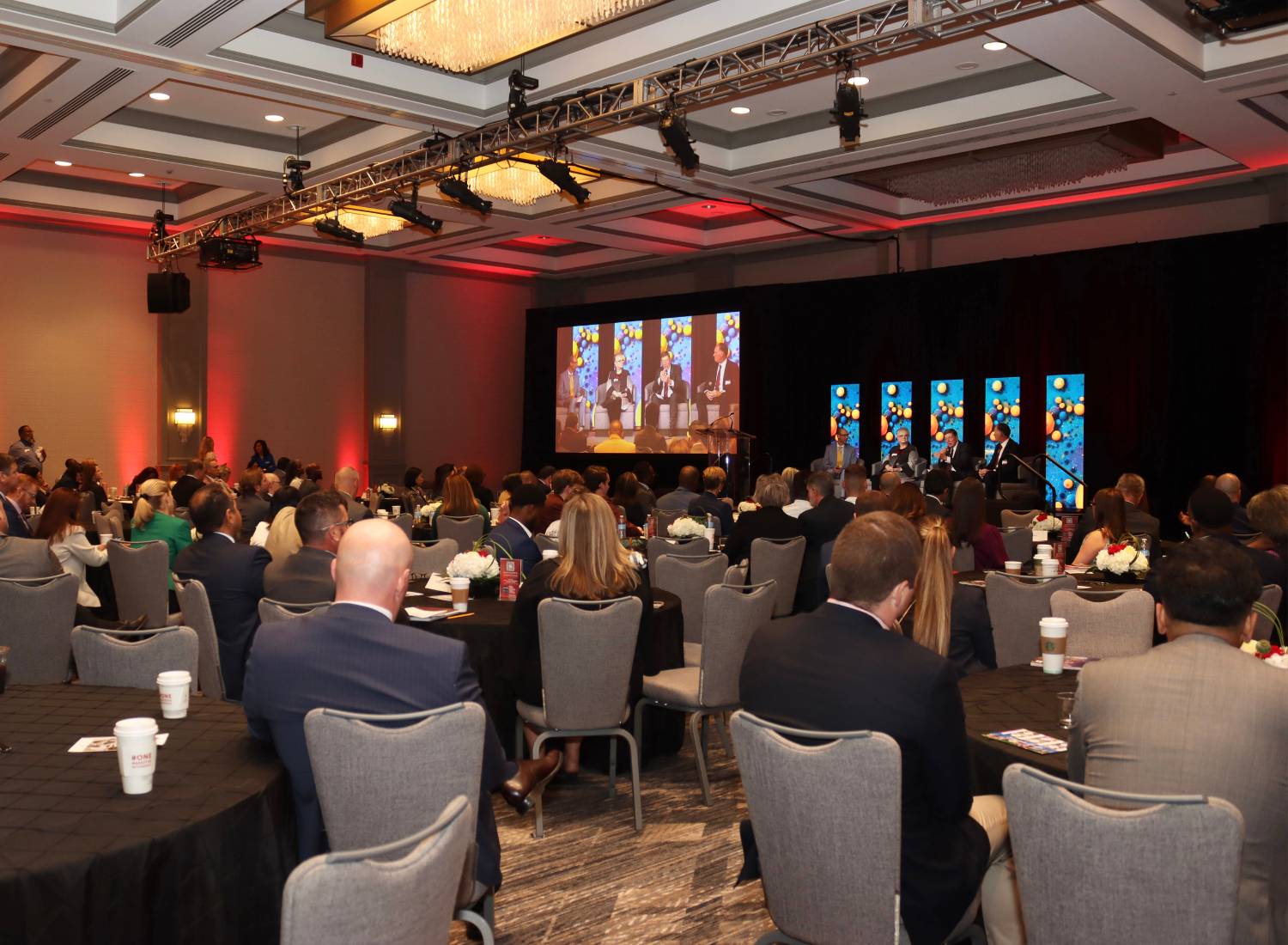
Join us at the Invest: New Jersey 6th Edition Leadership Summit! This premier event brings together hundreds of New Jersey’s business and regional leaders to discuss the challenges and opportunities for businesses and investors. Buy your ticket now!
What changes and milestones have most impacted Michels & Waldron Associates in the past year?
Interest rates have affected the development of some of our projects. The larger developers continue to move forward comfortably. The smaller ones are more hesitant to initiate new projects until they have a better understanding of what they believe the future will hold.
Another factor that has affected many of us is that people aren’t working in the office the same way they used to. One fellow who lived in New Jersey for many years and worked with us now lives in South Carolina and does some of our architectural work and most of our IT work. Another fellow, a talented design person, moved to the Washington, D.C. area. We’re able to function quite well remotely.
Those are the big things that have affected us in the last couple of years. Fortunately, our clientele is diverse, and the type of work we do is diverse enough that we’ve been able to weather the challenges rather well.
What key economic factors are shaping new design trends or development trends in New Jersey?
I’m not sure you’d call it a social trend, particularly, but it’s connected: the cost of construction and real estate valuations. It’s a different world than it was, say, 10 years ago, 20 years ago, 30 years ago, and 40 years ago.
I reflect back on the times that I was with some of the larger developers and also did a number of smaller projects. The smaller developers were still readily able to enter the marketplace, perhaps finance themselves differently, and move along.
Today, it is a different economic environment. As architects, we need to recognize that we’re also being impacted by those pressures, and we have to understand them. We need to understand the world and the pressures that the developers face. That helps us stay alive as a company and enables us to flourish.
What are the key drivers of business activity for your company?
When we look at the private sectors driving most of the activity, we see that it is in areas like multifamily or healthcare. Our company is involved in both of those categories. We probably do several thousand multifamily units a year, which is a lot for a small firm such as ours. That multifamily work comes from larger public companies, and it comes from smaller private folks. The private sector has been more impacted by the recent financing restrictions than the public companies.
We do a fair amount of healthcare work. We recently completed a ground-up 120,000-square-foot building in New Jersey, 50% of which was leased to Hackensack Meridian and 50% to St. Joseph’s Hospital. Surgery suites, medical offices, and various medical facilities were included in those buildings.
In addition, we’ve done a fair amount of work for a private developer in the former Muhlenberg Hospital, with some of those areas being converted to more private medical functions. We are currently active in both healthcare and multifamily housing and have found both remain active.
We additionally own several office buildings with major hospital tenants. We get to experience that world as architects, developers, and landlords.
Have you noticed any changes as remote work continues to evolve?
It is dependent on the size of the building. For smaller buildings, some individuals tend to want to have an office outside of their home, and it might be a mile away from where they live. They get the office activities out of their home, but they can more effectively maintain a life/work balance. I also believe that this type of activity, going from the office to the home, allows the economy to continue to develop because there is more activity in the community.
How are these types of services, from an urban perspective, integrated into creating a healthier community?
The simple answer is that the neighborhoods are reinforced by having a method to resolve the home-life-work situation, and resolve it in a way that becomes comfortable.
We had a fellow who took one booth in our architectural office. He lived in town. He ran a 200-person company located in Columbus, Ohio, and in South Carolina. He was away three or four days a week. He had three or four kids at home. He did not want to bring that work into his home life when he was home. He would pop in here on Thursday afternoons or Saturday mornings. For a few hundred dollars, he had a place to go. We had an interesting person in our midst who was able to have some interesting perspectives.
All of these people who come from or are living in different worlds and have different careers can find a spot under a roof like ours to go about their business. They can share their world as much as they choose to or not choose to. It is all about perspective and expanding the horizon on how this mix of interdisciplinary experiences can bring more opportunities for architectural developments.
How do you invest in talent growth and mentorship, as well as create a sustainable climate within your office?
It’s a process. Within our office, it’s a constant effort. There are a variety of needs we have now that are different from the needs that we had, say, two or three years ago, or that we will have two to three years from now. It’s a world where we try to stay on top of everything.
Where do you see Michels and Waldron in the coming three to five years?
We’ll continue on the healthcare side. In the past, we had done a fair amount of hospitality work that disappeared at the beginning of COVID. I expect that will return in some way. We also used to do more retail work, and I still see large retail opportunities. These different worlds are beginning to combine in certain ways, where there is residential development included in the renovations of large shopping centers and large retail environments. Healthcare is also included in some of those environments.
To the extent that we can use our knowledge of all of these different use categories, and we believe we know the logical ways in which they can be combined and reimagined, we can offer our clients some things that perhaps other architectural firms may not. So, does that mean growth? Yes, I hope so. It is also exciting to see where the new developments will be and what will be mixed into the projects developed in the coming years.
Want more? Read the Invest: New Jersey report.
Subscribe to Our Newsletters
"*" indicates required fields