
‘Ready sites’ speed industrial real estate development

Key points:
- • Lexington County took Cardiff Products from announcement to production in about 14 months because roads, water, sewer, and grading were already in place.
- • Nassau County is preparing industrial land near I-95 before it recruits tenants.
- • Data center growth adds electricity and water demand that Atlanta-area leaders are weighing against jobs and tax revenue.
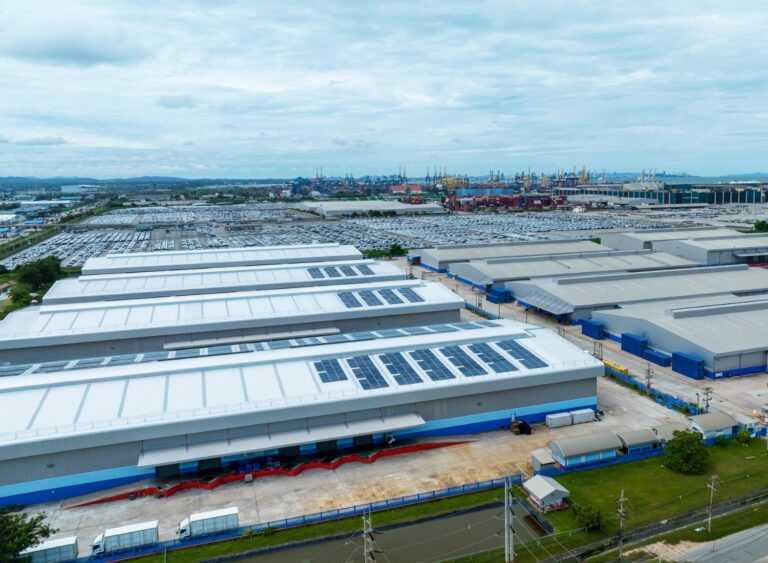
 November 2026 — Industrial real estate development across the Sunbelt is shifting toward sites that are ready before a tenant arrives, and the months saved on permits and utilities now decide where projects land.
Join us at caa’s upcoming leadership summits! These premier events bring together hundreds of public and private sector leaders to discuss the challenges and opportunities for businesses and investors. Find the next summit in a city near you!
“Cardiff Products is a great example of our proactive approach. Before the company committed to the project, the industrial park already had roads, water, sewer, and site grading completed,” said Garrett Dragano, director of Lexington County Economic Development, in an interview with Invest: South Carolina.
“One unique thing Lexington County does is leave site permits open. Instead of requiring the company to begin the permitting process from scratch, we were able to transfer the permit directly into its name. We announced the project in February 2025. That same week we approved the property sale and tax agreement, held a pre-construction meeting, and construction began the following day. By April 2026, the company had received its certificate of occupancy, completed testing, hired employees, and was producing products from its 95,000-square-foot facility.”
That is about 14 months from announcement to production. Every month a site waits on permits or utilities is a month a tenant is not producing. On unprepared sites, securing commercial building permits for large-scale industrial facilities typically requires four to 18 months, while utility power interconnection can add another eight to 18 months for standard distribution service and up to 30 months or longer for higher-demand loads.
Demand raises the stakes
“Industrial continues to be the golden child across South Carolina. The Upstate, in particular, is reaching record levels of industrial activity. Manufacturing and distribution have always been an important part of South Carolina’s economy, but demand is expanding beyond traditional manufacturing and distribution,” said Audrey Frey, senior managing director and market leader for CBRE South Carolina, in an interview with Invest: South Carolina.
Record activity means more industrial real estate development projects compete for the same prepared sites. Counties that finish the groundwork first have the advantage. Across the Greenville-Spartanburg industrial corridor, strong tenant demand drove positive net absorption of 2.4 million square feet as vacancy tightened to 5.3% in 2Q26, according to CBRE market data.
Florida lays the groundwork
Harvey Ward, mayor of Gainesville, said in an interview with Invest: Jacksonville: “The impetus for the Streetery was rebuilding the infrastructure underneath it. When the Hyatt was developed downtown, we used that opportunity to replace infrastructure and create conditions in which businesses could thrive for the next 50 or 100 years. Infrastructure that does not function is not charming. We want reliable infrastructure that welcomes investment.”
Gainesville’s downtown rebuild is not an industrial project, but it follows the same sequence as Lexington County’s industrial park: the groundwork comes first, and the investment follows.
Builders race the clock
Once the groundwork is in place, speed depends on sequencing. Jesse Bentley, executive vice president and regional director of Evans General Contractors, said in an interview with Invest: Jacksonville: “Once one part of the design is firm, we can begin procurement. Materials have experienced supply-chain shortages and longer lead times before, during, and after COVID. Understanding those conditions and ordering early helps prevent delays. We can also start construction sooner. If site work is complete before foundations, vertical construction, or tenant build-out designs are finished, we can break ground while design continues. That is the fast-track design-build process.”
Early groundbreaking depends on site work finished first. A ready site gives builders that option, and a raw one does not.
“Projects are complex, timelines are tight, and skilled labor continues to be in high demand. With these issues working against us, early collaboration is critical for a successful project,” said Lane Nelson, president of Abercrombie Specialty Contractors, in an interview with Invest: Jacksonville.
The data center impact
A third element to consider is the availability of utilities, and energy in particular. This is particularly important given the rising demand for data centers, which are heavy users of both electricity and water.
Atlanta offers a good example of the pros and cons.
Maceo Rogers, president and CEO of the Development Authority of Clayton County, said in an interview with Focus: Atlanta that data centers are adding a second claim on land and utilities in metro Atlanta: “We have to look at the investment they bring, the jobs they create, their tax contributions, and their overall impact on the community. We also know they consume significant amounts of electricity and water, and there are environmental and health concerns that residents may have.”
Utility load is a variable industrial developers cannot control. Nationwide, more than 2,600 gigawatts of generation and storage capacity are currently stalled in grid interconnection queues, with median wait times exceeding five years, according to Lawrence Berkeley National Laboratory and federal energy data, leaving regional utilities struggling to keep pace with simultaneous surges in manufacturing and data center power demand.
What to watch in 2027
The pattern that shaped Gainesville’s downtown and Lexington County’s industrial park will also decide the Sunbelt’s next wave of development: the groundwork comes first, and the investment follows. In 2027, the factors to look at include how many development-ready acres counties add, how quickly projects move from announcement to construction, and how leaders handle data center electricity demand. Together they show which markets have laid the groundwork and which can build on it quickly.
Want more? Read the Invest: reports.