






Alfred Sanchez, CEO, Greater Miami Chamber of Commerce
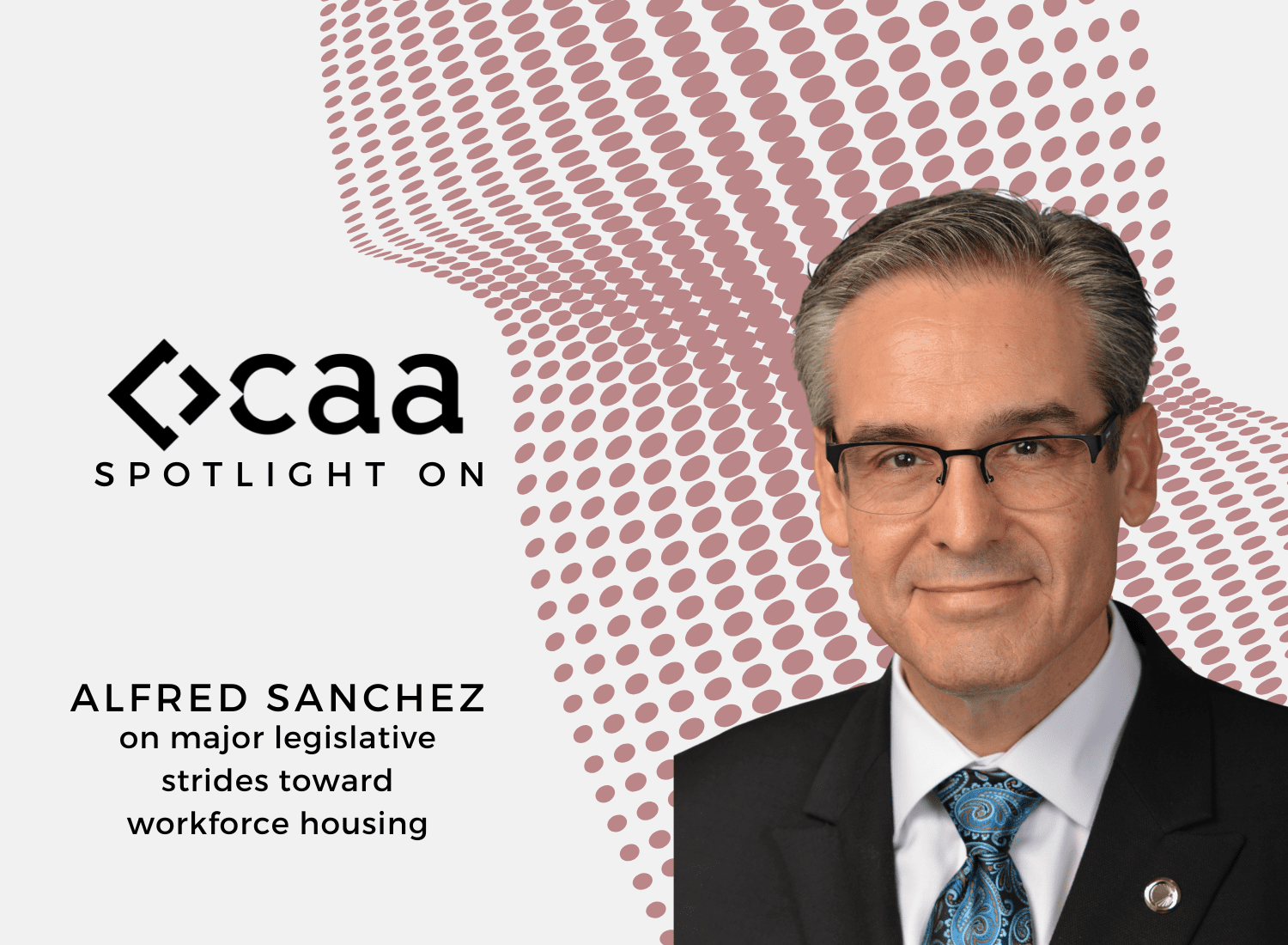 February 2025 — In an interview with Invest:, Alfred Sanchez, CEO of the Greater Miami Chamber of Commerce, discussed how the chamber is working toward transitioning Miami from a low-paying services economy to a high-paying tech economy. He also addressed how challenges such as the high cost of living, impact the need for workforce development and higher incomes.
What have been the most significant milestones and achievements for the Greater Miami Chamber of Commerce over the past year?
Everything we do is focused on four priorities that are seminal to the continued growth of Miami: transportation, workforce housing, workforce development, and resilience. We need to move the needle on transportation, develop affordable workforce housing as we have become a new tech hub, retool our education and training for both traditional education and the retraining and upskilling necessary to meet new opportunities, and resilience in terms of dealing with the sea level rise and climate change.
We have made major legislative strides toward workforce housing, such as passing the Live Local Act, which has spurred a lot of development. We are also committed to transit-oriented development, so we focus on ensuring density along the transportation corridors. While we are not fans of threats to home rule, we would not have achieved an uptick in local development without pressure from the state because some municipalities are against high-rises, which means low density. The matter now is getting those projects going, but it was a major win in the past year, in large part thanks to our Miami-Dade state delegation, especially Senator Alexis Calatayud who carried the bill, and Representative Vicki Lopez who supported it in the House.
What role does the chamber play in finding or implementing innovative solutions to climate concerns?
We have focused on this issue for more than 10 years. Irela Bagué, who is the founding chair of our resilience committee, says Miami’s environment is our business. Not only is that true, but it was also one of the reasons why so many people moved here during COVID-19. They did not just come here because we were open for business, but also because we have such a beautiful environment in which to do.
It may seem an ironic statement to some, but the chamber believes that the answer to climate change can only come from business and industry. Real solutions to major problems throughout history were also developed by industry. Elon Musk’s work with Tesla and the advances in batteries are examples of that. Additionally, Miami has been designated by the U.S. Commerce Department as a global climate tech hub, and a lot of investments and incredible business solutions are coming out of that. For instance, there is a company, Carbon Limit, that invented a concrete additive that actually captures carbon. Such solutions go beyond just dealing with the rising seas by putting up a wall. They are reversing the cause of climate change.
How is the chamber working to develop the business leaders of the future?
Everyone in the industry needs to worry about how to produce the leaders of tomorrow today while keeping in mind that things will continue to change. The question is how we understand where that change is going so that we can develop our leadership to meet that new reality.
We are focused on leadership development because it has changed a lot. Some 40 years ago, businesses were built to last, so management training was focused on that. Businesses nowadays are built to change, so the qualities needed for business leadership today are different. We have incorporated that into our Leadership Miami program. As part of that program, we take around 100 up-and-rising executives through an intensive four-and-a-half-month program. We have partnered with all the universities to form a faculty for the leadership portion of that program.
What is the strategy of the Greater Miami Chamber to both attract new business and investment to the region and support the local business community?
In terms of attraction, we are always looking to help bring companies here. Going out and getting businesses to come here is such an important job that it requires its own organization, so we created the Miami-Dade Beacon Council in the 1980s and work in partnership with them. We have an active international program that has made several trips with our mayor to Israel, Japan, Argentina, and other places.
Our mission is nevertheless more focused on taking care of the businesses that are here. When those organizations come, we try to incorporate them into the chamber and help connect them to resources and to each other within Miami. COVID-19 meant a great migration of tech entrepreneurs, investors, and fintechs, which was great. Nevertheless, some of them have left, so we aim to ensure that entrepreneurs and C-level executives who come here become rooted in Miami.
We have an immersion program about Miami called Senior Executive Orientation, where we take those executives and their spouses through an eight- to 10-week experience so they understand the main issues facing our community. That program introduces them to the mayor, the schools’ superintendent, and each other as they see all the wonderful things that make up Miami, such as the arts and sciences. The goal is not only to get and keep them here, but also that they take a meaningful role in their new community.
What workforce development programs does the chamber have in place to address the employment needs in the region?
There are many facets to workforce development. We work closely with Rick Beasley from our local workforce board, CareerSource South Florida, to reach out to small businesses. We received a grant from them to identify small businesses that are at risk and connect them with resources within the community. A lot of new initiatives have also been launched throughout the community, such as a new AI program at Miami-Dade College. We aim to connect those initiatives rather than duplicate them. Additionally, with many kinds of training, retraining, and upskilling programs coming up, we aim to educate the business community about those programs and how to connect to them.
We also aim to promote a more enlightened view of higher education on a state level. Universities and colleges are rewarded by the state with funding based on graduation rates and times. The state wants everybody to graduate within four years, so the more that colleges meet those targets, the more funding they receive. That misses the fact that many migrants who come here need to work, and they have children, so they cannot afford to go straight through university in four years.
Additionally, upskilling and reskilling are a growing fact of life for the American worker. Human workers will always be needed, but what human workers know and do and how they keep themselves trained will be different. As disruption accelerates through every industry, people will constantly need to reskill, hone up, and upskill. Universities must therefore be able to change their funding model to meet the new needs, which is why it is so important that the business community makes its case in Tallahassee.
What are the main pain points of the business community in Greater Miami and how is the chamber working to address them?
Successful, desirable metropolitan communities do not have the luxury of having single problems. The reason it takes a lot of work to keep Miami at the forefront is that many of its problems are integrated. The cost of living has gone up, so housing costs are astronomical compared to salaries. Moreover, wages are low because Miami has mostly been a service economy with low-paying jobs. We have been working for 20 years to get a tech hub started here where the goal is to go from a low-paying service economy to a high-paying tech economy.
Many of the problems we have are due to our great success as a community. Being a place everyone wants to live in can come with baggage: traffic, higher housing costs, etc. However, the chamber believes we are on the right track to addressing those issues by growing a higher-wage economy and producing a well-trained workforce to fill those new jobs.
For more information, please visit: