Spotlight On: David Wagner, Market President for South Florida, Florida Blue
 February 2025 — In an interview with Invest:, David Wagner, market president for South Florida at Florida Blue, discussed the company’s innovative healthcare initiatives, its commitment to community partnerships, and its efforts to address affordability, accessibility, and mental well-being in a diverse and growing region
What are some of the recent initiatives Florida Blue is leading in South Florida?
We recently launched our latest Growing Resilient Communities neighborhood in South Florida, a philanthropic program focused on breaking the cycle of generational poverty in key ZIP codes across the state of Florida. We are providing financial and programmatic support to five nonprofit organizations doing work in Miami’s 33142 ZIP code (Allapattah/Brownsville) as part of a multi-year initiative to address generational poverty. We assess factors like poverty rates, access to healthcare, transportation, and healthy food.
Fort Lauderdale’s Sistrunk and Sunrise area, ZIP code 33311, is our other Growing Resilient Communities effort in South Florida, where we’ve created programs like employing Dillard High School students at an on-campus claims management center. These students earn competitive wages and can continue working for us remotely during college, often returning as full-time employees after graduation.
Also in this area, we’ve partnered with Broward Health and Holy Cross Health to provide prenatal care for young or single mothers, offering services like ultrasounds, OB/GYN access, and vitamins. And, we have other community impact partners including the YMCA of South Florida and the Urban League of Broward.
How does Florida Blue partner with local organizations to address community challenges and support vulnerable populations?
We work closely with Camillus House, which provides housing, support, and outreach for veterans and those experiencing homelessness. They’ve reduced downtown Miami’s homeless population from 5,000 to under 1,000 by offering work training, health care, and apartment placements. We support their veteran care and mental health programs.
We also partner with Chapman Partnership, a homeless organization focused on families. Through our collaboration with Inter Miami CF, children from Chapman have had the chance to experience a professional soccer field with players like Lionel Messi, bringing their families along.
We’ve also hosted matches for visually impaired children on the Inter Miami soccer field, with Miami Lighthouse for the Blind, adapting the game with shakers on soccer balls and sound beacons on goals. Watching these children, some born without sight, score goals is unforgettable.
Florida Blue doesn’t just provide healthcare solutions, we reinvest in the communities we serve because it’s the right thing to do. This philosophy and our mission-driven focus has guided us for years.
How does your organization ensure that healthcare delivery in Miami reflects the diversity of its communities?
Miami’s dynamic diversity makes it vital for us to understand cultural nuances. For example, ZIP code 33311 in Broward has a strong Haitian and Jamaican population, while Allapattah, ZIP code 33142, in Miami is predominantly Dominican. Recognizing these differences is key to how we operate and serve individuals and families.
Florida Blue has been focused solely on Florida for more than 80 years, allowing us to understand the distinct needs of each region and community. While outsiders might see Miami as a single Spanish-speaking community, locals know the cultural differences among Cuban, Colombian, Mexican, Argentinian, and other communities. Health care must reflect these distinctions.
We hire local physicians who understand and speak the language of the communities they serve, breaking down cultural barriers to build trust. We also partner with organizations with diverse teams, including Puerto Rican, Brazilian, Colombian, and African American physicians.
Building trust is essential. Patients might not remember the details of a procedure, but they’ll remember feeling heard and understood.
How is your organization addressing the challenges and opportunities presented by Palm Beach’s growth and its diverse healthcare needs?
Palm Beach is experiencing significant growth, attracting retirees and professionals alike. It’s even being called “Wall Street South” due to the billions pouring into the area. Alongside this growth, affordability remains a key concern, especially for retirees and lower-income residents.
Florida Blue addresses this by offering $0 ACA (Affordable Care Act) plans in Palm Beach, as well as Miami, Broward, and the Treasure Coast. This provides affordable coverage while offering additional benefits like discount cards that members can use for over-the-counter medications, healthy foods, and other essentials.
For seniors and Medicare members, we focus on access. For instance, many older adults don’t drive, so we’ve developed programs to bring physicians and healthcare services to their homes, or help with transportation to medical appointments.
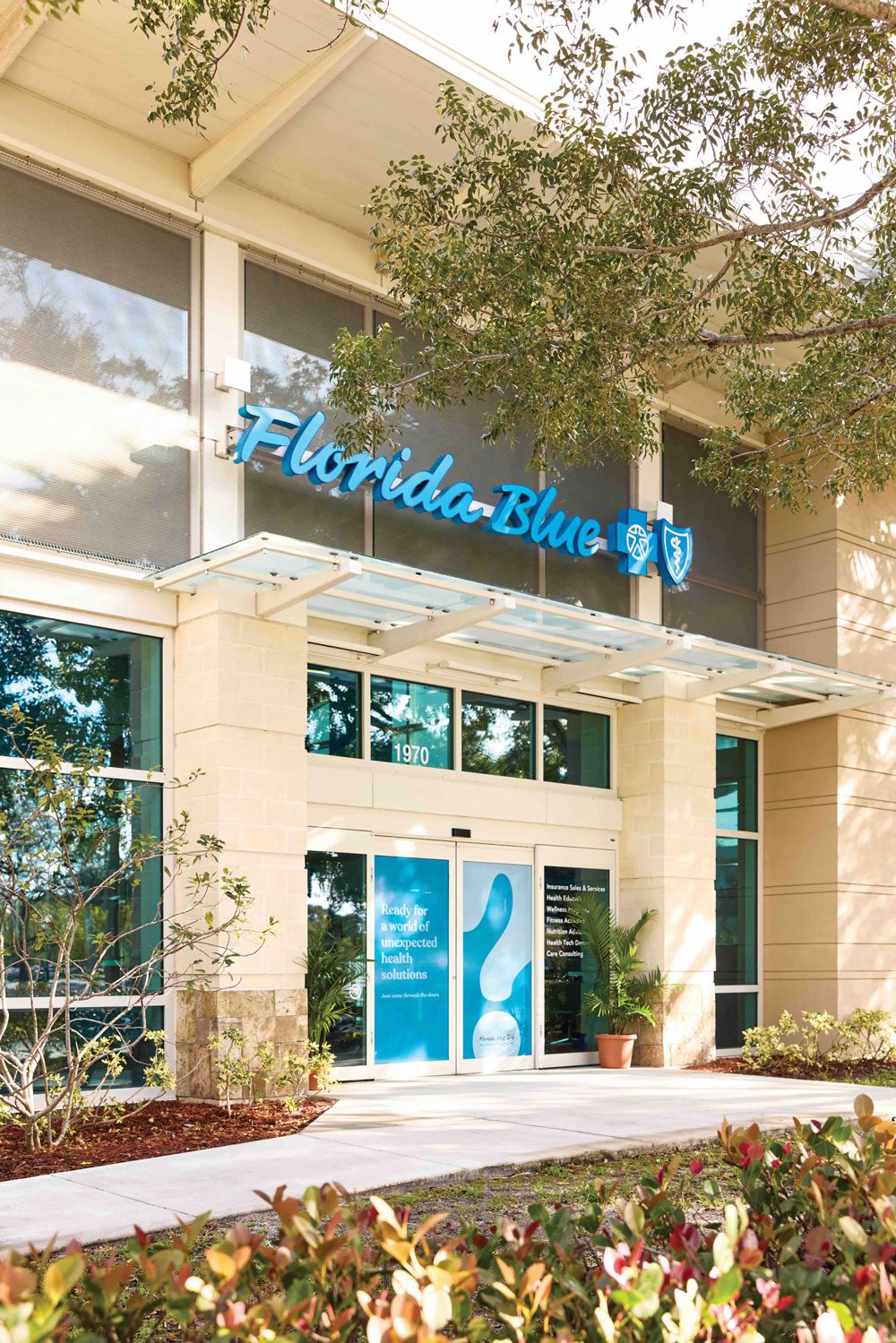
Another standout feature is our Florida Blue Centers. These are community hubs where anyone, regardless of whether they have a Florida Blue plan, can access personalized attention and services. Each center has a nurse to conduct health screenings, as well as wellness programs like Zumba, yoga, and nutrition workshops. These efforts not only improve access to healthcare but also foster healthier communities.
How does your organization support the small-business community in Greater Fort Lauderdale while addressing their unique healthcare needs?
Fort Lauderdale is a vibrant market with a strong small business ecosystem. Florida Blue supports this community through partnerships with organizations like the Greater Fort Lauderdale Alliance and the Urban League of Broward County. For instance, we’ve worked with the Urban League to provide affordable housing and recently became their healthcare partner.
We’ve also launched a local program where advocates and agents go into neighborhoods to connect directly with small business owners, bodega operators, drivers, and other local entrepreneurs. This hyper-local approach helps us understand their specific needs and offers tailored group health plans.
For small businesses, we focus on programs like those known as “shared savings”. These incentivize and reward employers and employees to prioritize wellness and prevention. For example, members are encouraged to get annual health screenings, vaccinations, and specialist referrals if needed. By promoting proactive health care, we can help employees stay healthy and keep costs down for employers.
Additionally, our clinical teams work on targeted health outcomes, such as reducing C-sections and increasing full-term births. These efforts highlight our commitment to delivering measurable results for businesses of all sizes.
Ultimately, our goal is to empower small businesses with the tools they need to keep their employees healthy while controlling costs. In Fort Lauderdale and beyond, it’s about being proactive, offering education and support, and tailoring solutions to meet the unique needs of every community.
What role will Florida Blue play in the future of healthcare across South Florida?
The future of health care in South Florida, and everywhere, includes leveraging technology like Artificial Intelligence (AI) in a safe, efficient way to achieve the best outcomes for our members and patients. Our CEO, Pat Geraghty, recognized this early and we invested early in AI. It’s not about replacing the human touch, it’s about using technology strategically to enhance efficiency and deliver better outcomes for our members, patients, and provider partners.
Access to health care is another critical piece. We are the richest country in the world, and everyone should have access to care. We want to be part of the solution by listening to communities and understanding their specific challenges. Each culturally diverse community brings its own experiences and needs, and we learn from them to serve them better.
Mental well-being is also a major focus. The stigma around mental health is fading, but it’s not completely gone. People suffering from depression, anxiety, or other challenges need easy and accessible care. It’s not just about improving individual lives; it makes sense for all of us to prioritize whole-person health. As we say, “There is no health without mental health.”
Affordability is another essential issue and goal. Health care needs to be affordable for everyone. To achieve this, we must focus on efficiency, ensuring people receive the right care at the right time. This proactive approach shifts the model from treating sickness to preventing it.
How is Florida Blue working to make healthcare more proactive?
Health care has traditionally followed a reactive fee-for-service model: you got sick, saw a doctor, and your insurance was billed. The more services performed, the more billed. Now, we’re shifting to a proactive model that manages chronic conditions and incentivizes prevention.
For example, if someone is planning to have a baby, prenatal care should start early with blood tests, weight monitoring, and ultrasounds. If someone is at risk of diabetes or high blood pressure, we address it before it leads to hospitalization. This mindset drives better outcomes and lower costs.
We’re also adopting value-based contracting. Instead of paying doctors for each procedure, we reward them for keeping patients healthy. For instance, if a doctor prevents a costly surgery through regular checkups and dietary advice, they share in the savings. This shift aligns incentives across the system, leading to fewer interventions, better health outcomes, and greater affordability.
Images provided by Florida Blue
For more information, please visit: