






Spotlight On: Cathy Bessant, CEO, Foundation For The Carolinas
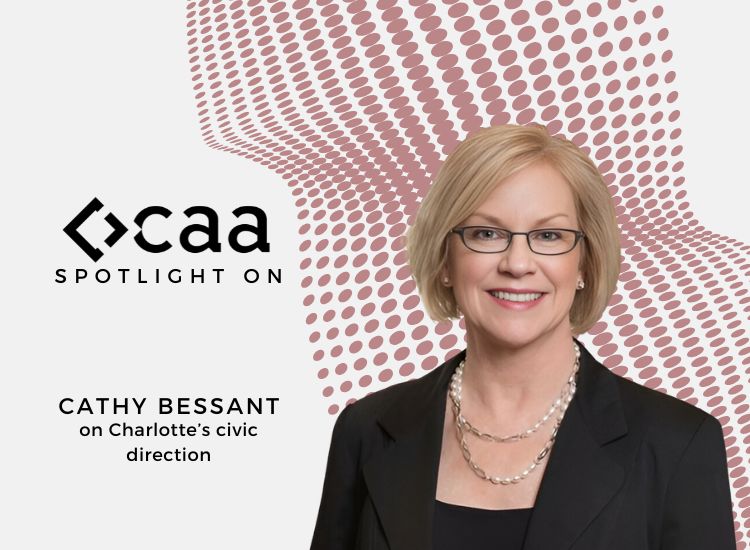 January 2025 — In an interview with Invest:, Cathy Bessant, CEO of Foundation For The Carolinas, discussed leadership transition, the importance of a strong management team, next-generation philanthropy, and initiatives to enhance community impact across Charlotte’s arts, culture and civic landscapes.
What were some of the Foundation’s key milestones over the past year?
I recently became CEO following Michael Marsicano’s 26-year tenure. While new to this position, I’m not new to the Foundation, having served as board chair about 20 years ago. Our leadership transition has focused on ensuring continuity while embracing change. Internally, we’ve strengthened our leadership team by promoting senior leaders and bringing in talent like Laura Clark from United Way of Greater Charlotte. Building a vibrant senior team is essential, as it’s ultimately the people — not just funds — who drive change. People matter more than money in philanthropy; while financial resources are vital, it’s our team who creates real impact.
We’re also working closely with leaders across sectors. For example, Andrea Smith and I have stayed connected as the Charlotte Regional Business Alliance evolves. Leaders from corporate, sports and civic sectors bring fresh perspectives, and we’re leveraging these relationships for greater impact. Externally, we’re on track for a record year in donor engagement and grant-making. We recently aligned with the Arts & Science Council, increasing its funding from around $14 million to over $20 million, a significant boost for Charlotte’s cultural landscape. We’re also nearing completion of the seven-year Carolina Theatre restoration project, a meaningful community asset. This theater, located at Belk Place and reflecting the community it serves, has been a complex, multi-year effort, slowed by COVID but ultimately a major win for Charlotte.
How would you describe the landscape of philanthropy and community impact in the Charlotte region?
After returning to Charlotte from a few years abroad, I’ve gained a renewed perspective on our city. Since my last local role, the region’s leadership and philanthropic landscape have diversified tremendously. In past decades, a few individuals guided much of Charlotte’s civic direction, but today, leadership is far more democratized, with many voices driving community impact — a shift that fosters sustainable, creative outcomes. We’re still focused on familiar challenges like public safety, transportation and education. While there has been progress, more remains to be done. Charlotte’s leadership continues to be forward-thinking and optimistic, consistently helping us exceed expectations. Years ago, who would have imagined Charlotte hosting an NFL team, a AAA baseball team or the NASCAR Hall of Fame? Yet, here we are — our spirit of unity and ambition is unique. Having worked in cities like Dallas, Nashville and Tampa, I can say Charlotte’s ability to rally diverse voices and relentlessly pursue new opportunities has truly built a city poised for sustained impact and success
What initiatives does the Foundation have to engage the next generation in philanthropy and giving?
We have more than 3,000 fundholders, and in a community foundation model, donors direct 95% of our activities. Our role is to guide and steward their resources, helping them make informed choices and align with the impact they seek. While this model has served communities well for decades, there’s a growing need to adapt to engage the next generation in philanthropy. Next-generation philanthropy opens opportunities for innovation. Younger donors want hands-on involvement and real-time interactions, preferring digital platforms over quarterly advisor meetings. A weeklong turnaround for directed donations feels outdated — they expect immediate engagement and impact. Many younger philanthropists come from entrepreneurial backgrounds, often without a traditional understanding of giving, so we emphasize teaching philanthropy through experience. Platforms like GoFundMe have popularized grassroots giving, transforming the landscape. We aim to help young people see themselves as philanthropists and appreciate the collective impact they can create.
How does the Foundation collaborate with local nonprofits and community organizations to address pressing social issues?
We work with about 600 local nonprofits that hold funds with the Foundation For The Carolinas. Supporting their growth and impact is central to our work. Beyond providing resources, we connect donors with causes, which is especially helpful for smaller nonprofits that may struggle to engage funders on their own. We’re committed to relentless partnership. For example, as we develop the Carolina Theatre, we’re collaborating with institutions near our Belk Place, like the rebuilt main library, WFAE’s new offices and Spirit Square. Together, we’re creating coordinated programming that’s greater than the sum of its parts, achieving outcomes far beyond what any one organization could accomplish alone.
What steps is the Foundation taking to ensure diversity, equity and inclusion are embedded in its priorities?
One of our guiding philosophies is a commitment to equity and equality. Our work is grounded in inclusion and diversity, which means creating a team that reflects these values and partnering with diverse leaders. Every part of our organization, from our policies to our building’s accessibility, is designed to foster inclusion and expand opportunities.
What is your vision for Charlotte in the next few years, and what role does the Foundation play in that vision?
Our community vision is rooted more in how we approach things than in specific projects. My focus is on ensuring we remain inclusive, diverse in leadership, optimistic and ambitious. This region has a strong tradition of collective planning and collaboration — like Center City Partners’ North Tryon Vision Plan — that lays a solid foundation for the future. Right now, I’m focused on sustaining the momentum we’ve built: a diversified economy, inclusive leadership, and a drive to pursue big goals. Progress is visible everywhere, from construction cranes to vibrant community spaces. What makes our accomplishments sustainable isn’t just what we build, but how we work together to achieve it. That’s the legacy I hope to see continue in Charlotte.
What approach does the Foundation take to create a meaningful impact in the community?
We strive for catalytic impact — addressing complex, challenging issues that require broad collaboration. The Foundation has a long history of tackling tough topics and uniting diverse groups to address them. For example, before COVID, Gene Woods and I co-chaired a task force on solutions for homelessness, which evolved into United Way’s Home for All program, aimed at housing instability. Our commitment to inclusion was key: we brought people with lived homelessness experience together with bank and healthcare executives, providing a broad perspective and grounded understanding. We also drew on best practices from other regions, enhancing the program’s effectiveness. At the Foundation, we aim for impact — positive changes that wouldn’t happen but for our involvement or collaboration with groups like the Charlotte Regional Business Alliance. Our goal is to make the world a better place daily through our work and partnerships.
For more information, please visit: