
Spotlight On: Dalton Pierce, City Manager, City of York
Key points:
- • York is prioritizing quality growth while preserving its small-town character.
- • Infrastructure investment is supporting residential, commercial, and industrial expansion.
- • Financial discipline and long-term planning are strengthening York’s growth strategy.
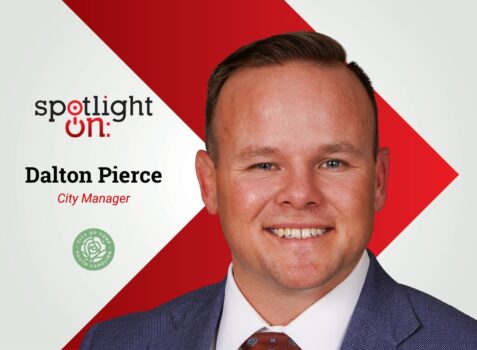 September 2026 — Invest: spoke with Dalton Pierce, city manager of York, about how the community is managing rapid growth while protecting its character and long-term financial health. “It’s the quality over quantity for us at this point in time,” Pierce said.
Join us at the Invest: Charlotte 6th Edition Leadership Summit! This premier event brings together hundreds of Charlotte’s business and regional leaders to discuss the challenges and opportunities for businesses and investors. Buy your ticket now!
Looking back at the past year, what trends or shifts are you seeing that are shaping York’s growth strategy?
Since 2020, trends have continued to shape our direction. Right now, we have more than 3,000 residential units approved, with about 35% of those entitled units closed out. As that residential base has expanded, we’ve seen a corresponding increase in commercial and retail interest, largely because York is now meeting the population and traffic metrics many users look for.
Council made a deliberate decision to stimulate residential growth, and today we have about 19 subdivisions in various stages. What’s unique is our bypass, which helps preserve our downtown commercial core and established neighborhoods while positioning commercial and retail uses along the periphery where infrastructure can support them.
We’re also seeing a shift in housing types. Historically, York has been heavily single-family. Now we’re introducing higher-density multifamily projects, which align with our comprehensive plan and help address affordability, workforce attraction, and demographic balance. That variety matters, especially as housing prices and interest rates affect buyer behavior.
Downtown is another key focus. We’re updating our downtown master plan and have a 98-room Hampton Inn & Suites under construction in the heart of downtown. We see that project as an anchor that can help drive revitalization and reinvestment.
For those who may not be familiar with York, what makes the city unique within the greater Charlotte region?
York is the county seat of York County and has deep historical roots, including ties to the Revolutionary War. We’re also close enough to the region to stay connected. Depending on traffic, you can get from York to Bank of America Stadium in about 40 minutes.
We don’t have an interstate running through the city, but we are served by major corridors like Highway 5, 161, 49, and 321. Those connections give us access to the broader Charlotte market while helping us preserve our identity. Much of York County’s early growth followed the I-77 corridor, but that growth is now pushing west and reaching York.
We were the fourth-fastest growing municipality in South Carolina last year, and I expect we’ll remain near the top. The difference is how we manage it. We’re not reacting to growth. We’ve planned for it. We’re also not chasing rooftops. It’s the quality over quantity for us at this point in time, and that mindset helps us preserve culture while planning for the future.
How is York positioning itself to capture commercial, manufacturing, and logistics opportunities?
One example is Spring Lake Business Park, a 32-acre public partnership between the city of York and York Electric Cooperative. The city invested in water and sewer infrastructure, and York Electric built the roadway. That gives us a ready site to attract light industrial, logistics, or manufacturing users that fit York’s scale and goals.
Another example is Komar Industries, which is located in the city. Komar created more than 160 jobs and invested roughly $11.5 million by repurposing an existing building. Their average wages are in the upper $40,000 range, and they’re now looking to expand. For us, that reflects the importance of strong partnerships, efficiency, and responsiveness. Time matters, and we work to remove unnecessary barriers while keeping expectations clear.
How are you prioritizing infrastructure and capital planning to support long-term growth?
In the past year, we completed a comprehensive water and sewer inventory and assessment and digitized our infrastructure system. We also completed a preliminary engineering report to understand capacity and future needs, particularly at our wastewater treatment plant.
Since I’ve been here, the city has invested roughly $35 million to $40 million in infrastructure across water, sewer, parks and recreation, sidewalks, and related assets. We’ve implemented capital improvement plans for utilities and parks, and our parks master plan is nearing full implementation.
Council is set to adopt our updated comprehensive plan in March. Across all required elements, the consistent theme is preserving York’s culture and small-town charm while growing in a way that reflects community input. We’re evaluating zoning tools like accessory dwelling units and conservation-oriented subdivisions that preserve green space while allowing density in appropriate areas.
We’re also updating our pedestrian and bike plan. Connectivity matters for quality of life and economic development. Creating walkable connections to downtown supports businesses, reduces parking pressure, and encourages foot traffic.
Where are you seeing workforce challenges, and how is the city responding?
York’s average age is about 38, which places us squarely in the prime working range. Over the past five years, the 25-to-54 demographic has grown steadily. The challenge is capturing more local jobs, particularly professional and skilled roles, so residents don’t have to commute elsewhere.
We have an economic development incentive program that identifies targeted areas, and we’re refining it to ensure it supports long-term goals without creating future liabilities. Our approach is to be intentional and realistic, building capacity step by step.
Long-term thinking is critical. The development pipeline won’t always be this active. Decisions made today need to support York for decades, not just the current cycle.
How are you working with schools and regional partners to prepare talent?
We work closely with York School District 1 and its career and technology programs, which offer pathways that don’t require a four-year degree. Those programs support fields like firefighting and line work, and we’ve hired directly from them as we expand public safety capacity.
We also collaborate with York Technical College and attend job fairs and workforce meetings throughout the year. Some essential roles, like wastewater operators, don’t always have a clear training pipeline, so we look for ways to align education with real workforce needs.
Internally, we’ve focused on speed and clarity. From job posting to offer, our goal is no more than 30 days. We also prioritize potential. If someone meets most of the requirements and can grow into the rest, that’s often a strong long-term investment.
What are your top goals for York over the next two to three years?
The priority is continuing to function as a strong, aligned organization. That includes closing out approved subdivisions, maintaining steady permit activity, and meeting milestones in our capital improvement plans.
We’re also investing in the organization itself. A comprehensive facility study and a five-year human capital plan are helping us plan for growth responsibly. Over the next decade, we’re looking at roughly $60 million in strategic investment, with an emphasis on flexibility and resilience.
At the end of the day, our role is to deliver high-quality public service. Capital projects and internal investments both contribute to the quality of life and long-term stability.
Any final thoughts on York’s trajectory?
York used to be a secret, and it isn’t anymore. We welcome growth, but only when it aligns with our long-term vision and values.
Over the past year, we’ve received national recognition from ICMA and earned the city’s first Moody’s credit rating, an Aa3, as well as multiple GFOA distinguished budget awards. We’ve paid off more than 95% of our debt and expect to reach zero by the end of the fiscal year. Those achievements reflect both financial discipline and organizational strength.
The future is bright, but growth cycles don’t last forever. Our responsibility is to strike while the iron’s hot and make sure York continues to thrive responsibly for years to come.
Want more? Read the Invest: Charlotte report.