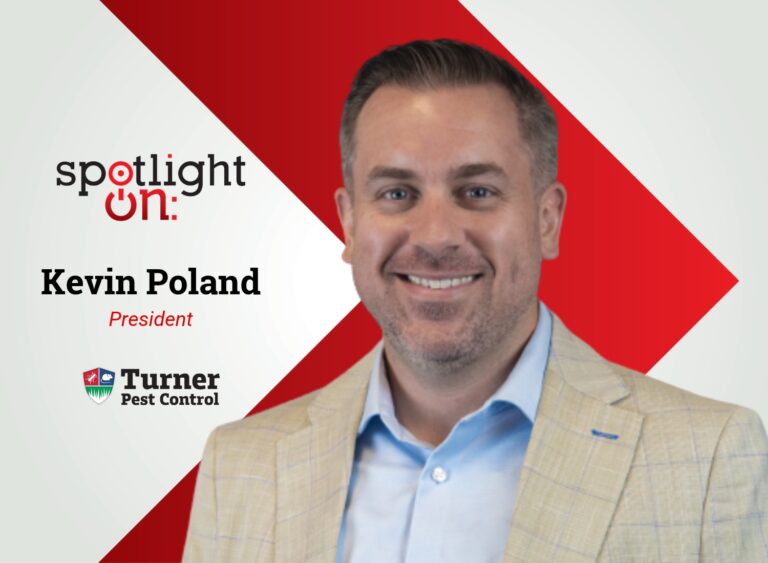

Spotlight On: Kevin Poland, President, Turner Pest Control
Key points:
- • Turner Pest Control is expanding business-to-business work across Northeast Florida.
- • The company exited fumigation in 2025 to focus on sustainable pest control.
- • Acquisitions and internal leadership development support Turner’s growth strategy.
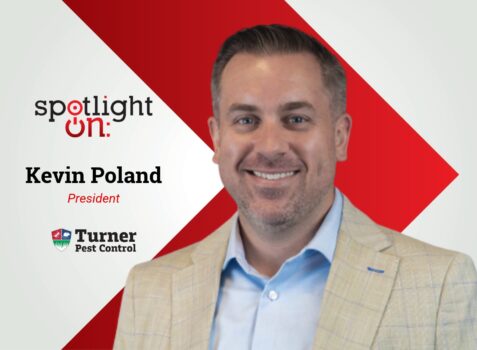 November 2026 — In an interview with Invest:, Kevin Poland, president of Turner Pest Control, discussed customer service, sustainable pest management, technology, workforce development, acquisitions, and the company’s Jacksonville roots. “We want every home and business protected in every way, shape, and form,” Poland said.
Join us at the Invest: Jacksonville 5th Edition Leadership Summit! This premier event brings together hundreds of Jacksonville’s business and regional leaders to discuss the challenges and opportunities for businesses and investors. Buy your ticket now!
What role does Turner Pest Control play in Jacksonville, and what operational changes have had the greatest impact?
Turner is a full-service pest control operation with three physical locations in Greater Jacksonville, including our main headquarters south of the city center. Turner is one of the largest pest control providers in Florida, and 50% of our footprint is in Jacksonville. We started here in 1971, and we continue to build business partnerships and relationships throughout the region, including healthcare systems and large business-to-business organizations. These relationships provide a stable platform for our employees and allow us to support the community.
Over the past year, we have made a concerted effort to develop the business-to-business clients in balance with our residential and commercial pest control work. We have strengthened our sales force to better support business development throughout Northeast Florida.
We are also proud of our customer care efforts. We want to answer phone calls faster and more accurately with friendly voices and exemplary service. We do not only want to sell more; we want to connect with our customers and keep them forever.
How is Turner using artificial intelligence to support customer care?
My approach to AI is to ask how it can empower our team members to work more efficiently and effectively. It is not about reducing headcount. We have tools that can summarize conversations so a team member can copy and paste notes rather than typing everything manually.
That is one area where we are being more intentional in communicating with customers, providing in-depth notes to team members in the field. Clear and consistent communication makes Turner easier to do business with.
What have been your priorities during your first year as president?
We made the strategic decision to stop providing fumigation services in June 2025. We needed to stabilize the organization and align with Anticimex’s core initiatives around sustainable pest control practices. Consumers are demanding fewer harmful chemical applications, and we believe providing a roadmap that gives them choices is a competitive differentiator from a spray-and-pray mentality.
We have strengthened the workforce and enhanced our customer service center. We increased the percentage of calls answered within 30 seconds by 30 percentage points over the past year, bringing service time to what I consider an acceptable level. The market is highly fragmented, and customers have many choices. We must differentiate ourselves and respond quickly. Turner has also made a major shift in human resources. We are using full-time recruiters to allow us to backfill positions quickly, especially on the front line. This allows us to deliver products within 24 hours.
What pest management trends are having the greatest impact on Florida homes and businesses?
One reason I decided to come to Florida was the pace of growth here compared to other states. With population expansion comes a reduction of wildlife habitat and an increase in sanitation issues. Bigger cities have bigger pest problems. We have relationships with homebuilders and are seeing positive trends in new commercial and residential construction, and with that growth comes displaced wildlife and greater need for pest control.
It is important that we keep pace with what is happening in Florida and provide consumers with options while protecting the investments business owners continue to make in the region. As industry accelerates in this state, it is our job to identify conditions that are conducive to pest issues and be proactive in addressing them for our clients.
How do technology and preventive monitoring support sustainable pest management?
Because Turner is part of the Anticimex ecosystem, we have access to digital technology called SMART. It supports proactive pest management through infrared sensors that monitor and protect homes and businesses. Motion and heat detection can indicate an infestation or problem sooner than traditional approaches.
Notifications come to our office, allowing us to respond faster, make an educated decision about what needs to be addressed earlier, and hopefully reduce the time required to solve the problem. Our partnership gives us tools and technology to work more efficiently, challenge team members, and use data to protect homes and businesses throughout the state.
Technology helps us respond faster, while legislation and chemical use continue to change. We remain focused on protecting public and human health. Pest control is an essential service, particularly when concerns such as hantavirus or dengue fever arise. Chemicals widely used 15 years ago are no longer commonplace. Turner and Anticimex aim to remain on the leading edge and help push the industry forward.
How does Turner adapt pest management programs to different business and healthcare environments?
Client tolerance for pest issues differs in the business-to-business world. A healthcare system cannot have a mouse or rat in an operating room; the tolerance is zero. An ant in an office break room is a different situation, often connected to sanitation and how people use the space.
Our job is to diagnose problems and work with clients to reduce sanitation issues through a comprehensive program that becomes a partnership. Healthcare environments may require additional equipment and more frequent inspections. The program depends on the client’s unique needs and budget. We want every home and business protected in every way, shape, or form.
How is Turner creating career opportunities while addressing workforce needs?
Turner can take someone with no industry experience and teach them pest control. In some cases, we prefer that because we can teach sound protocols, good habits, and repeatable processes. Customers should receive the same experience regardless of which technician arrives.
We recruit for customer service acumen, communication, pride in work, and an interest in turning the position into a full-time career. Our in-house leadership development program runs every year. Last year’s cohort included nearly 20 people. Technicians become service managers, service managers become branch managers, and branch managers can lead regional operating hubs and sit on the executive leadership team. Staffing is a problem for everyone, so we address it by creating repeatable internal processes that move people forward as quickly as possible.
How do acquisitions fit into Turner’s growth strategy?
I do not see mergers and acquisitions as a problem. I see them as an opportunity, and part of Turner’s total growth strategy. As an Anticimex company, we are selective about how we partner through mergers and acquisitions. We are looking for companies with good recurring revenue, strong people, great relationships, and that are a fit with Turner’s culture and current services. Our goal is to make integration seamless for employees and customers.
Pest control is a highly fragmented market and will remain that way. When one acquisition is completed, two or three new companies may pop up in the marketplace the next day. The industry’s entrepreneurial spirit is unmatched and has made it attractive to private equity. The barrier to starting a one-man pest control company is relatively low, while larger companies face greater complexity, insurance costs, and business-to-business sales requirements.
The industry continues to show organic growth, approaching double digits year after year and is somewhat recession-proof. Pest control remained essential during the 2008 housing crisis and COVID because homes and infrastructure businesses still required protection.
What is your outlook for Turner’s contribution to Jacksonville over the next three to five years?
Even though we are now a large pest control company with a presence statewide, our roots are in the community here in Jacksonville. Our employees and I live here.
Being private equity-backed does not make it less important to hang a banner at a local high school, sponsor the minor league ballpark, or participate in local activities. We do not have to operate only on a national scale. It is important to support our team members in how they spend their time, focusing on where we see business growing in NE Florida. I will continue to double down on investment and involvement in local associations and organizations that align with our strategic direction and culture to make an impact in our community here in Jacksonville. As we continue to grow our presence throughout the state, we will do the same here at home.
Want more? Read the Invest: Jacksonville report.