





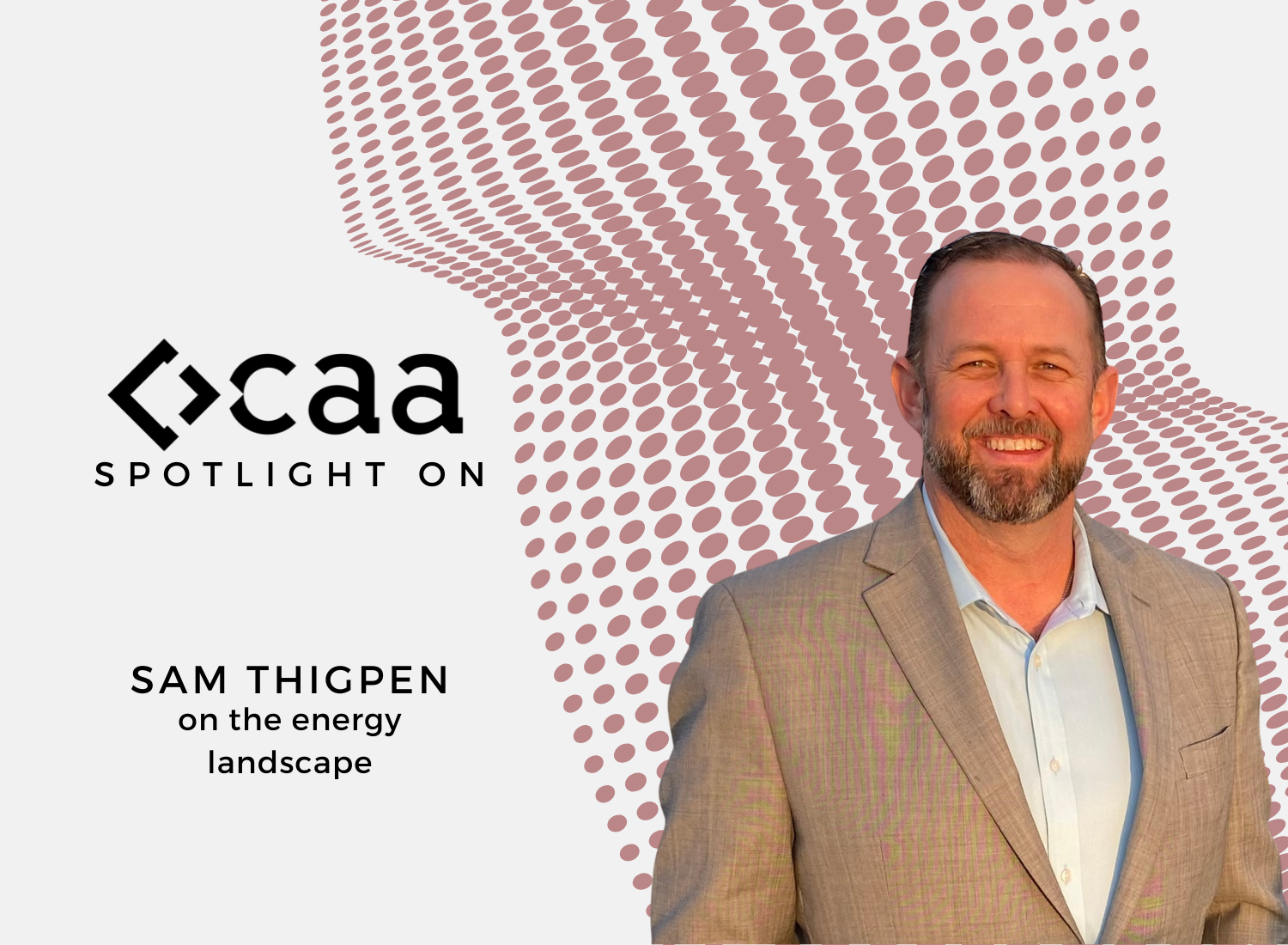
Spotlight On: Sam Thigpen, CEO, Sapphire Gas Solutions
March 2025 — The biggest hurdle in the U.S. natural gas industry is the lack of LNG supply. “Our big challenge in managing growth is making sure we have the LNG and CNG supply,” Sam Thigpen, CEO of Sapphire Gas Solutions, told Invest:.
What were some major projects or initiatives that were particularly successful for Sapphire Gas in the past year?
A big initiative early last year was to shift our virtual pipeline business focus toward the power generation market and supporting off-grid power generation, primarily focused on data centers. We are seeing micro-grids gaining acceptance due to the lack of power infrastructure.
We placed a big focus on this last year, and it’s turning out to be the right direction for our business. We are now in front of major hyperscale data centers, and others talking about natural gas supply for their power generation needs while they wait on the grid connections.
Our first few data center projects appear to be going to go live this year. We will be providing LNG (liquefied natural gas) and CNG (compressed natural gas) for their power generation needs.
That was a big initiative for us last year, and we are seeing the growing momentum. We knew it was going to take about a year for us to get in front of the right, and it’s working. That’s exciting for us.
What sets Houston apart from other markets in the southern Gulf?
There are a couple of things that are unique about being in Houston. Last year, we obtained our LNG export license from the federal government. We’re now licensed to export LNG on a small scale. Being here in Houston is great for us because we can export out of the Port of Houston, and we can do that by ISO container. That’s going to increase our opportunities to move LNG out of Texas through Houston and into Latin America and the Caribbean.
Additionally, we don’t see the big growth in data centers that we see in Phoenix, Dallas, Austin, Atlanta, and Virginia, but there is data center growth in Houston. We also see a lot of microgrid needs here as well. Because we’re on the Gulf Coast, storm damage to the utility grid due to hurricanes and freezes requires a more diverse need for micro-grid and mobile power. As a result, resiliency programs along the Gulf Coast are big opportunities for us, and we’re a part of all that as well.
Do you expect a potential U.S. trade war with Mexico and China to affect some of those plans?
Our goal is to deliver LNG to support power generation needs. Most of the small-scale LNG export we’ve seen over the years has gone to microgrids in the Caribbean or South America. We see that same opportunity continuing. Energy is a big need all over the world. A trade war with Mexico or other countries in our hemisphere doesn’t change the fact these regions need energy; they need power, and they need gas. We will work through that as it develops. So far, we haven’t seen a slowdown in the number of people that want to talk about projects that require LNG.
How would you characterize the demand and supply of natural gas right now in terms of the different markets that you serve?
Demand is up, and supply is lagging. We have a seller’s market, so to speak. We are seeing a huge uptick in the need for natural gas, primarily because of the need for off-grid power generation. I don’t see that trending downward anytime soon. It’s going to continue to trend upward for the foreseeable future.
What is the company’s approach to sustainability and environmental responsibility?
With the new Cummins natural gas engines, we can convert more of our fleet away from diesel and onto natural gas fuel. Our first delivery is for six trucks, and we will continue to take delivery throughout this year. That continues to be a focus for us.
We also continue to work to expand our renewable natural gas business. We are proponents of finding more ways to get renewable natural gas into the industrial sector, for example. We do a lot of work in that space, and right now there are no federal credits, mandates, or incentives to use renewable natural gas in the industrial sector. Most of the incentives are geared toward transportation.
What are the key challenges in today’s energy landscape?
Being in the compressed and liquefied natural gas business, the biggest challenge we have right now is the tightening of supply. We are deploying capital to build more CNG stations and we need to partner with companies to build LNG liquefaction. If we cannot find the right partners, we will build liquefaction ourselves. That’s probably the biggest challenge we have because the opportunity for growth is so large compared to our current supply of LNG and CNG.
What role do you believe your company will play in terms of the future of energy distribution?
We will continue to be a leader in the virtual pipeline delivery of natural gas. We are one of only a few companies that can deliver the amount of natural gas needed at a remote power generation site at the scale that it takes for a microgrid or a data center.
There’s going to be an enormous amount of need for that service across the country. We work all over the country, and that’s how we’ll continue to be a leader in that space as it grows and develops. We are also one of the only companies that can provide both LNG and CNG as a combined service at this scale.
What are your top priorities for the next five years?
The top priorities for us are to fully transition our business to focus on the power generation market. That’s a big transition for us. Over the next five years, I could see a vast majority of our business delivering natural gas to off-grid power generation projects.
Over the next five years, we need to build out our LNG and CNG supply to manage and achieve that growth. In all that, being sponsored by private equity, we are focused on creating value for their exit, as well, sometime in the future.
For more information, please visit: