

Spotlight On: Sul Hemani, Vice President & Branch Manager, Sunflower Bank, N.A. dba First Foundation Bank
Key points:
- • First Foundation merged into Sunflower Bank in April 2026, adding capacity, capital, and geographic reach; full integration in September 2026.
- • Tampa Bay demand is strong but capacity-constrained, especially in hospitality and attainable housing.
- • A positive long-term outlook depends on proactive public-private planning to align housing and hospitality supply with growth.
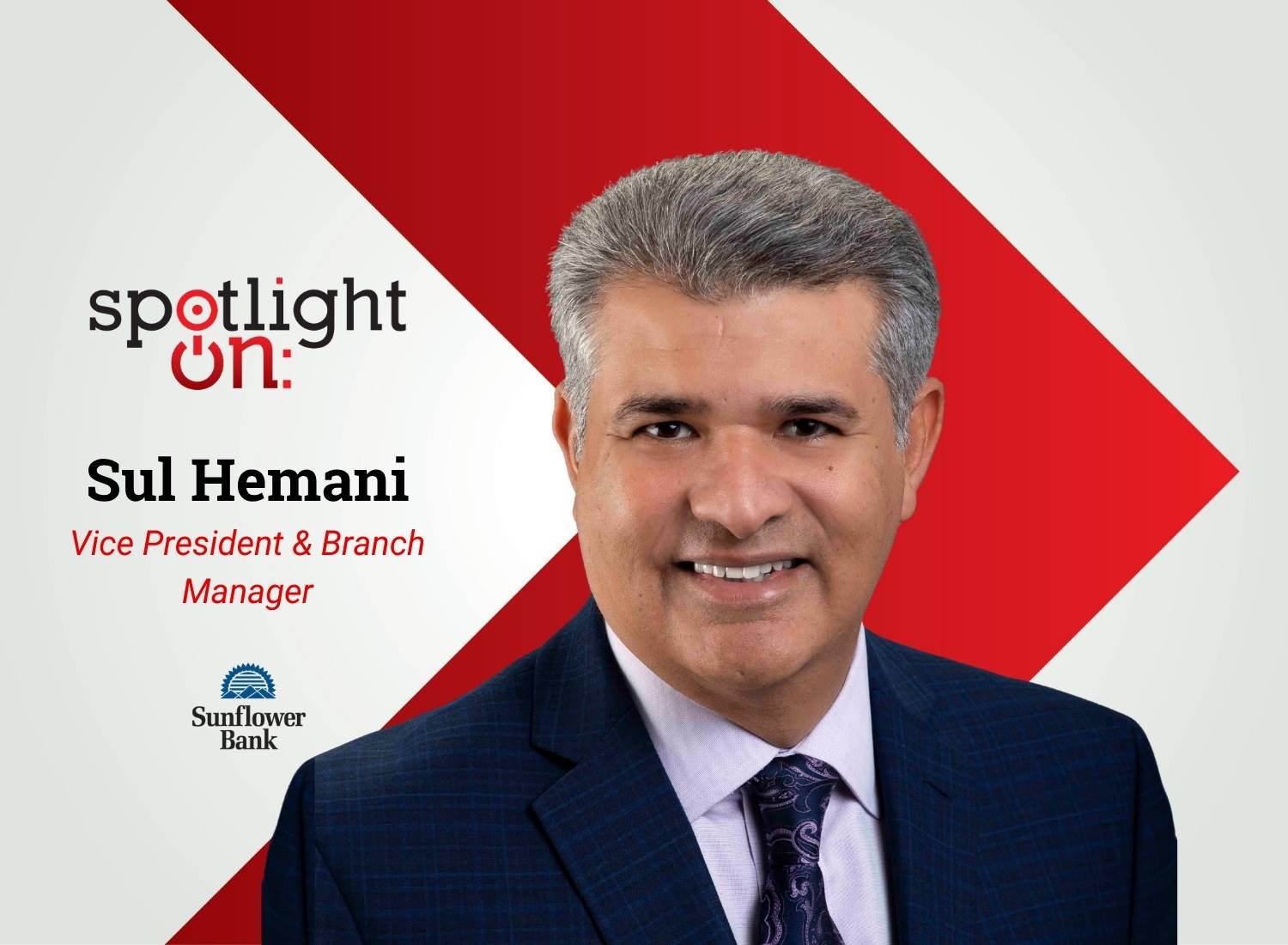 May 2026 — Invest: sat down with Sul Hemani, vice president and branch manager, to discuss Sunflower Bank’s expansion in Tampa Bay after its merger with First Foundation Bank, current impacts on the local economy, and the role of relationship banking in a digital era. “Technology can answer many questions quickly, but the human element, understanding a client’s goals and helping them think through decisions, will always matter,” Hemani said.
Join us at caa’s upcoming leadership summits! These premier events bring together hundreds of public and private sector leaders to discuss the challenges and opportunities for businesses and investors. Find the next summit in a city near you!
What changes over the past year have had the greatest impact on First Foundation Bank in Tampa Bay, and in what ways?
First Foundation Bank has been in Tampa Bay for years, but I joined in April 2025 as the prior leader was preparing to retire. The timing was right for me professionally, and when I met our president it immediately felt like a strong fit. We connected quickly, found we knew many of the same people, and I walked away feeling confident this would be my new home.
I also saw a chance to learn from someone with rare experience building banks and guiding organizations through growth cycles. He has started two banks from scratch and has been involved in 14 mergers. Having that kind of institutional knowledge close by is valuable, especially in a market like Tampa Bay where opportunities move quickly and relationships matter.
Since arriving, a key impact has been getting deeper into the community and understanding where the needs are most urgent. When you are close to local businesses and local decision-makers, you start to see where banking can be a true partner, not just a provider of products.
What recent initiatives, expansions, or service enhancements have been most notable for your branch?
One of the most notable developments is First Foundation Bank’s merger with and into Sunflower Bank on April 1, 2026. Our organizations share a deep commitment to enhancing the lives and wellbeing of the customers and communities we serve. Until our systems fully integrate in September 2026, we’re operating under the First Foundation Bank name but now as Sunflower Bank we offer relationship-focused financial services with increased capabilities, a stronger capital base, and an expanded geography.
That added scale matters. Together, we bring more capacity to the table and can respond to projects across the full spectrum of business needs from commercial and specialty lending to treasury management and deposit solutions. I see it as a strong match that allows us to do more for clients, and to do it with a long-term commitment to the community.
How would you characterize the demand environment in Tampa Bay right now? Are you seeing strength in specific sectors?
We are seeing demand, and we are also seeing clear gaps. On the hospitality side, Tampa Bay needs more rooms. If the region wants to remain competitive with other destinations and keep attracting visitors, events, and conventions, capacity has to catch up. More inventory supports not only tourism, but also business travel, meetings, and the broader ecosystem of restaurants and local services that benefit when the region stays busy.
On the residential side, affordability is a major priority, especially for first responders, teachers, and nurses. The goal is to support projects, including multifamily, that expand attainable housing and strengthen neighborhoods. Done well, those projects help the people who keep the community running live closer to where they work, and they help Tampa Bay grow in a more balanced way.
Quality-of-life factors shape this, too. Communities that include walkability and access to everyday services, including grocery, dining, and waterfront areas, tend to be more resilient and attractive over time. Creating that kind of environment is part of what keeps talent here and draws new talent in.
What major trends are you seeing in banking, and how is First Foundation adapting?
Across the industry, many institutions are moving toward larger, more affluent segments, while the middle market and small businesses often have the greatest need for support. Those companies are the heart and soul of Tampa Bay and of the broader economy, but they can struggle to find the right financing partner as underwriting models become more standardized and less relationship-based.
Our philosophy is relationship banking. We are not focused on a single transaction. We want to understand the client’s plan, help them strengthen their business, and stay with them as they grow. Even if we cannot solve everything on day one, we can still be a steady partner who helps map the steps to get there.
When you support a client early and help them build, the relationship tends to deepen over time. As they grow, the bank grows. More importantly, the community benefits from stronger, more stable businesses that can hire, invest, and expand.
How are First Foundation Bank and Sunflower Bank leveraging digital tools while maintaining a strong relationship-driven model?
Customers want convenience, and they want control from wherever they are. Our online platform is designed to make routine banking possible without a branch visit, from opening accounts to moving funds and handling wires, including for clients who work across time zones.
That matters because business is global. Markets in Asia, India, and Japan can be active while we are asleep. When something comes up in real time, clients need access and tools that work. A strong digital platform helps make banking feel like a 24/7 service, which is increasingly the baseline expectation.
At the same time, we protect time for real conversations. In our Tampa office, meetings are appointment-based so clients can sit down with the right people and get focused support. The goal is to use technology for speed and access, while preserving the personal touch that builds trust and keeps banking human.
Change is the only constant thing in this world, and digital tools reduce the time spent on manual work and research, which lets bankers spend more time directly with their clients. Technology can answer many questions quickly, but the human element, understanding a client’s goals and helping them think through decisions, will always matter.
As you look to the next two to three years, what are your key goals and priorities for the bank, and what is your outlook for the Tampa Bay economy in general?
Over the next three to five years, I believe Tampa will continue to be a phenomenal place to be. It already has many advantages of a major city, including an international airport, strong amenities, and quality of life, and that is why people keep relocating here.
The challenge is growth pressure, especially on housing and rents, and the opportunity is planning ahead so supply can meet demand. Tampa also needs enough hospitality capacity to compete for larger conventions and events, and that connects back to infrastructure, real estate development, and the broader economic strategy of the region.
I have been involved in conversations around housing needs at the city level, looking at what Tampa needs today and what it will need in the next several years. When you do that work seriously, it becomes clear that planning cannot be reactive. You have to measure demand, forecast where the pressure points will be, and create a roadmap that brings public and private partners together.
Personally, I encourage clients to set ambitious goals and then build a plan to reach them. I learned through mentoring that sometimes people do not articulate the size of their own potential until someone reflects it back to them. If you put a bigger vision on the table, it can change the way someone approaches decisions and opportunities. If you think big, you become big, and that mindset applies to businesses and to cities.
For our bank, the priority is to stay close to clients, stay disciplined, and use our relationship model to help businesses navigate change. When leaders plan with the next five to seven years in mind, it becomes easier to grow in a way that is sustainable and inclusive.
Want more? Read the Invest: Tampa Bay report.