


Spotlight On: Mike Blankenship, Managing Partner, Winston Taylor
Key points:
- • Energy, infrastructure, and healthcare are driving Houston’s growth.
- • AI is improving legal efficiency while preserving attorney oversight.
- • Winston Taylor plans to expand its transactional and capital markets capabilities.
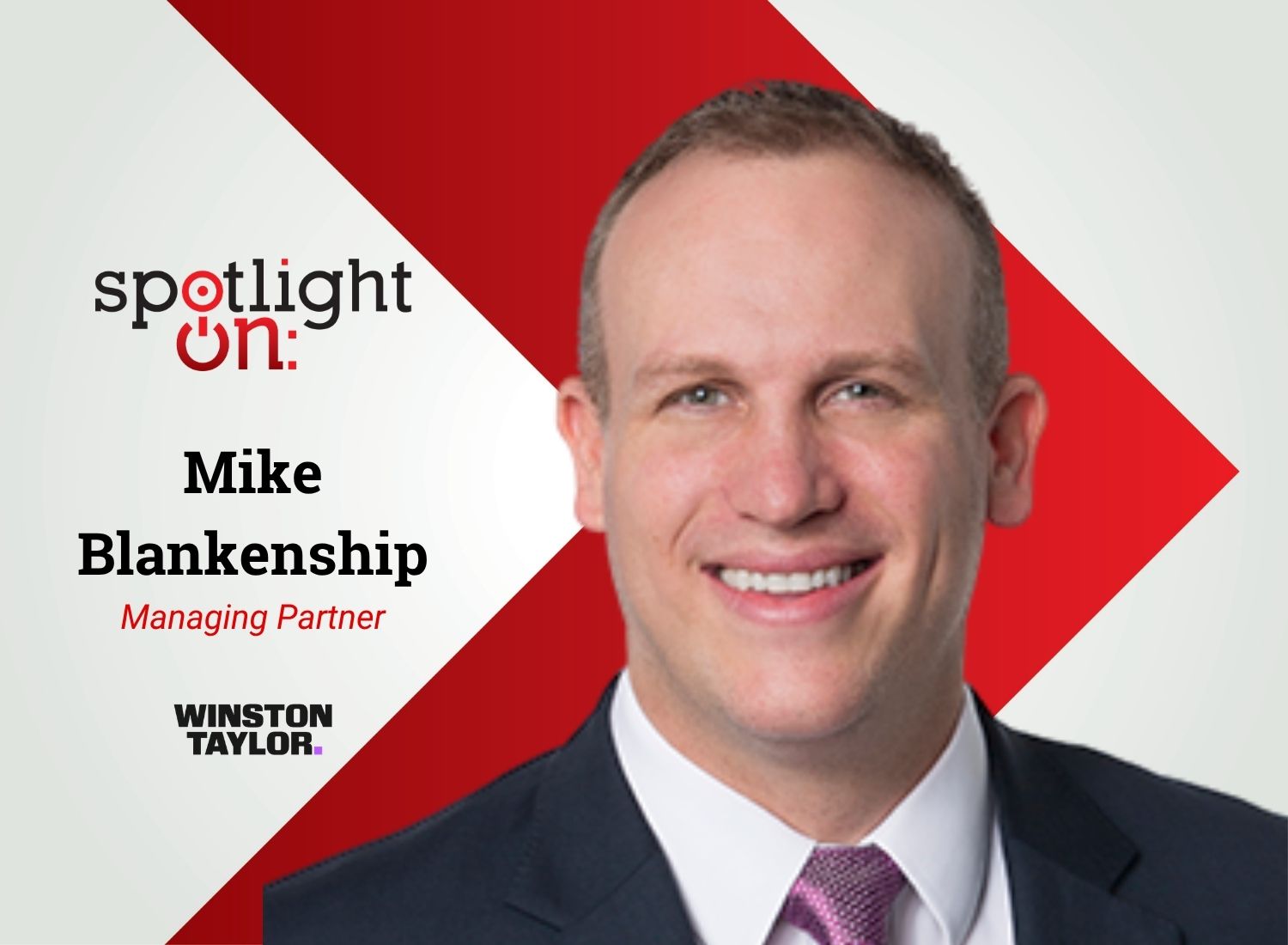 September 2026 — Invest: spoke with Mike Blankenship, managing partner of Winston Taylor’s Houston office, about the region’s business climate, capital markets, and the legal profession’s adoption of artificial intelligence. Blankenship highlighted Houston’s strengths in energy, infrastructure, healthcare, and international commerce, as well as the firm’s plans to expand its transactional capabilities. “Infrastructure is where you’re going to see hundreds of billions of dollars spent, which means they are going to need lawyers,” Blankenship said.
Join us at the Invest: Houston 3rd Edition Leadership Summit! This premier event brings together hundreds of Houston’s business and regional leaders to discuss the challenges and opportunities for businesses and investors. Buy your ticket now!
How would you describe Houston’s business climate, and what are you watching over the next year?
The Houston business climate is pretty good right now. There is a lot of activity in energy and infrastructure, including data centers and AI, which are critical not only in the United States but globally. Texas will probably see more data centers than many other states. Houston’s energy producers can build power plants, supply natural gas, and help identify the next forms of energy that will fuel those data centers. Houston is a critical part of the growth we are seeing across the country.
We are also seeing activity in healthcare and life sciences. Houston may not have the same venture capital presence as Nashville, Silicon Valley, or Austin, but there is still significant investment in those sectors. We have the Texas Medical Center, which is the largest medical complex in the world, and that creates considerable opportunity.
Houston’s proximity and connectivity will also support more technology-driven businesses. The port and the city’s access to Latin America are important. We see significant inbound and outbound investment between Houston and Central and South America. Houston is an incredibly diverse city with many languages spoken, and I believe that will continue to support its growth.
Which industries are creating the greatest opportunities for Houston and your firm?
A great deal of the opportunity is being driven by infrastructure. As billions of dollars are invested in the industry, more jobs are created, more capital is deployed, and more lawyers are needed, particularly on the transactional side.
There will probably be a shortage of talent because the need is so high, but that also presents an opportunity to train and develop more professionals. Houston will be a beneficiary of that activity.
How are economic conditions and the capital markets changing the way companies approach growth and investment?
Companies are being smart about how they deploy capital. Energy companies are generally working within their cash flows, while other capital-intensive businesses are beginning to invest more aggressively. We are seeing significant capital deployed by companies such as SpaceX and others, which is positive for the region.
We will also see more businesses pursue public-market opportunities. Houston has a substantial concentration of Fortune 500 companies, and Texas ranks near the top nationally. That is a testament to where capital is being deployed and the number of companies that want to establish and grow their operations here.
How are recent changes to Texas’ corporate legal system influencing businesses and the Houston market?
We are preparing additional guidance around corporate governance as more companies consider redomiciling in Texas. The Texas Stock Exchange is based in Dallas, but it will affect companies throughout the state, including those in Houston.
We are advising clients on the potential benefits of using Texas as the jurisdiction for their companies. For example, there are ownership thresholds that must be met before certain actions can be brought against a company. Texas has adopted aspects of what Delaware has historically done and, in my view, improved upon some of them.
Texas also has a business court system that provides companies an alternative to traditional state or federal court. It is intended to offer a professional venue with judges who understand complex business disputes.
In what areas are clients seeking the most advice?
For my practice, much of the demand in Houston involves capital-raising activities. We work with early-stage private companies seeking investment, as well as later-stage businesses preparing to go public.
We advise clients across the process. That can include borrowing through debt financing or raising equity through traditional investment structures. Those capital needs are driving a significant portion of the work we are seeing.
How are your clients approaching artificial intelligence, and how is Winston Taylor LLP using it?
I use AI every day. The firm is using it to augment our work, not replace it, and to make us more efficient as attorneys.
We frequently advise clients on their AI policies, particularly around confidentiality. Companies need enterprise-level systems rather than tools that send information onto the public internet, where sensitive material could become exposed. Employees must understand those risks and follow the organization’s policies.
We take the same approach within the firm by protecting client confidentiality and keeping information internal. We use proprietary resources, along with systems that other firms also use. The Houston office has 100% usage, probably the highest rate in the firm, because I have encouraged the office to lean into the technology.
AI is becoming comparable to what the Excel spreadsheet became for accountants. Professionals will increasingly find that they cannot work effectively without it. It will help speed up processes, support greater deal volume, and allow us to serve clients more efficiently, but I do not view it as a replacement for attorneys.
How is the firm attracting and developing the next generation of legal professionals?
We recruit from law schools, including the University of Houston, and operate a summer associate program. Many join us after their second year of law school, return to complete their third year, take the bar exam, and then join the firm the following fall. That is how we recruit organically from law schools.
We also hire laterally from other law firms. An attorney may be looking for a different platform or environment, and we can bring that individual into our firm. We partner with as many institutions as possible to communicate who we are, strengthen our brand, and build the talent pipeline.
How does Winston Taylor LLP contribute to the Houston community?
We take community involvement seriously. The firm provides pro bono legal assistance and supports volunteer activities in various areas. Our attorneys work with individuals and organizations that need assistance, including lower-income individuals navigating legal issues.
I also volunteer personally. I served for several years on the board of Writers in The Schools and have visited schools to help teach fiction writing. We try to find meaningful ways to engage the community. Our firm chair strongly encourages us to be invested in the communities where we operate, and service is one way we demonstrate that commitment.
What are your priorities for growing the Houston office over the next three to five years?
We are focused on organic growth by developing new partners and bringing in lateral partners. We must expand in areas such as mergers and acquisitions, private equity, energy, and capital markets. These areas will remain active over the next three to five years.
Infrastructure is where you’re going to see hundreds of billions spent, which means they are going to need lawyers. We want to work on those transactions and position the office to capture that opportunity.
The Houston office has a little over 100 full-time employees. My priorities include continuing to grow that footprint, aligning the office with the firm’s broader strategy, and demonstrating that we are part of the Houston community.
What makes you optimistic about Houston’s future?
I have been in Houston for over a decade and have seen a great deal of change. It is a massive city, covering approximately 680 square miles, but there are smaller communities within it. It has been great to be part of the city, and I see substantial opportunities for continued growth.
I work with many people internationally, so I see Houston’s international community firsthand. The city has a great location, is easy to travel to, and attracts people from around the world. I believe Houston will be successful over the next several years.
Want more? Read the Invest: Houston report.






