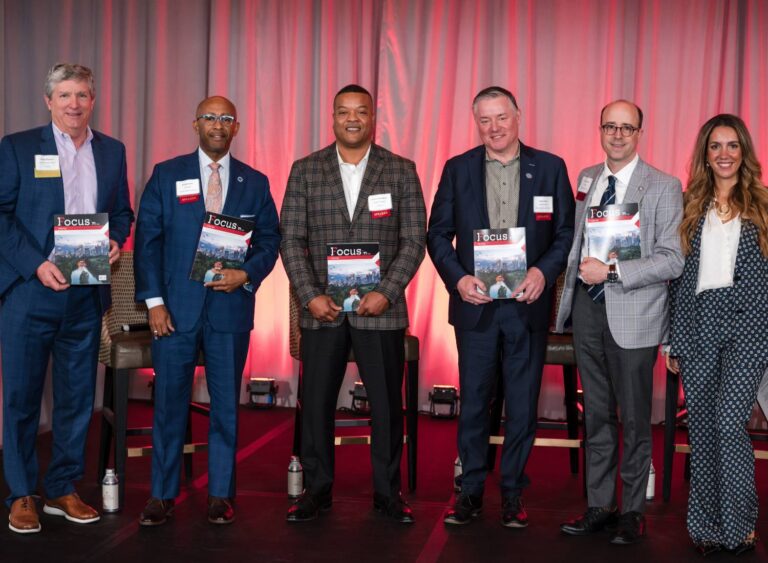







Thomas Trautner, Governance Co-Chair, Urban Land Institute Northern New Jersey
In an interview with Invest:, Thomas Trautner, governance co-chair of the Urban Land Institute Northern New Jersey, shared ideas on how to shape sustainable and inclusive communities, discussed challenges such as rising construction costs, and the need for balancing development in warehouse and affordable housing projects.
Reflecting on the past year, what have been the most significant milestones or achievements for the Urban Land Institute Northern New Jersey?
The Urban Land Institute remains strong in New Jersey in terms of hosting high-quality events with robust panel discussions that reflect a diversity of viewpoints. These events align with our mission to shape the design and built environment in New Jersey. Additionally, we provide a valuable networking opportunity for business professionals, especially as we move further away from the restrictions of COVID-19. Our morning events before panel discussions and evening networking opportunities for young professionals, as well as our Women’s Leadership Initiative (WLI), have been well received. We recently hosted a cross-platform event with Commercial Real Estate Women (CREW) New Jersey, which was highly successful. The goal is to continue delivering this kind of value to our members. We also have strong continuity within our leadership, with a pipeline of emerging professionals dedicated to the mission.
Regarding the leadership transition, I am now the governance chair of ULI Northern New Jersey. We have new co-chairs, Liz Limbrick and Dan Johnson. Liz is the Director of Brownfields and Sustainable Systems at the New Jersey Economic Development Authority, and Dan as the account director for R&J Strategic Communications.
How is the rising cost of capital and construction materials affecting project feasibility and timelines?
It is not helpful. However, good projects are still good projects, and developers find ways to get them built. The rising costs may impact (and delay) timelines and may require more strategic problem-solving. New Jersey has always had a high barrier to entry, which is not new. If a project presents a strong opportunity and offers a significant return on investment, developers generally find ways to proceed. The challenge lies in managing portfolios and timelines while dealing with these financial pressures. The more significant issue is for off-market deals or projects with additional layers of complexity or risk. Developers may be less inclined to take on projects that, while promising, carry entitlement risks or uncertain costs related to environmental concerns. There is also a broader impact from Wall Street on real estate development in New Jersey, compounded by the state’s regulatory environment. Just over 2024 we have seen that there have been both progress and setbacks. While legislative and regulatory bodies have good intentions, some recent climate resiliency regulations have had unintended consequences. For example, New Jersey’s Inland Flood Protection rules were meant to mitigate obvious flooding risks. However, in some already developed urban and suburban environments with no foreseeable risk of flooding, these regulations have unexpectedly created obstacles to redevelopment. This has led to longer timelines, increased costs, and increased entitlement risks for developers.
On a positive note, New Jersey has made strides in affordable housing policy. In 2024, the state revamped its statutory regulations concerning the constitutional obligation to provide affordable housing, known as the Mount Laurel Doctrine. The new legislation is designed to streamline the process for municipalities to plan and create zoning that allows for more affordable housing development. During the third round of affordable housing regulations a decade ago, it took years to determine municipal obligations because these obligations were not clearly defined from the outset. Now, in the fourth round, the New Jersey Department of Community Affairs has taken over the process, providing greater certainty. While some municipalities are still contesting the DCA’s calculation of the number of affordable units that they are required to develop, a housing plan to address the overall approach seems to have reduced confusion and will hopefully create more opportunities for developers to engage in meaningful projects.
What is UrbanPlan, and how does the Urban Land Institute plan on engaging with the North Jersey neighborhoods and communities to discuss urban challenges?
The UrbanPlan is our way of introducing concepts related to development and redevelopment into school systems across New Jersey. We aim to expose children to these ideas much earlier than I was ever exposed to them. The program teaches concepts such as zoning, real estate development, and the mechanics of how development projects work. The program has been incredibly rewarding for both participants and the students. The sessions present the students with a problem – for example, how to build something that meets certain objectives within specific constraints – and then they use Legos on a board to figure out how a development project might achieve community goals while recognizing trade-offs. Everything has a cost, and compromises are necessary. Through this program, students gain insight into how community leaders, including elected officials, municipal planners, and residents attending planning and zoning board meetings, view development. At the same time, they understand that real estate developers must consider financial viability, as no one will build a project that is not economically feasible. The program introduces key concepts such as public incentives, the cost of construction, the responsibilities of developers, housing affordability, and climate resilience.
Our hope is to expand this program and expose more people to these issues. It benefits students by showing them career paths they may not have considered, and it benefits communities by fostering informed discussions about development.
What are the main challenges that Urban Land Institute Northern New Jersey is facing, and where are the opportunities?
One of the primary challenges is that New Jersey is a highly regulated state. The timeline for obtaining entitlement approvals, along with permits, which I consider a second phase of the entitlement process, is long, arduous, and expensive. This creates a high barrier to entry for development in New Jersey. This challenge negatively impacts housing affordability, as delayed approvals can kill projects, preventing new housing from being built. Additionally, it creates an uneven playing field in terms of access to capital to undertake development, which can particularly affect local developers from communities of color. In short, there are many unintended consequences to these regulatory hurdles.
As for opportunities, New Jersey’s geographical position makes it a prime location for warehouse and logistics spaces. Many residents enjoy next-day delivery services from companies like Amazon, which necessitate nearby warehouse space. Initially, warehouse development was seen as a positive alternative to multifamily housing, as it did not add school-aged children to local districts and provided tax revenue. However, as warehouse construction increased, public sentiment shifted against it. A form of “not in my backyard” sentiment has developed in New Jersey. People want the convenience of rapid delivery but do not want warehouses near their homes. Simultaneously, there is resistance to multifamily housing. These competing pressures contribute to an inefficient development landscape, where projects become fragmented rather than part of a cohesive urban planning strategy. Without top-down planning to create a more walkable and livable New Jersey, development often feels like a constant battle.
What initiatives or projects are you excited to push forward?
Urban Land Institute Northern New Jersey continues to promote and create opportunities for project tours, particularly focusing on downtown redevelopment scenarios. We are planning an event to showcase the robust development happening at Fort Monmouth. We are also staying current with industry topics, particularly regarding the evolving landscape of industrial warehouse development. Another area of focus is the fourth round of New Jersey’s affordable housing regulations under the Mount Laurel Doctrine. Municipalities recently had a deadline to take a position on the affordable housing obligation calculations provided by the New Jersey Department of Community Affairs. Over 400 municipalities responded, the majority of which accepted the proposed figures. A mediated process will unfold throughout the year, and we anticipate seeing some exciting development projects emerge from this effort. Lastly, from a legal perspective, I am also interested in how these regulations will be implemented. Where agreements cannot be reached, new legal precedents may be established. This process will shape the landscape of real estate and affordable housing in New Jersey for years to come.