


Spotlight On: Sandra Marin Ruiz, Regional Director, Florida Small Business Development Center (SBDC) at FAU
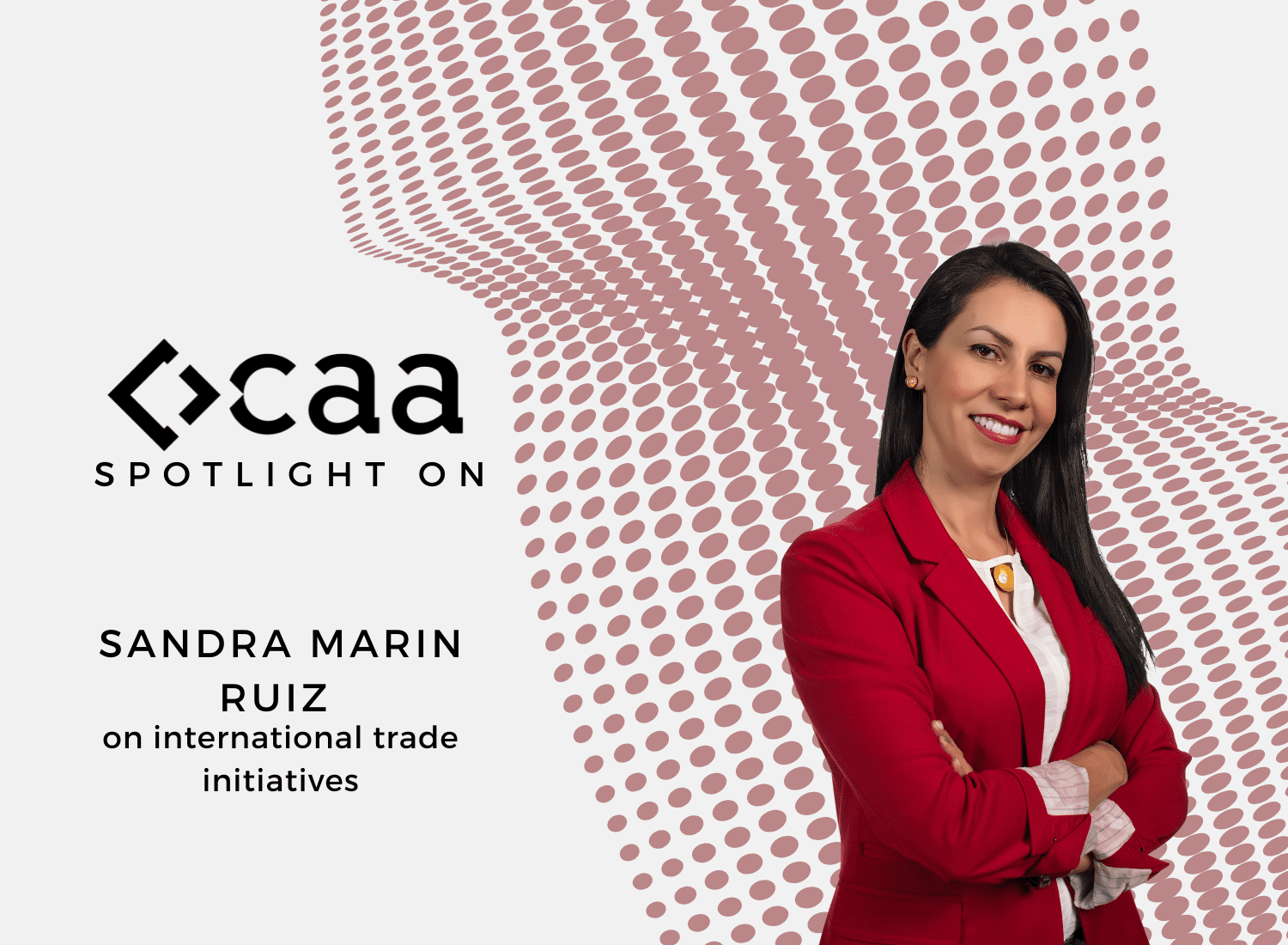 January 2025 — In an interview with Invest:, Sandra Marin Ruiz, regional director of the Florida Small Business Development Center (SBDC) at Florida Atlantic University (FAU) discussed how SBDC fosters business growth, especially in global markets, through tech-acceleration and commercialization technical assistance services. She also highlighted life sciences and high-tech industries as key sectors driving innovation.
What have been some of the main highlights over the last year for the Florida Small Business Development Center (SBDC) at Florida Atlantic University (FAU)?
Over the past 12 months, we have achieved several significant milestones. The Small Business Development Center serves approximately 2,000 businesses annually, in addition to assisting about 1,000 individuals who are looking to start a business. Our primary focus remains on providing consulting support.
This year, we expanded our operations by adding a sister program called the APEX Accelerator. With this program, we help business owners who are striving to become government contractors, not just locally and at the county level, but also at the federal level. Together, SBDC and APEX Accelerator have launched the Tech Series Consulting-based Program, which accelerates the path for technology commercialization. This initiative supports businesses in obtaining government contracts and accessing capital from 13 different federal agencies to develop prototypes and build new technologies. Traditionally, these technologies originate from universities, but we are now enabling corporations and manufacturers to create innovation teams within their organizations.
We have seen some remarkable outcomes. Corporations that build innovation teams with their employees are now able to spin off new technologies. These spinoffs often result in the creation of new companies, where employees and employers collaborate to form new entities. This approach provides employees with opportunities to grow their assets and create generational wealth, all while maintaining their existing employment. By extending the technology commercialization mindset beyond universities to corporations, we are shaping their knowledge into narratives that can be transferred into new products. These products, in turn, receive funding from government programs that support high-risk technologies without requiring repayment. If successful, these initiatives offer a long-term path for growth and collaboration with the government.
Which industries and sectors are driving growth in Palm Beach, and where are the strongest opportunities for growth?
You can see the trends, and they are leaning toward life sciences. There is a lot of construction and shifting development happening. If you look at the statistics, there is also significant activity in the financial sector. It is a noticeable shift from the traditional focus on hospitality to a stronger emphasis on technology.
What we have also been expecting is a shift in manufacturing. There are many headquarters moving to the area, and part of our conversation with the South Florida Manufacturing Association has highlighted that we have numerous manufacturing capabilities within entities that do not even recognize themselves as manufacturers. For instance, life sciences labs often classify themselves on the scientific side, but they actually have manufacturing capabilities. This opens opportunities for others to utilize these resources to create more products and services.
Historically, Florida was focused on agriculture, construction, and hospitality. Now, we see companies aggregating across a variety of sectors. For example, in the marine industry, activities range from entertainment to heavy lifting in aquaculture in partnership with entities from out-side of Florida, such as seafood production in warm waters. It is hard to pinpoint one dominant trend because the landscape is constantly evolving. Companies are migrating to Florida for investment opportunities and favorable policies, creating a dynamic and diverse economic environment.
We also see significant growth in aerospace research. While much of the testing occurs in other parts of the state, there is rapid evolution in aerospace components here. For example, some companies work on microgravity and solar applications for agriculture. While the testing is conducted elsewhere, the groundwork and development often happen here.
High-tech industries are especially prominent, and encapsulate everything. Manufacturing, education, and even the financial sector are increasingly adopting high-tech approaches. In construction, for instance, there is a company called Carbon Limit that was recently presented in our “Croc Tank.” They capture CO2 in concrete, combining environmental sustainability with material innovation and fintech elements. This type of cross-sector integration exemplifies the breadth of opportunities in Palm Beach and speaks volumes to the enormous potential for new industry sectors to emerge here.
How do you help businesses in Palm Beach with their international trade and internationalization efforts as they seek to establish themselves abroad?
Let me break this down into two aspects. I am part of the District Export Council, an entity designated by the U.S. Secretary of Commerce to provide resources for businesses aiming to go global. Typically, this involves manufacturers with products they wish to export. With multiple ports in South Florida, we are fantastically located to trade with about 96% of the global market. We are strategically positioned.
What we have noticed, however, is a significant gap in awareness. Many businesses do not consider international trade as a viable avenue for growth. To address this, we have programs such as the SBDC’s international trade initiatives. One of our key programs is the Statewide Trade Expansion Program (STEP) grant, which supports businesses with research and trade missions in partnership with the Florida Department of Commerce.
There are many businesses unaware of their export potential, especially in a country like the United States with its numerous ports. Additionally, technological products and services are increasingly being commercialized globally, allowing for the export of services as well as goods. To address this, we launched the Trade Series Consulting-based Program. It helps businesses start with a global perspective from the very beginning. This involves learning about tariffs, payment systems, and other complexities of international trade.
For individuals without a tangible product or service, there are opportunities to act as intermediaries or commercial agents for locally produced goods. Logistics agencies play a significant role in this. Our goal is to help communities create businesses that leverage their proximity to international markets. For example, U.S. products and services are well-received globally, and our strong currency facilitates revenue stability for exporters.
How do you identify which global international markets for export and internationalization make sense for your clients?
International trade is based on the product, not the entity. Each product has a code under the Harmonized Tariff Schedule. Using this, we identify the most favorable markets. We also consider U.S. trade agreements, product restrictions, and logistics costs. Especially as logistics is a business of high level of cost management. Losing even a cent per unit can have significant implications. Those who manage these details well can find tremendous success. However, for newcomers, navigating these complexities can be expensive and challenging. That is why our support is so valuable.
We use market research methods and opportunity/risk matrices to analyze all aspects of a product. For example, if someone has a representative in a specific country or a manufacturing facility in a region, we prioritize studying those markets. This approach helps expedite the process with lower risk.
For physical products, we focus on data-driven recommendations. In the case of services, especially in life sciences, we must navigate intellectual property, national security concerns, and geopolitical conditions.
We develop export marketing plans and market overviews. A group of researchers and students from Florida Atlantic University’s College of Business helps analyze data. We consider both external and domestic markets. Data is crucial in determining whether a deal is viable.
Training is also a significant part of our work. For example, we have a contract with the Organization of American States to help businesses from the Caribbean enter the U.S. market and to create partnerships with U.S. exporters This involves training businesses on friendly trade practices.
For new exporters, we provide guidance on exporting complex items like medicine, food, or military-related products. Intellectual property is another challenging area. We offer data and resources to help companies make informed decisions.
For larger manufacturers, we assist with securing capital to increase production capacity. For those just starting, we focus on research, handholding, and utilizing networks like the SBDC networks in other countries. This ensures a smooth transition into international trade.
For more information, please visit:





