


Spotlight On: Larry Padilla, CEO & Executive Director, Decatur Housing Authority
Key points:
- • Decatur Housing Authority is evolving into a more entrepreneurial housing organization.
- • Partnerships and geographic expansion are key to growing affordable housing.
- • Attainable housing is becoming essential for working families priced out of the market.
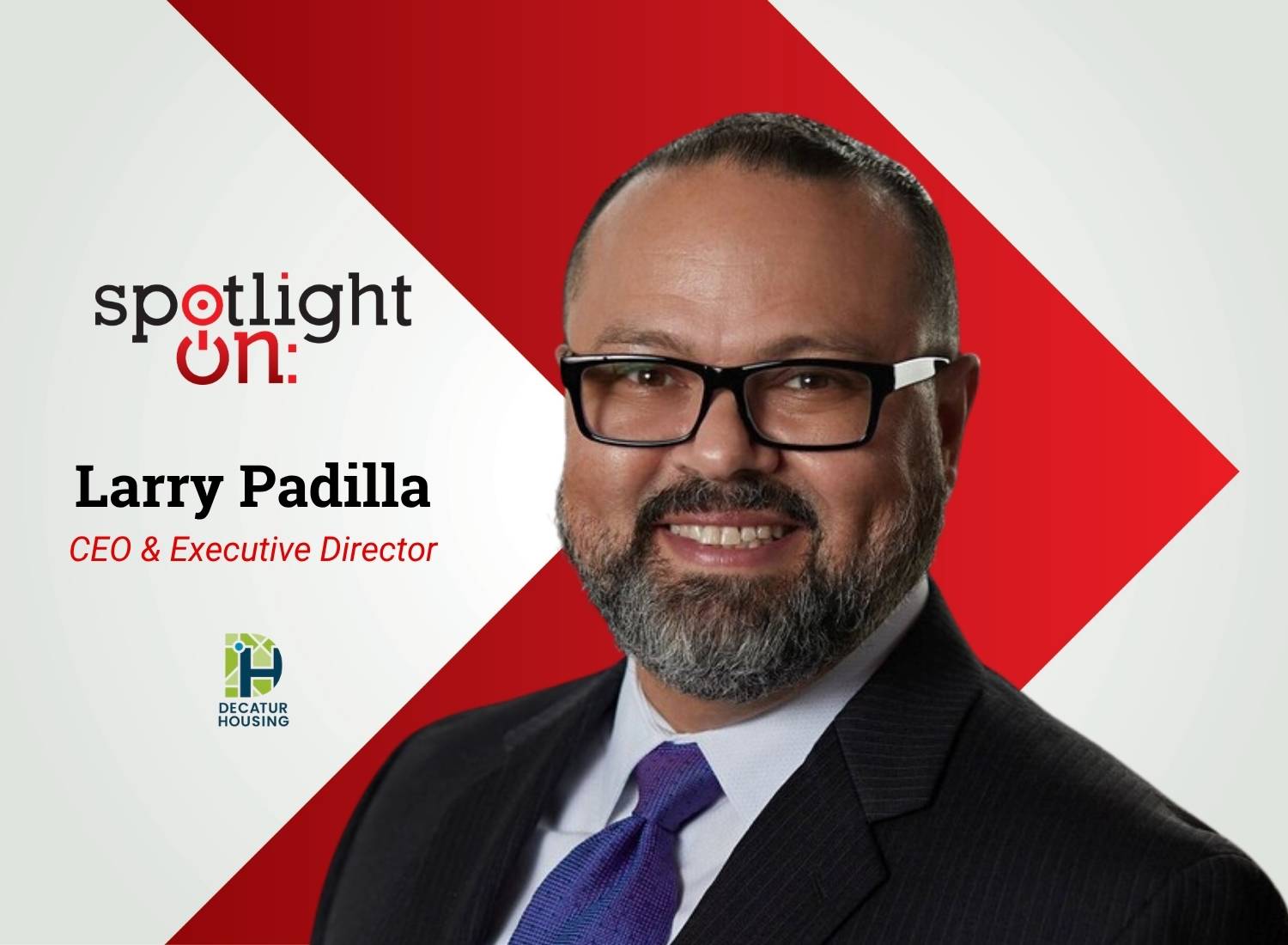 August 2026 — In an interview with Focus:, Larry Padilla, CEO and executive director of Decatur Housing Authority, discussed the organization’s transformation, efforts to expand housing opportunities, and the challenges of addressing affordability in a constrained market. “Because those resources are limited and highly competitive, it can take years to assemble the financing needed to bring a development to fruition,” Padilla said.
Join us at caa’s upcoming leadership summits! These premier events bring together hundreds of public and private sector leaders to discuss the challenges and opportunities for businesses and investors. Find the next summit in a city near you!
What changes over the past year have impacted Decatur Housing Authority, and in what ways?
One of the first challenges was addressing a common misconception, both internally and externally, that housing authorities are city agencies or municipal departments. A housing authority is an independent public corporation, autonomous from the city or municipality it serves. Established under state law as a public body corporate and politic, it is entrusted with providing affordable housing and administering federal, state, and local housing programs.
Our organization has also undergone a significant business transformation. We have converted all our former public housing communities into privately owned entities with independent ownership and investor structures. Today, the only federal program for which we serve as the fiduciary administrator is the Housing Choice Voucher Program, commonly known as Section 8.
At the same time, we have evolved into much more than a program administrator. We operate as a real estate owner, developer, and operator with a responsibility to create, preserve, and expand affordable and attainable housing. That requires us to think and operate like a business while remaining committed to our public mission. Our long-term sustainability depends on diversifying revenue sources, developing new housing opportunities, and operating with the same discipline and accountability expected of high-performing private-sector organizations.
Historically, the organization functioned more as an administrative agency than as an entrepreneurial enterprise. There was less emphasis on operational performance, accountability, and individual ownership of outcomes. Changing that culture has required evaluating our operating model, adopting industry best practices, establishing clear expectations, and creating a culture where accountability and continuous improvement are shared responsibilities.
My leadership philosophy has been central to that transformation. I believe leadership is not about what I accomplish individually; it’s about what we accomplish together. I want to be surrounded by talented professionals whose expertise informs better decisions. We have intentionally shifted toward hiring exceptional people, empowering them to contribute to strategic discussions, and encouraging thoughtful participation in decision-making rather than simply assigning tasks. While the responsibility for final decisions ultimately rests with me, those decisions are stronger because they are informed by the people closest to the work.
Meaningful organizational change inevitably brings difficult personnel decisions. Since I assumed this role, we have experienced significant staff turnover through retirements, voluntary departures by individuals who chose not to embrace the organization’s new direction and expectations, and terminations related to performance. Throughout this transition, our Board of Commissioners has been unwavering in its support and has recognized that lasting organizational change requires difficult but necessary decisions.
Another important aspect of our transformation has been breaking down organizational silos and increasing collaboration across departments. Our team has increasingly recognized that virtually every function within the organization is interconnected. Decisions made in one area inevitably affect another, and our effectiveness depends on working collaboratively rather than operating independently. It has been rewarding to see departments rely on one another more intentionally, creating a stronger, more unified organization that is better equipped to fulfill its mission.
How has the authority’s strategy to expand beyond Decatur progressed?
We are taking a very strategic approach. Right now, we are building a robust pipeline that includes opportunities both inside and outside Decatur. We are encouraged by the momentum we are seeing with potential partnerships, organizations, and development opportunities.
At the same time, we understand the challenges that come with growth. Every development faces financial, political, and community pressures. There are also many misconceptions about what housing authorities are capable of doing along with external pressures such as NIMBYism.
A major part of my evolving role is to educate. Whether we are speaking with residents, business partners, community stakeholders, or on a conference panel, there has to be consistent messaging about what affordable and attainable housing truly mean, the misconceptions surrounding them, the complex financing required, the stereotypes surrounding residents, and the economic impact these projects can bring to a community. Consistent education is critical to any expansion strategy.
What would it take to build a pipeline of more than 1,000 units?
There are several approaches we are pursuing simultaneously. We continue to identify opportunities to self-develop, create new partnerships with other experienced, mission-driven developers, collaborate with similar organizations that share our goals, and perhaps make acquisitions. If we diversify our strategy, the impact can be greater and happen more quickly.
We keep talking about a crisis, but I feel there is little progress in addressing it. There is no single solution. Different communities require different approaches, and we have to remain flexible.
Our objective is to be at the table, working with others to create and preserve affordability. That means leveraging partnerships, sharing resources, and exploring every avenue that can help expand housing opportunities.
What does attainable housing mean in practice, and why is it important for Decatur’s future?
People often hear the term affordable housing and immediately think of public housing, but that is a common misconception. Affordable housing encompasses a broad range of housing options and financing models. Traditional affordable housing often relies on Low-Income Housing Tax Credits and other competitive funding sources. Because those resources are limited and highly competitive, it can take years to assemble the financing needed to bring a development to fruition.
Attainable housing, sometimes referred to as workforce housing, serves a different segment of the population. In a market like Decatur, it generally focuses on households earning up to 120% of the area median income. These are individuals and families who earn too much to qualify for subsidized housing but still cannot afford to live in the communities where they work.
In many ways, this is one of the most financially vulnerable populations. We often champion the middle class, but the reality is that many working families live paycheck to paycheck without the benefit of housing subsidies or the financial cushion to absorb rising costs, inflation, job loss, or other unexpected life events. A single financial setback can quickly place their housing stability at risk.
Attainable housing is typically not subsidized, but rents are intentionally priced below market levels to create opportunities for working households. Making these developments financially viable requires the right combination of land costs, financing, public-private partnerships, and favorable market conditions. Developers must balance affordability with long-term financial sustainability.
As traditional affordable housing financing becomes increasingly competitive and more heavily regulated, many developers are exploring attainable housing as an important complement to those efforts. While it may offer greater flexibility in terms of financing and regulatory requirements, successful projects still require a careful alignment of economic, financial, and community factors.
For Decatur’s future, attainable housing is essential. A healthy community depends on a diverse workforce and a range of housing options that support economic stability.
What opportunities exist to accelerate housing production while maintaining quality, sustainability, and long-term affordability?
Access to land remains one of the biggest factors. We have to evaluate opportunities to acquire land, invest alongside others, or form partnerships that provide access to sites at reasonable costs.
We also need projects located in areas where rents can support long-term operational and debt obligations. While the current economic environment presents challenges, waiting indefinitely is not a solution because costs continue to rise.
We are operating during a period when opportunities exist, but land availability remains scarce. Scarcity drives up property value, making acquisitions more difficult or contributing to deals not getting done.
That reality is one reason our growth outside Decatur is important. Expanding our geography will give us access to additional opportunities that may not exist within a highly constrained market. Without that flexibility, it becomes increasingly challenging to create affordable and attainable housing at scale.
What are your key goals and priorities for the next two to three years?
The priority is continuing to strengthen the organization. We have made significant progress, but we are not finished. I want people to walk into an environment that is collaborative, supportive, and focused on best practices. Every one of our team members should bring expertise to the table and be encouraged to grow professionally.
As an organization, we need to think creatively about opportunities. Not every opportunity will be directly related to housing; however, there may be other revenue-generating ventures and investments that can help fund and support our housing mission.
The long-term goal is to build a stronger and more diversified organization that can sustain its communities while advancing its mission. An unspoken mandate of our mission is to assist residents in moving to the next level. I often share with our team and residents that we are about providing a hand, but not holding hands. We want seniors to be able to age in place, working families to access workforce training and other opportunities that improve their economic outlook, and young people in our communities to access academic enrichment programs that help them thrive, overcome stereotypes, and become future leaders.
Ultimately, we want our residents to become more self-sufficient.
We are also interested in expanding homeownership opportunities within the affordable and attainable housing space. The age of the typical homeowner has risen significantly compared with previous generations, and many people who would once have purchased a home much earlier now face substantial barriers.
The question is how we can contribute, even in a small way, to changing that reality and creating new pathways to stability and ownership.
How can the perception of affordable housing be changed?
One of the most important things people overlook is that housing affordability affects far more people than they realize. Many individuals who would never consider themselves candidates for affordable housing are already relying on arrangements that make housing costs manageable, whether that’s living with roommates, sharing housing expenses, or making other financial compromises. That’s the reality of affordability.
Housing affordability is not defined by age, race, or gender. It’s about whether individuals and families can make ends meet without having to choose between paying rent, buying groceries, filling a prescription, or covering other necessities. Those are challenges that can affect anyone.
The greatest obstacle is overcoming the stereotypes that continue to surround affordable housing. Too often, people assume it is intended for “someone else.” The reality is that many working professionals, recent graduates, young families, seniors on fixed incomes, and essential workers experience the same housing pressures. In many cases, they earn too much to qualify for housing assistance but not enough to comfortably afford the communities where they work and want to live.
Changing that perception begins with broadening the conversation. Rather than focusing on labels, we need to recognize that housing affordability is an economic issue that affects a wide range of people. When we create housing opportunities for teachers, nurses, first responders, municipal employees, service workers, and young professionals, we are strengthening the entire community. Affordable and attainable housing are social priorities and essential components of a healthy, sustainable local economy.
Want more? Read the Focus: Atlanta report.






