
Twin Cities leaders push for equity to close economic gaps
Writer: Pablo Marquez

July 2025 — The Twin Cities have seen a range of promising policies aimed at advancing equitable economic progress in recent years, but the true challenge lies in shifting from rhetorical commitments to tangible resource allocation. Equity can mean anything from access to capital, affordable housing, quality education, to inclusive workforce opportunities. According to speakers at the recent Invest: Minneapolis-St. Paul leadership and networking conference, determining how to prioritize these interconnected issues is central to shaping the region’s future.
“The Twin Cities have done a great job in moving from rhetoric to actual resource allocation. Organizations are coming together to work for a brighter future. Equity is not a political liability; we have to work together collectively in order to move the needle forward,” said Terrance Hopson, regional vice president for the Midwest region at Western Governors University.
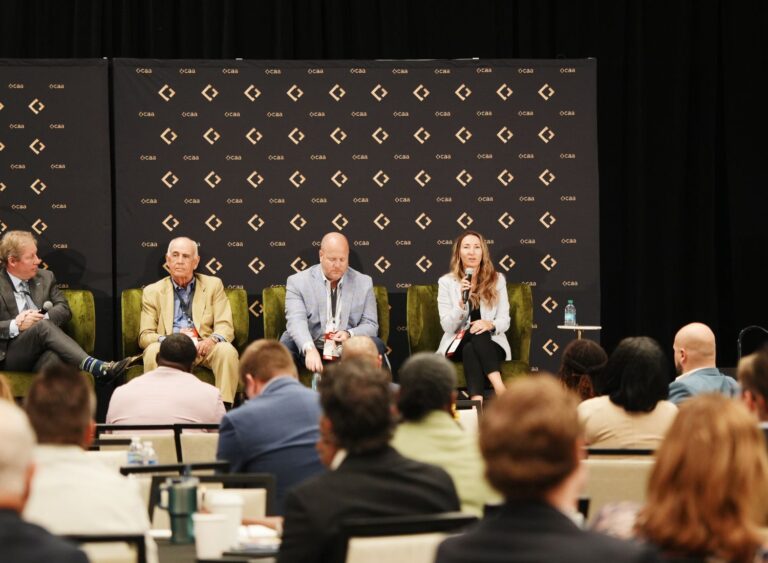
Hopson was speaking as part of a panel titled, “Policy or Politics: What is holding back equitable economic progress in the Twin Cities – and what is being done about it?”
Anne Burt, mayor of the city of Woodbury, echoed a similar sentiment and highlighted the importance of redistributing wealth. “We have planned strategic growth that is well thought out under Minnesota’s Fiscal Disparities Program,” she said. “Taking communities that have strong commercial opportunities and redistributing tax dollars to other communities is a great idea.”
As economic disparities deepen, alignment between public and private actors has become more urgent and complex, especially amid rising political polarization and growing activist demands for structural change. Private companies and nonprofit institutions in the Twin Cities are stepping in where public policy has stalled, offering innovative models that may inform or complement broader economic strategies.
Hopson added to the discussion by stressing the need for access to capital and affordable housing. “Capital and housing are the answer to this. That is the American Dream, every individual should wake up and not worry about medication, education, childcare, etc. The Twin Cities have a lot of resources, and we can work together,” he said.
The Twin Cities are home to a strong and diverse educational ecosystem, featuring high-performing public schools and renowned colleges and universities. Minnesota consistently ranks among the top states for education, with notable strengths in both K-12 and higher education. The state’s commitment to early childhood learning and a solid K-12 foundation contributes to its national reputation. With a high school graduation rate of 84.2% and a ranking of seventh in the U.S. for PreK–12 education, Minnesota continues to demonstrate its dedication to academic excellence and student success.
Burt expressed that education is the gateway to the future when pushing for equity and addressing economic disparities. “Education is the key here; we must make sure that we are preparing the next generation in order to have a skilled labor force. The importance of working with schools and universities cannot be understated,” she said.
The Twin Cities feature a well-developed and comprehensive public transportation network, primarily operated by Metro Transit. With a mix of buses, light rail, and commuter trains, the system provides broad coverage across the metro area, allowing many residents and visitors to travel conveniently without the need for a personal vehicle.
“Public transportation and transit are key to cementing Minneapolis in terms of providing connections to labor,” said Adam Duininck, president and CEO of the MPLS Downtown Council. “Access to jobs and opportunity, as well as affordable housing, is important to make residents and employers fulfilled in this environment.”
The panel also touched on the nuanced safety and security landscape in the Twin Cities, with crime rates varying by neighborhood and type. While some areas face elevated levels of violent crime, particularly in Minneapolis, others remain relatively safe due to strong community ties and visible law enforcement. It is important to note that the Twin Cities have seen a significant drop in violent crimes in recent years.
Duininck pointed out that public safety is the glue that holds the foundation of a functional city and thriving business environment together. “Safety and security are essential. Investing in policing communities is important in order to make individuals feel safe to move around. Foundational safety is what makes a community functional,” he said.
Both Minneapolis and St. Paul are tackling public safety through community-driven strategies and targeted interventions. A comprehensive approach that combines resident engagement, improved urban design, and increased police presence is essential for effective crime prevention and lasting safety.
Watch Panel 2 of the Invest: Minneapolis-St. Paul 3rd Edition launch conference:
To access the Invest: Minneapolis-St. Paul 3rd Edition report, click here. (Subscription required.)
For complete conference panel discussions, tune in to our YouTube Channel.