
Charlotte Business News: Banks Bet on AI Pivot
Key points:
- • Charlotte remains the No. 2 US banking center by assets, behind only New York.
- • Bank of America and Truist are accelerating AI and private credit investments.
- • Charlotte’s fintech ecosystem added more than 4,000 jobs over the past year.
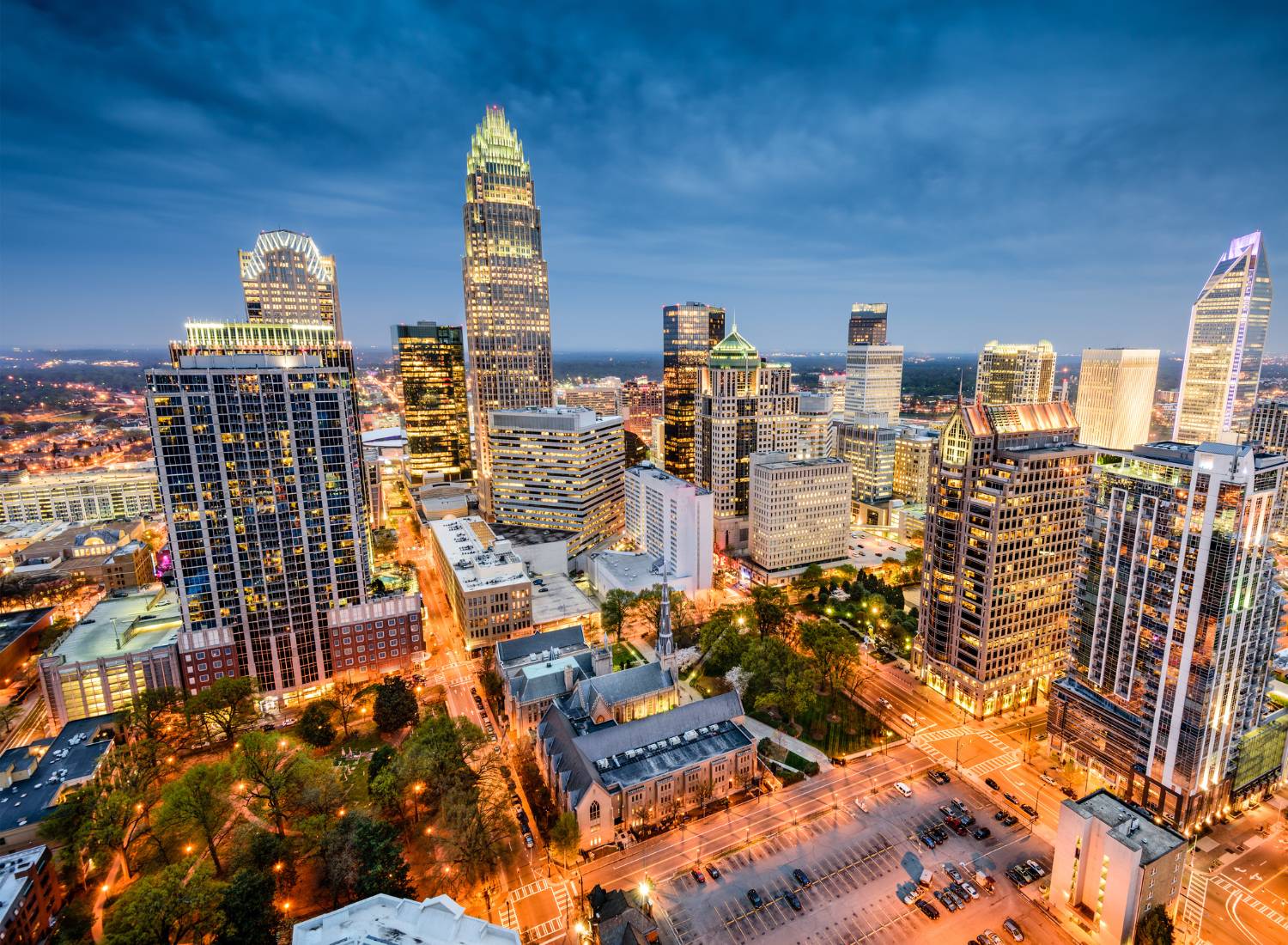 May 2026 — The latest Charlotte business news is, fittingly for the nation’s second-largest banking center, a story of strategic evolution. While the region remains anchored by commercial giants, it is increasingly defined by the intersection of enterprise AI and the rapid expansion of private credit.
Join us at caa’s upcoming leadership summits! These premier events bring together hundreds of public and private sector leaders to discuss the challenges and opportunities for businesses and investors. Find the next summit in a city near you!
Bank of America, Truist, and a growing cohort of Charlotte-headquartered specialty lenders are accelerating two strategic bets: the deployment of generative AI across operations and a deeper push into direct lending to compete with asset managers currently capturing traditional banking market share.
The scale of this shift is underscored by Charlotte’s position as a global financial titan. According to the Federal Deposit Insurance Corporation (FDIC), Charlotte ranks second only to New York City in aggregate banking assets. The city’s two primary tenants, Bank of America and Truist, anchor a combined asset base of just over $4 trillion — with Bank of America holding ~$3.5 trillion and Truist ~$550 billion. While this concentration provides a stable talent pool and deep commercial real estate demand, it has faced increasing pressure as private credit and fintech firms steadily disintermediate traditional bank balance sheets.
The response is visible in the latest earnings transcripts. Bank of America’s 2026 Q1 results highlighted the impact of its “Meeting Journey AI” and “Erica” platforms, reporting millions of hours in saved productivity and enhanced operating leverage (Bank of America Investor Relations). Meanwhile, Truist is moving into its “Truist 2.0” phase, having completed the sale of its majority stake in Truist Insurance Holdings in early 2024 to bolster capital for core banking technology (Truist Press Release Archive).
Smaller Charlotte-based players, including LendingTree and a bench of specialty finance startups, raised significant growth capital in 2025, leading the Charlotte Regional Business Alliance to market the metro as a “fintech corridor” rather than a legacy banking center.
The Private Credit Angle
Private credit is the second pillar of this transformation. Bank of America has expanded its strategic alliances with major private-credit managers to grow its lending book at a rate exceeding consumer net interest income. Truist has similarly formed a dedicated direct-lending unit, recruiting originators from Northeast investment banks to capture midmarket deals. Regional platforms such as Barings, alongside smaller private-credit shops in SouthPark and Ballantyne, are building a midmarket origination network that rivals traditional financial hubs.
Talent and Footprint
Workforce data confirms the sector’s resilience. The Charlotte-Concord-Gastonia metro was among the country’s leaders in job gains through 2025, ranking fourth in job growth as of January 2026, adding tens of thousands of roles across the broader economy. According to the CBRE’s “Charlotte Office Figures Q1 2026” report, uptown class-A office vacancy has fallen for three consecutive quarters as bank-adjacent tenants consolidate, and institutions like UNC Charlotte and Davidson College have expanded their financial-technology curricula to feed the local pipeline.
Looking forward, the success of this “pivot” will be measured by three diagnostics:
1.- Whether Bank of America’s AI-driven productivity leads to sustained cost-to-income improvements.
2.- Whether Truist’s new direct-lending unit achieves the volume required to become a standalone operating segment.
3.- Whether major private-credit managers continue to establish Charlotte as a “second campus” to New York.
For executives tracking the region, the most consequential story is no longer just deposit growth — it is the flight toward an AI-enabled, private-credit-inclusive financial ecosystem.
Want more? Read the Invest: Charlotte report.