Spotlight On: Bose Bratton, President, Wake Stone Property Company
Key points:
- • Population growth is fueling development across eastern Wake County.
- • Data centers are emerging as a new regional investment opportunity.
- • Long-term planning and community collaboration are shaping responsible development.
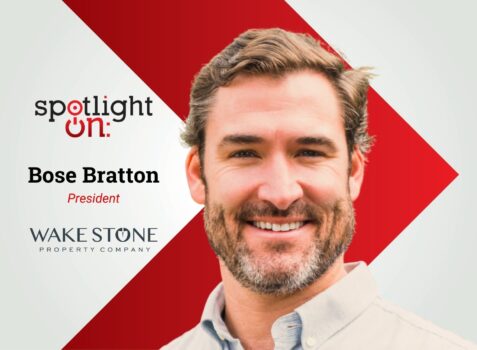 September 2026 — Invest: spoke with Bose Bratton, president of Wake Stone Property Company, about the Triangle’s resilience, the opportunities emerging across eastern Wake County, and the company’s long-term approach to development. “Development is not a short-term exercise. When we build something, we try to think about the future,” Bratton said.
Join us at the Invest: Raleigh-Durham 4th Edition Leadership Summit! This premier event brings together hundreds of Raleigh-Durham’s business and regional leaders to discuss the challenges and opportunities for businesses and investors. Buy your ticket now!
How would you describe the real estate and development environment in the Triangle, and what are the main forces shaping investment and project activity?
We feel fortunate to be operating in a market like Raleigh-Durham. Even with macroeconomic challenges in the background, this region continues to have strong momentum. People are moving here every day, sometimes for jobs that are already lined up and sometimes because they know opportunity is here. That speaks to the strength of the market and to the long-term vision local leaders have had in setting the region up for success.
In eastern Wake County, especially, a lot of growth has been driven by single-family residential expansion. As new rooftops go up, they create demand for the supporting real estate that follows, whether that is industrial, retail, service-oriented commercial space, or last-mile logistics.
Which industries or tenant types are driving the most activity in the market today?
There are several forces at work with distribution, logistics, and last-mile delivery remaining active alongside businesses linked to the single-family home growth we’ve discussed.
The greater Raleigh area is also still in a strong position because it offers a mix that is hard to replicate. There is a highly educated workforce, a still-reasonable cost of living compared with many peer markets, and a quality of life that appeals to both families and employers. The region’s location and transportation connectivity add to that advantage, and infrastructure improvements such as the completion of the I-540 outer loop will make areas like Knightdale even more accessible.
What opportunities are emerging in the regional real estate market today that may not have been present a few years ago?
One of the newer opportunities people are trying to understand is data centers. That has become a major topic of conversation, particularly east of Raleigh, where there is still land available and, in some places, a more rural development pattern. Some communities are excited about the possibilities, while others are more cautious.
It is an area people are watching closely because it comes with a unique set of demands, especially around power. In some cases, the challenge is not only finding the right land, but also whether the infrastructure can support the energy requirements these projects bring. It is still early in terms of how much of that activity will ultimately land here, but it clearly represents a newer category of opportunity within the market.
What role does collaboration with local governments and economic development organizations play in helping projects move forward in such a fast-growing region?
It plays a huge role. Given our company’s roots, we have been working with municipalities, counties, and state-level stakeholders for decades. Those relationships matter, and they matter even more in a region that is growing as quickly as this one.
In Knightdale, for example, we work closely with town staff, elected officials, and the development services team as we think about new projects. It is important that our goals align with the town’s goals, and if there is any conflict, we work through it early and thoughtfully. That helps ensure projects deliver what communities need, whether that is jobs, tax-base services, or a stronger sense of place.
Historically, some of our work has been concentrated in industrial development, which has been positive for employment and tax revenue. Looking ahead, we are also pursuing projects that contribute more directly to the community fabric, including mixed-use office and multifamily developments with retail components.
How are expectations around sustainability, land conservation, and responsible development shaping decisions across the industry?
If you’re not collaborating with the community, whether that’s from the economic side or from the people who live around you, and building products that are a benefit to the community as a whole, then ultimately it’s not set up for long-term success.
That is the heart of it. Development is not a short-term exercise. When we build something, we try to think about the future. We have to understand things like the traffic implications, the effects on the land, the broader community impacts, and how a project fits into the long-term vision for a place.
That means maintaining close relationships with all the stakeholders involved. It is not just the economic development side or the municipal side. It is also the people who live nearby and who will experience the project directly. If we do not understand their perspective, they are not going to understand ours.
What makes the Triangle competitive compared with other fast-growing regions in the United States?
One of the biggest differentiators is the university system and the talent pipeline it creates. This region has an extraordinary concentration of educational and research institutions, and that feeds directly into the labor force, innovation ecosystem, and business environment. Companies know they can find the talent they need here.
Beyond that, the region checks a lot of boxes that matter to both employers and residents. The weather is appealing, the cost of living is still manageable compared with many other high-growth markets, and it is a nice place to raise a family. Another advantage is variety. Across the Triangle and the surrounding municipalities, there is a style of living that can work for almost anyone, whether that means an urban high-rise or a quieter setting with more land while still being close to major employment centers.
There is also a broader sense of community across the region. Many of the institutions, municipalities, and business organizations work well together and share a mindset around growth and improvement. That collaborative culture is a real asset.
What risks or uncertainties are developers paying the most attention to as they plan projects over the next few years?
The big issues are the ones most people would expect: inflation, interest rates, and broader geopolitical uncertainty. Those pressures filter into everything. Energy costs affect fuel, fuel affects transportation and construction, and that influences borrowing costs, project feasibility, and ultimately the pace of development.
Housing affordability is especially important. One of this region’s advantages has been that it offers a compelling quality of life at a more accessible cost than some competing metros. If that equation changes too much, it could take some of the momentum out of the market.
We have also seen how policy and trade issues can create curveballs. Because we work with logistics users who depend on international production and distribution, tariff-related shifts have had a real impact. Right now, one of the biggest things we are watching is the energy situation and how it affects both construction costs and project timelines.
What is your vision for Wake Stone Property moving forward? How do you want the company to be viewed in the market?
Our goal is to spur economic and social development in the communities we serve. That means being thoughtful about what we build, where we build it, and what each project contributes to the built environment and to the broader community.
We want to be known as long-term thinkers. We are not developing simply to move on as quickly as possible. In many cases, we intend to hold assets for a long time, so it is important that they are the right assets in the right places and that they add lasting value.
Wake Stone Property grew out of a family business that goes back decades, and while this company is still relatively young in its current form, we are building on that legacy with a fresh focus. We want to be seen as a company that is thoughtful, responsible, and committed to projects that endure.
I would also add that the quarry business, which is where our roots are, is sometimes misunderstood. It can carry negative perceptions, but it is a vital industry in growing regions. The people in that business have to be mindful of their communities, and in many cases, they are strong local citizens who contribute meaningfully back to those places.
Want more? Read the Invest: Raleigh-Durham report.