Spotlight On: Hash Alyawer, Managing Director, Naftali Florida
Key points:
- • Naftali is expanding its South Florida development and lending platforms.
- • Luxury buyers increasingly prioritize quality, functionality, and thoughtful amenities.
- • Market responsiveness and broker relationships are shaping development decisions.
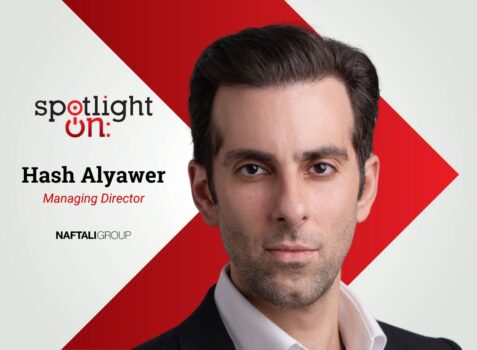 September 2026 — Invest: sat down with Hash Alyawer, managing director of Naftali Florida, to discuss the firm’s strategy in Miami and South Florida, spanning development priorities, its lending platform, and what luxury buyers are demanding today in a maturing market. “Quality doesn’t necessarily mean just charging the highest amount or using the rarest kind of finish,” Alyawer said.
Join us at caa’s upcoming leadership summits! These premier events bring together hundreds of public and private sector leaders to discuss the challenges and opportunities for businesses and investors. Find the next summit in a city near you!
How would you describe Naftali’s strategic vision for Miami and broader South Florida, and how the region fits into the firm’s long-term growth plans?
Naftali is headquartered in New York, but in 2022, we made our first acquisition in South Florida. Since then, the objective has been to continue to expand the portfolio while adhering to our principles. I joined in May of 2025, and I grew up in Miami, so it has been meaningful to help build the platform here.
We continue to build in both New York and South Florida, and we stay close to end-user demand while looking for places where we can add value to the neighborhoods we invest in. How much we invest will always come down to opportunity and the ability to execute to our standard.
Right now, we are pursuing opportunities on the development side and on the credit side. Beyond our equity development business, we have a debt platform, and we recently closed our first South Florida loan a few months ago. With continued migration into the region and crossover from our New York clientele, expanding here is a natural fit.
How does the firm work with local architects, planners, and contractors in Miami compared with markets like New York?
My background is mostly in South Florida, so I can speak most directly to what I have observed with our teams and partners here. On our two active South Florida projects, Arquitectonica is the architect on both. They are local, but operate at a global level, and that matches the caliber of what we are delivering.
Across the broader consultant team, we have a mix of South Florida and New York partners. Rockwell Group is the interior designer on both projects, and collaboration has been effective. There is always a learning curve across markets, but we bring the same focus on quality and accountability everywhere we operate.
How does Naftali balance condominium, rental, and mixed-use decisions as demand evolves across South Florida?
Development is fluid, and we constantly evaluate whether a program is still the right fit as conditions shift. If demand moves toward larger units, you have to be willing to adapt. If the market suggests adding or reducing retail, or adjusting unit mix, those are real considerations.
Sometimes those changes add cost and complexity, and they can be frustrating to architects and designers as you iterate. But we view responsiveness as part of delivering the right product. Whether it is refining layouts, rethinking amenity mix, or rebalancing how much space is dedicated to residential versus retail, we want the plan to remain grounded in what people will actually buy and use, and in what strengthens the surrounding neighborhood over time.
What lessons has the company learned from developing in Miami, and how will those insights shape future Florida projects?
One of the biggest differences in South Florida is the degree of engagement with the brokerage community. In Miami, you typically need deeper and more consistent interaction with brokers than you might in other markets, especially compared with parts of New York.
For me, that is familiar. For the New York team, it was an adjustment when the firm first invested here. The market rewards ongoing presence, regular interaction, and a sales approach that stays connected to brokers and the broader community supporting a project. That kind of feedback loop can also improve decision-making earlier in the process, because you hear quickly what buyers care about and where the market is shifting.
How has the market responded to projects like the Jem Private Residences, and what does that say about luxury demand in Miami?
The response has been positive, and you see it in the values buyers are willing to pay. For the firm, it reflects a consistent thesis centered on quality and executing at a high level.
Quality doesn’t necessarily mean just charging the highest amount or using the rarest kind of finish, and it is not about being expensive for its own sake. It is attention to detail, coordination, and execution, and that is what supports premium pricing relative to competitive projects in the downtown submarket.
Buyers are also increasingly sophisticated. They ask more detailed questions about floor plans, amenity programming, and day-to-day functionality. In a market where the luxury segment continues to expand, that scrutiny is now the norm.
How is Naftali leveraging amenities and design to attract buyers and investors in the luxury segment?
We try to start with demand rather than preference. We speak to buyers and the brokerage community, and we focus on the spaces people actually use. When we look at amenities, we think about lifestyle and ease of luxury living, then build programming and services around that.
For example, we are bringing a signature restaurant into the building and developing partnerships that connect residents to the neighborhood. We are about to announce a collaboration with PAMM that includes membership access to the Perez Art Museum, which is a block away, as well as a beach club and signature yacht club for buyers at the Jem. The goal is a cohesive experience aligned with the buyer profile.
How does Naftali approach sustainability and resiliency, given Florida’s climate and environmental realities?
We engage the appropriate consultants to address resilience and ensure we are building in a way that makes sense for the local environment. We also consider the context of each site and neighboring communities, and carry those considerations through design and construction. The intent is to be practical and disciplined, so the building performs the way it is supposed to in real-world conditions, not just on paper.
Looking ahead, what Florida opportunities are you most excited about, and how do they further distinguish Naftali’s presence in the region?
One advantage of our platform is that we operate on both the equity and credit sides. On the equity side, we have active developments today, and we are evaluating where we can add the most value by delivering quality at the upper end of the market. Miami Beach is one area we are watching closely because demand aligns with the kind of product we build.
On the credit side, we are more flexible on use cases while remaining conservative about who we lend to and partner with. That platform allows us to participate in projects we may not develop ourselves, including projects outside the luxury segment, and support broader community needs. It also gives us a different lens on the market, because we can evaluate opportunities across sponsors, asset types, and neighborhoods, and that can inform where we see long-term demand building.
I am excited to continue growing our portfolio in South Florida on both sides of the business and to contribute to the region’s momentum.
Want more? Read the Invest: Miami report.