Spotlight On: Steven Acosta, Health Market Leader, Insight Global
Key points:
- • Insight Global has expanded its healthcare footprint in Jacksonville through workforce and consulting solutions.
- • Healthcare providers are turning to AI, virtual care, and data modernization while facing ongoing staffing shortages.
- • Workforce development and international nursing programs are becoming key strategies for meeting future demand.
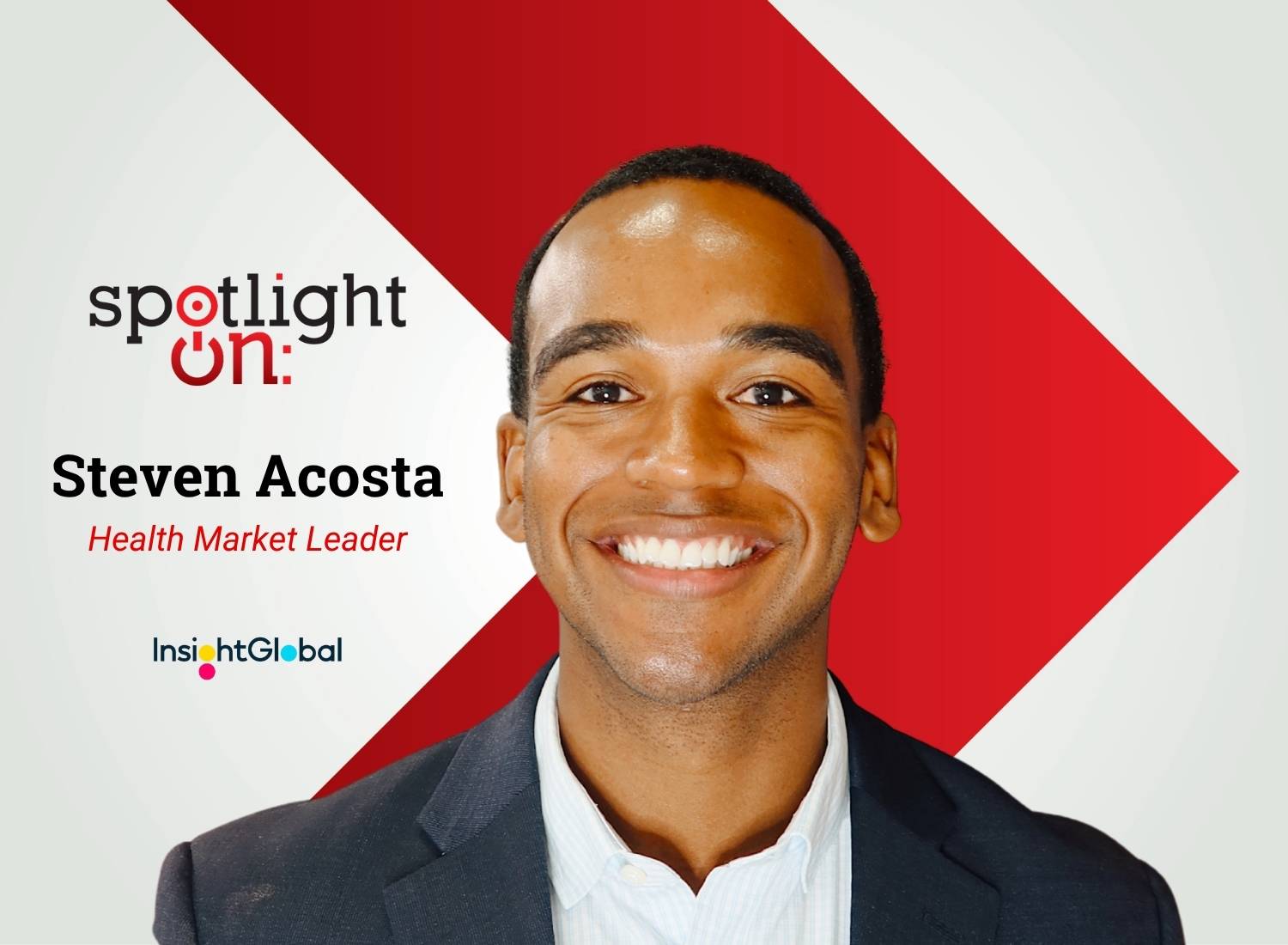 June 2026 — Steven Acosta, health market leader at talent and consulting company Insight Global, spoke with Invest: about the company’s healthcare growth in Jacksonville, workforce shortages, and how technology is reshaping healthcare delivery. “Hospitals operate at the speed of trust, and hospitals grow at the speed of trust,” Acosta said.
Join us at caa’s upcoming leadership summits! These premier events bring together hundreds of public and private sector leaders to discuss the challenges and opportunities for businesses and investors. Find the next summit in a city near you!
What is your overview of Insight Global, specifically its healthcare sector and position in the Jacksonville region?
Insight Global is a $5 billion global talent and consulting company delivering solutions through more than 75 locations globally, including across Canada, Europe, Asia, and Latin America.
I joined the Jacksonville market two years ago after working in our New Jersey office in the technology division. While Insight Global had maintained a Jacksonville presence for many years, there was no dedicated healthcare division here. I was brought in to build that market.
Healthcare represents about $300 million of our business. We work with organizations such as Optum, Cigna, UHG, Baptist Health, Brooks Rehabilitation, UF Health, and Nemours. Our goal is to provide strategic, talent, and technical solutions that help customers accelerate their priorities.
How has the past year been for Insight Global Health, and what accomplishments are you most proud of?
Since August 2024, our Insight Global Health team in Jacksonville has tripled. That is what I am most proud of.
Insight Global’s purpose is to develop our people personally, professionally, and financially so they can be the light to the world around them. Growth is a reflection of that mission.
We are a relationship-driven organization. Rather than being transactional, we focus on becoming an extension of our customers’ businesses. By understanding their goals, we can provide services and solutions that help them get where they want to go.
What are the biggest changes you are seeing in hiring among hospitals, healthcare systems, and providers?
Healthcare organizations are being asked to do more with less. They still need to serve patients, but reimbursement pressures are forcing them to rethink how they operate.
One trend we are seeing is the willingness of healthcare organizations to explore offshore talent. Organizations that previously would not have considered international staffing are now looking at resources in places like the Philippines, India, and Latin America.
Another major trend is data modernization. Healthcare organizations are increasingly focused on moving data into environments where it can be leveraged more effectively. That is particularly important because AI depends on having clean, usable data.
Healthcare has traditionally been slower to adopt new technology because of privacy concerns and the sensitive nature of patient information. However, organizations are recognizing that data modernization is essential if they want to improve efficiency and patient outcomes.
On the clinical side, workforce shortages remain significant. Medical assistants, nurses, imaging professionals, CT techs, and radiation techs are all becoming more difficult to recruit. Population growth across North Florida is driving demand faster than many organizations can keep up with.
One area where Insight Global has invested heavily is international nursing. We recruit and train nurses internationally and help them transition into U.S. healthcare systems. We support them throughout the process so they can become productive members of their organizations quickly.
What partnerships with educational institutions have proven successful in addressing workforce challenges?
We work closely with academic health systems, including UF, UCF, and USF. One initiative that has shown promise is partnering with graduate nursing programs to help connect graduating advanced practice providers and advanced practice registered nurses directly with health systems experiencing shortages.
That said, there is still a significant supply-and-demand imbalance. There simply are not enough nurses graduating quickly enough to meet current needs.
I believe more collaboration is necessary. Organizations need to approach workforce development with an abundance mindset and look for opportunities to partner. Whether those partnerships are between educational institutions, staffing firms, or healthcare organizations, there is tremendous opportunity to work together to solve common challenges.
How important are upskilling opportunities in helping bridge workforce gaps?
Upskilling will absolutely play a role, although I think the industry is still in the early stages.
Insight Global launched a clinical upskilling offering several years ago and completed successful programs that helped phlebotomists become medical assistants and enabled imaging professionals to expand their certifications and capabilities.
Initially, many customers were not ready for those programs. Today, we are seeing much greater interest because healthcare organizations increasingly recognize the need to develop talent internally.
At the same time, I believe international nursing remains one of the strongest long-term solutions. These programs address workforce shortages while also creating life-changing opportunities for nurses and their families.
Our model places nurses with health systems on a three-year basis while providing support throughout their transition. It creates a sustainable workforce solution that many organizations are beginning to embrace.
How do virtual care, AI, and digital health tools fit into the future of healthcare staffing and patient access?
Virtual healthcare services are already having a meaningful impact. They can reduce administrative burdens on physicians and help organizations operate more efficiently.
For example, technologies such as Epic’s ambient listening tools can document patient visits automatically, allowing physicians to spend more time focusing on patients rather than paperwork.
AI will undoubtedly be transformative, but organizations must first establish a strong data foundation. That is why data modernization remains such an important topic today.
To fully realize AI’s potential, organizations will need much more than individual tools. They will need integrated workflows and systems that allow AI to support operations across the enterprise. That process will take time.
Healthcare leaders also remain appropriately cautious because patient information is involved. Hospitals operate at the speed of trust, and hospitals grow at the speed of trust. Protecting patient data and maintaining confidence will continue to be essential as organizations adopt new technologies.
Looking ahead three to five years, how do you see healthcare evolving, and what does that mean for Insight Global’s health area?
I expect to see more partnerships with universities, more workforce development initiatives, more upskilling programs, and broader adoption of virtual healthcare services.
Technology will help address some workforce shortages while expanding access to care. We are already seeing how rapidly innovation is advancing, and I expect that pace to continue over the next several years.
For Insight Global, the priority is continuing to adapt to the needs of the market. We have always evolved based on what our customers need. This year, we launched Insight Global Labs, our AI services and product division, as part of that commitment.
Our approach has always been to invest where the market is heading and help our customers navigate change. As healthcare continues to evolve, that focus will remain central to how we serve the industry.
Want more? Read the Invest: Jacksonville report.