Spotlight On: Antonio Nichols, Health Officer & Administrator, Florida Department of Health in Duval County
Key points:
- • Duval County is expanding healthcare access through mobile clinics, free transportation, and community outreach.
- • Partnerships are helping tackle food insecurity, maternal health, and chronic disease prevention.
- • As Jacksonville grows, the health department is investing in workforce development and stronger community networks.
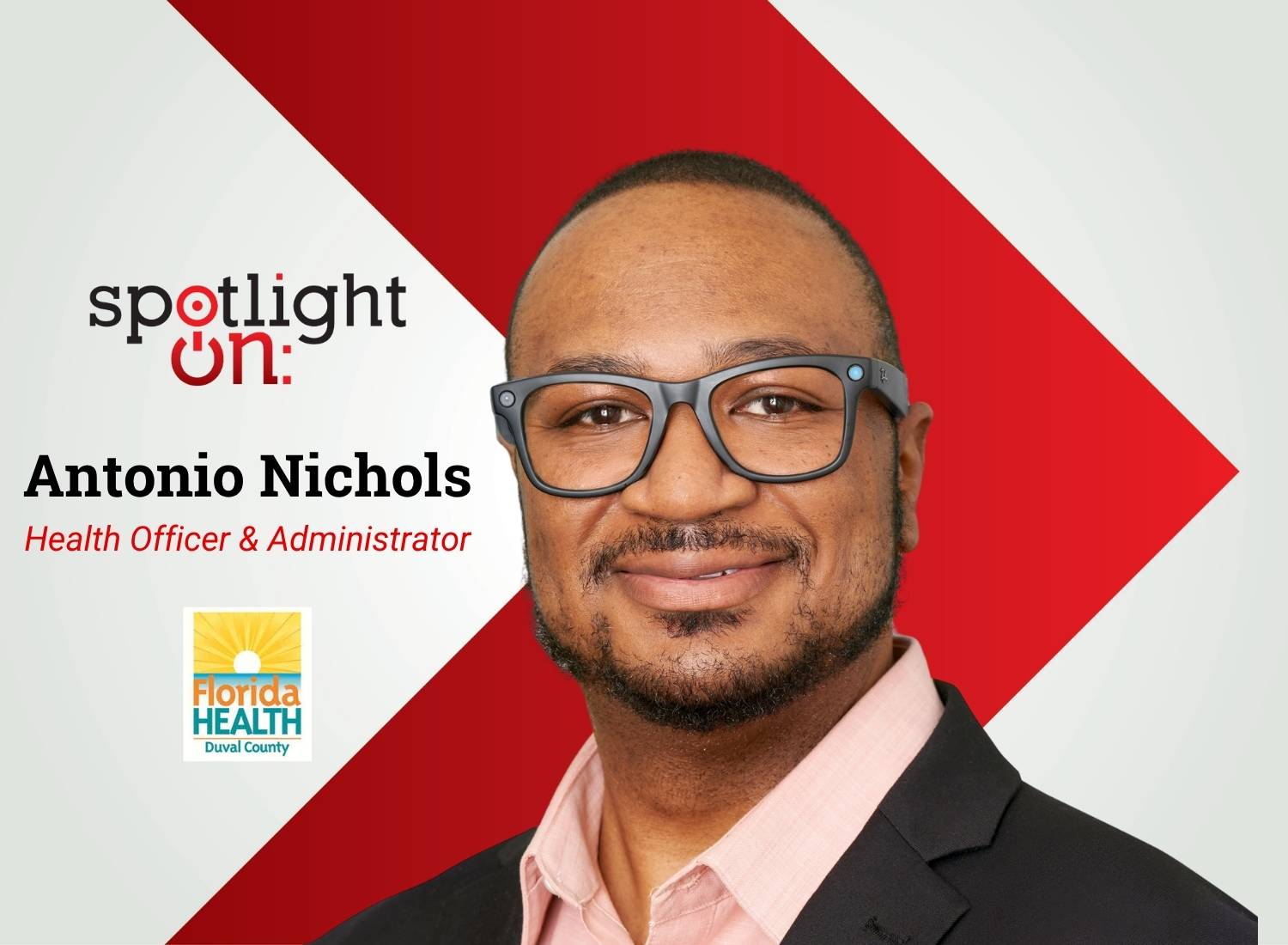 June 2026 — Invest: spoke with Antonio Nichols, health officer and administrator of the Florida Department of Health in Duval County, about expanding access to public health services, strengthening partnerships, and preparing for Jacksonville’s continued growth. “It takes a village to meet the challenges impacting our society, especially public health challenges,” Nichols said.
Join us at caa’s upcoming leadership summits! These premier events bring together hundreds of public and private sector leaders to discuss the challenges and opportunities for businesses and investors. Find the next summit in a city near you!
What have been some key milestones and strategic developments for the Florida Department of Health in Duval County over the past 12 to 18 months?
We have grown a lot in the way we allow residents to access our services. One of the main areas my team and I wanted to focus on was improving access and expanding our services beyond brick-and-mortar sites. As healthcare moves into the future, it is going to be more about bringing services to individuals in environments where they are comfortable.
One milestone I am proud of is our partnership related to eliminating the transportation burden for our clients. We started bringing nontraditional partners to the table to solve age-old public health problems. One of the issues every public health system faces is access to care. When we asked our clients about barriers, transportation was one of the biggest issues.
We partnered with ZTrip to create a program through which any client who comes to the public health department for services can receive a free ride to our services and back home. We have over 300 clients who take part in that program every month, which means they do not have to worry about how they are going to get to their appointments or our centers.
Another key milestone is our partnership with Eartha’s Farm and Market and Clara White Mission in the creation of the Grow and Nourish program. This created a central location where residents can receive fresh fruits and vegetables. Many areas in town are considered food deserts, and eating healthy can be expensive.
Now, residents can pick fresh fruits and vegetables and learn how to turn what is harvested into a healthy meal. Our goal is to target areas with a high incidence of chronic conditions, such as hypertension and diabetes, and give individuals the resources and education to help manage those conditions now and for generations to come.
What healthcare and wellness needs are evolving most in Duval County?
Jacksonville is in a unique position because many of our needs are associated with rapid population growth. That growth is going to create increasing needs and burdens on our public health system and on the services provided by our local public health network.
We are seeing widening social vulnerabilities and healthcare worker shortages, which are issues not only in Jacksonville but nationwide. These needs highlight the importance of increasing access and linkage to services, whether related to affordable housing, food insecurity, safety, the rising cost of living, or exposure to violence.
All of these factors suggest that we will have to increase access to prevention programs to sustain what is coming and take on the increased demand of a growing population. We have to increase prevention programs for chronic conditions and transmissible diseases as the population grows.
What strategies are you implementing to improve accessibility and outreach beyond the brick-and-mortar model?
We call it public health without borders. It is about going past the brick-and-mortar mentality and ensuring we can take care of people. One initiative I am proud of is the development of mobile medical units. These units will be specifically designed to go into neighborhoods and bring the care of the health department to people’s front doorsteps.
Whether it is pediatric dentistry, women’s health, or pediatric care, these mobile medical units will be designed to integrate into communities and provide critical care. It is a boots-on-the-ground approach. We can park in an apartment complex, at the end of a cul-de-sac, or in a business parking lot, then engage with the community and knock on doors.
That allows us to educate the community on everything the health department provides while also offering services on the spot. We have also expanded clinical hours because many of our clients are working professionals. They need to be able to access care after hours and when they need it. Telehealth and telemedicine are also a big part of what we are building. When care becomes convenient, more individuals are willing to access it.
Our prenatal support group is another example. It targets new and expecting mothers and helps them through motherhood, whether it is their first child or their third. Partners come in to provide education on areas such as poison control, baby-proofing a home, and doula services. We also connect mothers with services like Women, Infants, and Children and Healthy Start.
What I love most is that it is not just about education. It is also about providing resources and tools. If a mother needs a car seat, we give her one. If she needs a stroller, we give her one. If she needs a pack and play to practice safe sleep, we give her one. You have to provide individuals with the tools to ensure your community remains safe and healthy.
How are digital tools and awareness campaigns helping address public health needs and workforce challenges?
They help tremendously. Digital tools support recruitment and retention of public health professionals and help build awareness around public health issues facing the community. You have to make people aware of the issues affecting community health and wellness, then let them know what services or programs exist to address those issues.
When I came in, I wanted to saturate the market so people became extremely aware of what the health department does and offers. My direction was that I wanted the health department to be everywhere. Everywhere somebody turned, I wanted them to see something related to the health department and what this agency does to protect the people of Jacksonville.
We have put messaging in nontraditional places. As people fill up their tanks, there can be a public health message. When they check out at the grocery store, there can be messaging on the screen. We have partnered with streaming services, used bus shelters and billboards, and placed messages in places where people might not expect to see the health department.
We also partner with our major and minor league sports teams. With the Jacksonville Jaguars, we are on-site providing public health services and education during home games. With the Jacksonville Jumbo Shrimp, there is a public health night every year where families can come out and receive information and education from the Department of Health.
These tools also allow us to do more focused education. Opioid overdoses were a big issue in our community. We partnered with the city of Jacksonville and looked at the data to understand where many overdoses occurred. The data showed that many were happening in public parks, specifically in community restrooms.
I chair the Opioid Substance Use Disorder Board for the city of Jacksonville. That board connects grassroots organizations doing boots-on-the-ground work with funding that allows them to expand services for opioid and substance use disorder throughout the community.
What are your priorities for the next three to five years?
Along with nontraditional partnerships, we need to foster traditional partnerships with hospitals, schools, and local nonprofits. It takes a village to meet the challenges impacting our society, especially public health challenges.
Looking ahead, much of our focus is on population growth and the demographic pressures that will increase service demand. Jacksonville’s population growth is expected to intensify across sectors, so we must work with partners to expand capacity, strengthen coordination, and make targeted investments for residents.
For the department, I want to continue strengthening access to care and our core public health infrastructure. Strong infrastructure allows us to meet rising demand and maintain continuity for essential public health services.
We are also partnering with academic institutions, including the University of North Florida, to create a pipeline for the next generation of public health professionals through internships and fellowships within the department.
I also want to continue strengthening community-level linkages to care. By investing in local nonprofits doing boots-on-the-ground work, especially when their mission aligns with ours, we create force multipliers in the community. I don’t have to touch you directly in order for me to be a part of the system of care that’s going to support you.
Strong partnerships will enable us to continue our mission now and for years to come. We have to foster and leverage those partnerships to position Jacksonville as one of the healthiest cities in the state.
Want more? Read the Invest: Jacksonville report.