Tampa Bay defense industry builds beyond the base

Key points:
- • MacDill’s CENTCOM and SOCOM presence anchors a broad defense sector and feeds a specialized talent pool that the region’s private companies are absorbing.
- • Tampa Bay is consolidating into a “Cyber Bay” hub where government, military, academia, and commercial tech converge on the same mission.
- • Defense work is driving private-sector demand for secure infrastructure — SCIF space, data processing, and cybersecurity — that ripples to builders, law firms, and IT providers.
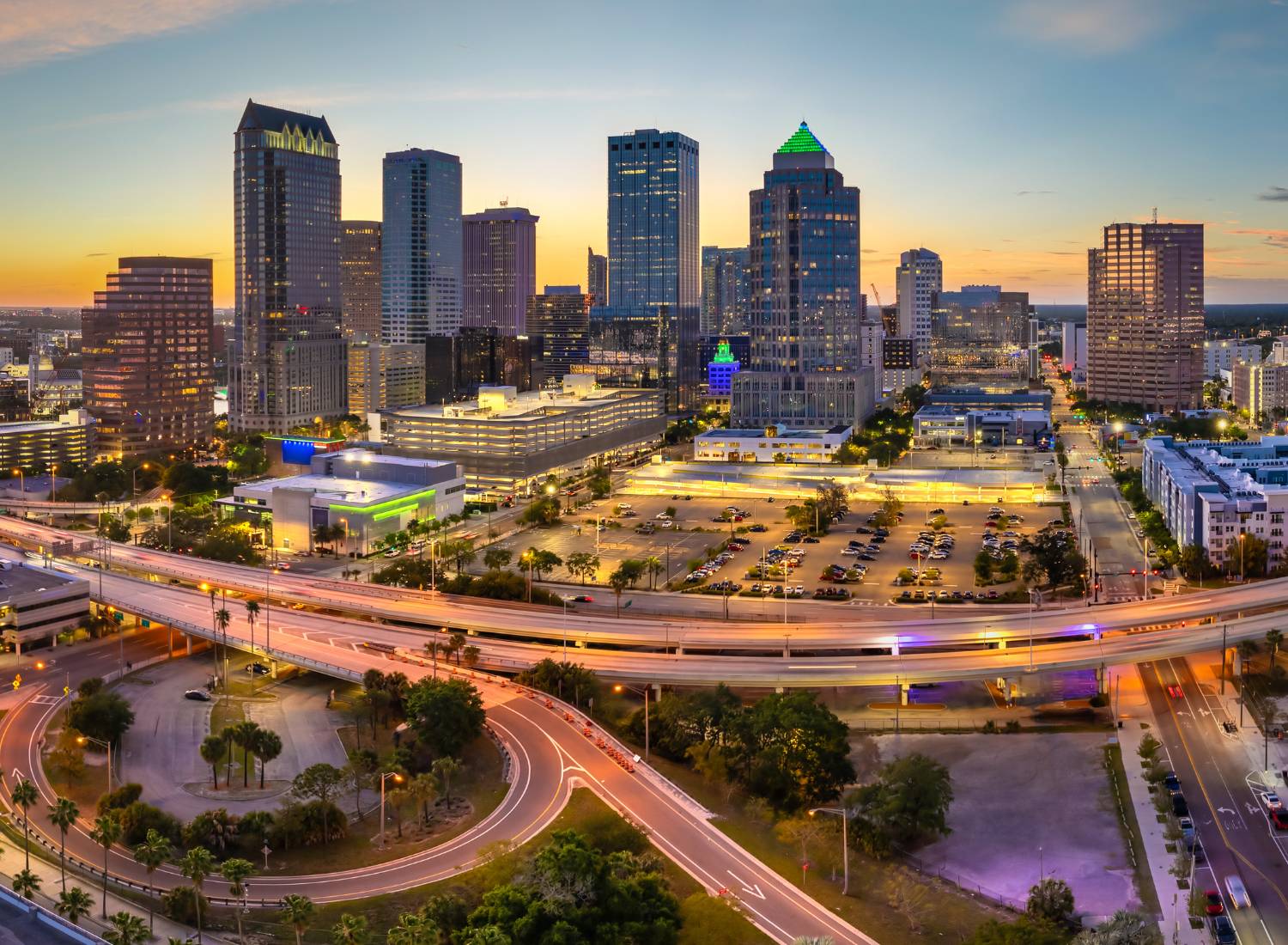 June 2026 — Bill Cronin sees the engine of the Tampa Bay defense industry running well beyond the fence line at MacDill Air Force Base. “Defense is a major driver for our region,” said the president and CEO of the Pasco Economic Development Council in an interview with Invest: Tampa Bay. “With U.S. Central Command and Special Operations Command at MacDill Air Force Base, we have a deep pool of talent coming out of the military and moving into private-sector roles.”
Join us at caa’s upcoming leadership summits! These premier events bring together hundreds of public and private sector leaders to discuss the challenges and opportunities for businesses and investors. Find the next summit in a city near you!
That pipeline — federal mission feeding commercial growth — now anchors a regional economy stretching from cybersecurity to construction.
An anchor and an ecosystem
The Tampa Bay defense industry begins with one address: MacDill Air Force Base. It is the only U.S. installation that hosts two four-star combatant commands — U.S. Central Command and U.S. Special Operations Command (SOCOM) — alongside two flying wings and more than 30 mission partners. SOCOM enables operations in more than 80 countries from its Tampa headquarters.
Around that core sits a deep contractor base. CAE, General Dynamics, Honeywell, Northrop Grumman, and RTX all keep a presence in the region, and the work spans aviation, cybersecurity, IT, intelligence, advanced manufacturing, and training and simulation. The Tampa Bay EDC counts a veteran workforce above 80,000, ranks the metro fourth nationally for veterans, and reports 15% employment growth in defense and security over five years. The story now is less about the base itself than about what is growing around it.
A talent pipeline in uniform
That growth starts with people. A steady flow of cleared, technically trained personnel leaves service each year and stays local — the dynamic Cronin points to. Courtney Jackson, founder and CEO of Paragon Cyber Solutions, builds her firm on it directly. Paragon is an approved Department of Defense SkillBridge employer, a program that lets active-duty members spend their final six months in uniform working with a civilian employer.
“We are an approved DoD SkillBridge employer, supporting active-duty service members in their final six months as they gain civilian work experience, and we partner with Hiring Our Heroes. Pipelines get built through programs like these, person by person, and Tampa Bay has them in force,” Jackson said. For the Tampa Bay defense industry, that is talent acquisition at the source, giving the region an edge.
“We have something most regions would love to have: MacDill Air Force Base and the federal mission that comes with it, sitting alongside a fast-growing commercial technology sector,” Jackson said. “The opportunity is connecting the two.”
The rise of Cyber Bay
Arnie Bellini, managing partner of Bellini Capital, calls the result “Cyber Bay.” “What makes Tampa Bay different is that it brings together four pillars in one place: government, military, academia and the private sector,” Bellini said. “All four are working toward the same challenge of defending the digital borders of the United States.”
Bellini traces the advantage back to the same talent thesis: “With Central Command here and thousands of military cybersecurity professionals in the region, we have a deep and highly specialized talent base. People move from military service into the private sector, bring ideas with them and, in some cases, build companies around those ideas.”
Bellini puts the stakes in economic terms. “Cybersecurity is not optional, it is an imperative,” he said. “When I talk about defending digital borders, I am really talking about defending the economy.”
The convergence is pulling companies in. “Tampa Bay is becoming the centralized hub where government, large commercial companies, and tech innovation meet, and the companies relocating here see it,” Jackson said.
Orion Edge is one of them. The electronic warfare hardware developer relocated its headquarters from Colorado to Tampa, and CEO John Mueller cites the same draw. “First is proximity to SOCOM and the innovation ecosystem around it,” Mueller said. “We work through that ecosystem, including efforts tied to SOFWERX and the Army Research Lab.” He aims to grow the Tampa team to about 40 over two to three years, hiring largely from University of South Florida engineering programs. “The combination of incentives, talent, and proximity to defense partners makes Tampa a strong base for our next phase,” he said.
The pull shows up at scale, too. The annual SOF Week conference, held in Tampa because of MacDill, drew the global special operations community downtown in May 2026 for an agenda dominated by cyber, AI, and unmanned systems.
Secure space in demand
The build-out is physical, too. Eric Grzybowski, partner and project manager at The Perry Company, sees the pressure from the construction side. “Over the last several years, the demand for SCIF spaces, and also defense-related work … in the private sector, there seems to be an abundance of that particular sector of business,” he said. A SCIF — a sensitive compartmentalized information facility — is a secure space engineered to handle classified material, and private firms increasingly want their own.
Alan Higbee, managing partner at Shutts & Bowen, sees the legal and data side of the same trend. “One of our areas of specialization in Tampa is working with defense and other federal contractors, and we have seen an explosion of that activity. Given everything happening in the world, demand in that area continues to grow, and with MacDill here, a lot of it is being concentrated in the Tampa Bay area.” Every cleared contract carries compliance, data-handling, and infrastructure requirements that flow outward to law firms, builders, and IT providers across the region.
The opportunity Jackson describes — connecting the federal mission to the commercial sector growing around it — is no longer theoretical. Executives should watch two things next: where the coming wave of cleared talent lands as more service members rotate out, and whether cyber and data firms keep relocating to sit near the mission. If Bellini is right that defending digital borders means defending the economy, the Tampa Bay defense industry’s next chapter will be measured less by base payroll and more by the companies that talent builds.
Want more? Read the Invest: Tampa Bay report.