Texas Stock Exchange opens a new front in U.S. markets
Key points:
- • TXSE began live trading July 10 with a phased rollout through July.
- • The new exchange adds competition to NYSE and Nasdaq.
- • Listings and liquidity will determine TXSE’s long-term economic impact.
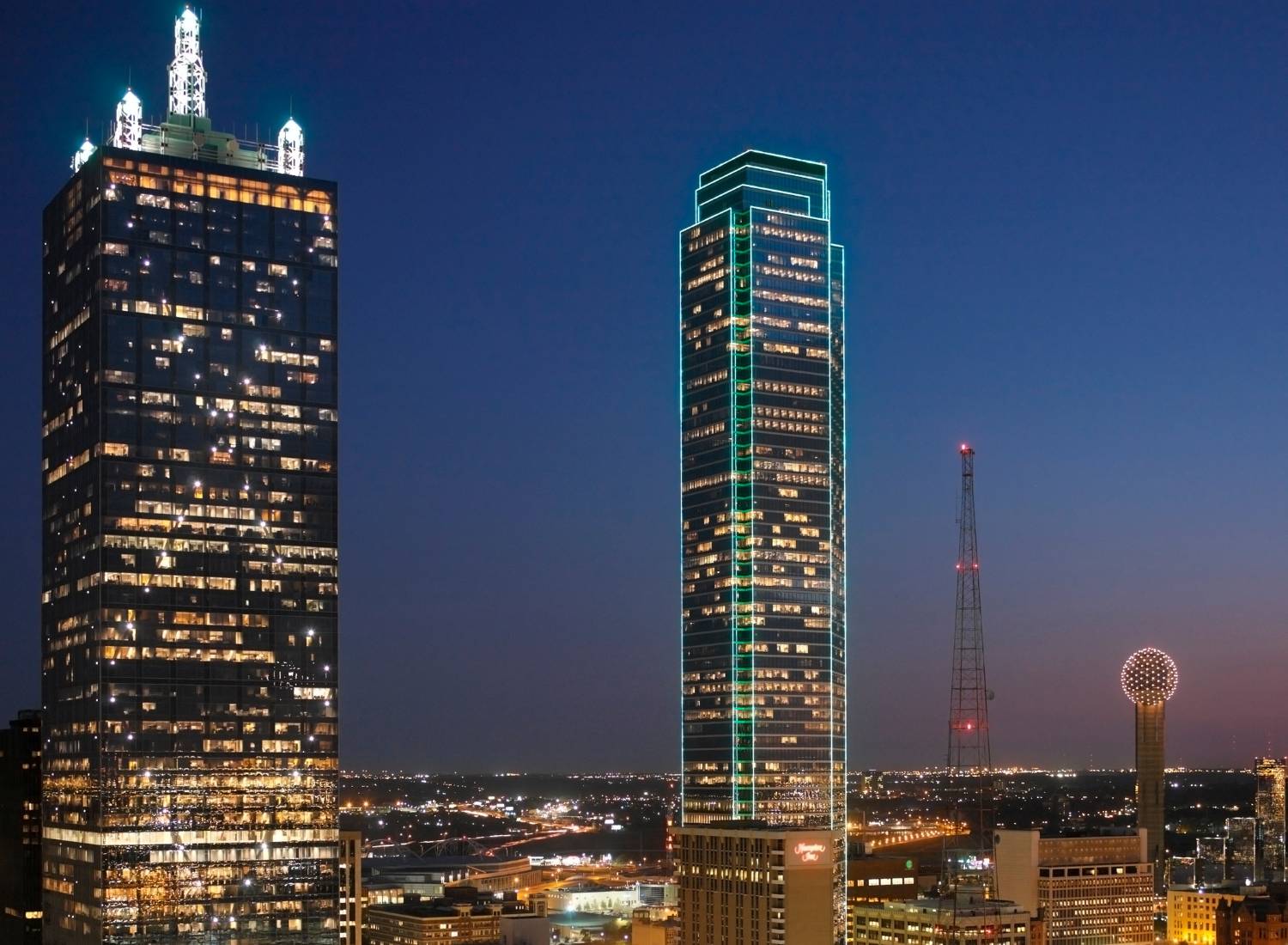 July 2026 — The Texas Stock Exchange began live trading in five National Market System securities on July 10, turning a $275 million-backed plan into an operating national exchange. The first trades placed Dallas inside the infrastructure of U.S. equity markets and started a rollout designed to compete for trading volume and listings nationwide.
Join us at caa’s upcoming leadership summits! These premier events bring together hundreds of public and private sector leaders to discuss the challenges and opportunities for businesses and investors. Find the next summit in a city near you!
“The center of gravity for American capitalism is now headquartered in the boom belt,” Texas Gov. Greg Abbott said at an April TXSE event in Miami. He said the exchange would align capital-market infrastructure with the region, driving U.S. growth. The “Boom Belt” encompasses 11 states across the southeastern United States.
The U.S. Securities and Exchange Commission approved TXSE as a national securities exchange in September 2025. According to TXSE, major financial institutions, including BlackRock, Citadel Securities, Charles Schwab, J.P. Morgan, and Goldman Sachs, back the exchange, which has raised $275 million. TXSE expects all National Market System symbols to go live by July 31, followed by exchange-traded product listings in September and corporate listings in October.
A financial cluster gains market infrastructure
The launch adds an exchange operator to a North Texas financial sector that already includes major operations from Goldman Sachs, J.P. Morgan, Charles Schwab, and other global firms. According to the exchange, Texas has 519,000 financial professionals, while The Wall Street Journal reported that Dallas ranks second only to New York among U.S. metropolitan areas for finance-related employment.
James Kolari, a finance professor at Texas A&M University, described TXSE as a tool for attracting investment. “When we put this financial engine up in Dallas, or in Texas, we’re going to attract capital,” he told The Texan.
An exchange does not finance a data center, factory, or startup on its own. It strengthens the ecosystem around capital formation. Listings teams, market technologists, securities attorneys, compliance specialists, investment banks, and asset managers tend to cluster around market infrastructure and corporate clients.
That gives Dallas a chance to capture more of the advisory and technical work that surrounds public companies. It also reinforces the city’s case to businesses weighing headquarters, finance operations, or incorporation decisions.
READ MORE: ‘Y’all Street’: 6 factors reshaping finance in North Texas
Competition arrived first
TXSE enters a Texas market that the incumbent exchanges already recognized as strategic. NYSE Texas opened in Dallas in March 2025 after the New York Stock Exchange reincorporated its Chicago electronic exchange, according to the Intercontinental Exchange. By December, NYSE Texas had reached 100 dual listings with more than $2 trillion in combined market capitalization.
Nasdaq Texas launched in March 2026 with an initial group of dual listings that included APA, Construction Partners, J.B. Hunt, Huntington Bancshares, and ProFrac Services. Nasdaq also dual-listed itself on the Texas venue.
Those moves validate Texas’ appeal, but they also raise the bar for TXSE. It must compete against exchanges with established liquidity, issuer relationships, global brands, and mature market technology.
Kolari expects that rivalry to benefit the market. “By having competition, you’re going to have better stock exchanges and lower prices,” he told The Texan.
For investors, another exchange does not create a new share of stock. It creates another venue that can quote prices, attract orders, and compete for execution. Strong competition can pressure fees and improve technology, but additional venues also increase the importance of smart order routing, connectivity, and reliable liquidity.
Texas builds a capital-markets framework
The exchange forms part of a broader state strategy. Texas created a business court, strengthened its corporate-governance framework, and adopted tax provisions designed to attract exchange operators and corporate registrations.
In 2025, Gov. Greg Abbott signed Senate Bill 29, which codified the business judgment rule and changed derivative-claims procedures. Senate Bill 1058 allows registered securities market operators to exclude certain transaction rebates from taxable revenue. According to the Texas Economic Development Corporation, voters also approved a constitutional amendment that bars certain taxes on securities transactions and market operators.
Those measures create a fuller corporate proposition: Companies can locate in Texas, incorporate under Texas law, resolve certain disputes through Texas’ business court, and access listing and trading venues based in the state. TXSE gives that strategy an institution built in Dallas rather than a Texas branch of an incumbent exchange.
The listings test comes next
Trading volume will provide the first scorecard. TXSE needs market makers, brokers, and institutional investors to route enough orders through its platform to establish consistent liquidity and competitive execution.
Corporate listings will provide the more consequential test. A meaningful group of new listings, transfers, or dual listings would give Texas a larger role in how public companies raise capital, manage investor relationships, and choose governance frameworks. ETP sponsors will offer an earlier signal when TXSE begins accepting those products.
“The proof is going to be in the movement of companies,” TXSE Founder and CEO James Lee told The Wall Street Journal.
TXSE does not need to displace the NYSE or Nasdaq to alter the market. If it wins durable trading volume and credible listings, it will give issuers another national option and make Dallas a stronger center of influence in U.S. capital markets. Even before that verdict, its launch has pushed every major U.S. exchange to treat Texas as territory worth competing for.
Want more? Read the Invest: Dallas-Fort Worth report.