
Spotlight On: Clancy Hardin, Assistant Director Economic Development, City of Cibolo
Key points:
- • Cibolo is shifting its focus from residential growth to expanding its commercial and industrial tax base.
- • The city is targeting advanced manufacturing, defense, and healthcare to create jobs and strengthen long-term growth.
- • Updated development policies aim to make growth more predictable while preserving Cibolo’s character.
 July 2026 — In an interview with Invest:, Clancy Hardin, assistant director of economic development for the city of Cibolo, discussed the city’s strategy for balancing growth, supporting local businesses, and expanding its commercial tax base. “The goal is to create a clearer, more predictable development process while maintaining the flexibility needed to support future growth,” Hardin said.
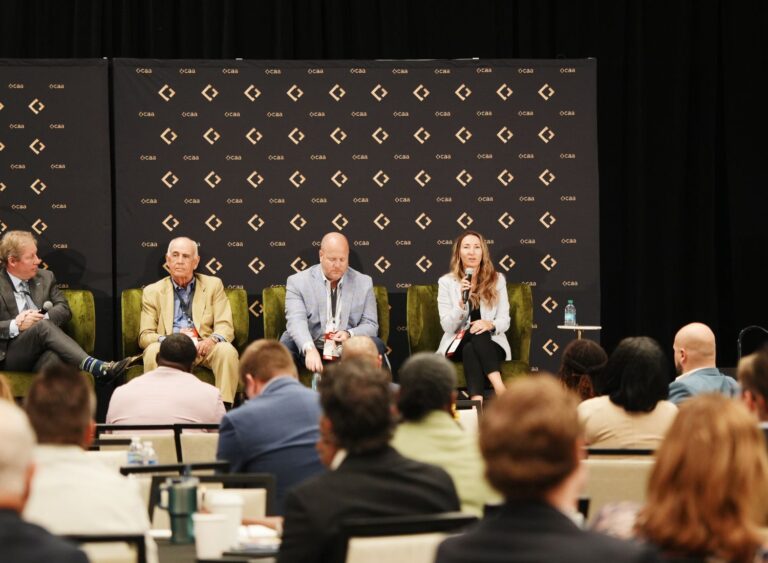
Join us at caa’s upcoming leadership summits! These premier events bring together hundreds of public and private sector leaders to discuss the challenges and opportunities for businesses and investors. Find the next summit in a city near you!
What are the top priorities outlined in Cibolo’s strategic economic development plan, and how will success be measured?
Our strategic economic development plan serves as a roadmap for the next five to 10 years and is aligned with the City Council’s broader priorities.
The strategic economic development plan is grounded in business retention and expansion, while also establishing a clear framework for business attraction and recruitment. It reflects Cibolo’s unique development pattern: because the city has limited frontage along I-35, much of its future tax base growth will depend on targeted development south of the city toward the I-10 corridor. The plan therefore guides long-term site readiness, infrastructure coordination, land banking, and recruitment strategy, while identifying the industries that best align with Cibolo’s growth objectives.
We already have a major employer that supplies transmissions for Toyota operations in the region. AISIN is our crown jewel. Our goal is to build on existing regional strengths by supporting an ecosystem of advanced manufacturing, distribution, logistics, biomedical, defense, and aerospace opportunities.
We track progress through defined initiatives, timelines, and implementation measures so the plan remains actionable and accountable.
How is the city working to ensure commercial development and job creation keep pace with residential growth?
Cibolo’s mayor and city council members are very supportive of economic development and commercial growth. As Cibolo’s growth pattern evolves, we are placing greater emphasis on expanding the commercial and industrial tax base.
We emphasize that strengthening business recruitment and retention is one of the best ways to relieve long-term pressure on taxpayers.
Our goal is to secure two or three significant projects by late 2027 or early 2028. Economic development is a long-term process, but those projects could help offset pressure on the tax base. A challenge for our community is that a significant portion of our property value is exempt from taxation through provisions for disabled veterans and residents age 65 and older. That means we are working with a smaller taxable base than many communities. Commercial and industrial growth are critical to long-term fiscal sustainability and service delivery for Cibolo.
Which industries are you most actively targeting for recruitment, and how do they fit Cibolo’s long-term vision?
We have four primary target sectors. The first is advanced manufacturing, which is a natural fit for Texas. The second is defense, given our proximity to Joint Base San Antonio and our large veteran population transitioning into second careers. The third is the space economy, where we see emerging opportunities in aerospace and related supply-chain activity along the broader Texas innovation corridor.
Our location along the I-10 corridor creates opportunities connected to activity between Houston and other aerospace hubs, including engineering operations, manufacturing facilities, and supporting industries. The fourth is automotive manufacturing and distribution. AISIN has demonstrated that logistics operations work well from Cibolo, where companies can avoid some congestion associated with larger urban areas while maintaining access to the region.
A long-term opportunity is biomedical and health-related industries. That includes medical services, biomedical suppliers, and companies that want access to the broader San Antonio-area healthcare and bioscience ecosystem. UTSA alone reported $173.2 million in research expenditures in 2025, and the region benefits from collaboration among UT San Antonio, UT Health San Antonio, Texas Biomedical Research Institute, Southwest Research Institute, hospital systems, and military medical institutions. That regional strength creates opportunities for communities like Cibolo to attract complementary investment and services that meet both regional demand and local community needs.
We remain open to opportunities that align with our strategic goals and deliver long-term value to the community.
How do you evaluate whether economic development incentives are delivering meaningful returns for taxpayers and the community?
We evaluate incentives based on measurable public benefit and long-term return on investment. For small businesses, our EDGE Grant program helps address legitimate barriers such as startup costs, repairs, and expansion needs, while requiring private investment alongside public support. For larger commercial and industrial projects, we focus on job creation, wage levels, capital investment, and long-term value to the community.
A recent example is Max and Louie’s, where a $50,000 grant supported a $4.5 million investment, and we expect to recover that public investment through projected sales tax revenue in less than five years. As Cibolo continues to grow, especially along the I-10 corridor, our incentive strategy will remain disciplined, flexible, and aligned with the city’s long-term economic development goals.
What opportunities do you see for creating a vibrant downtown while preserving Cibolo’s character?
Downtown is the fabric of our community. Before joining Cibolo, I worked in Main Street management and historic preservation, so this is an area I care deeply about.
What many people do not realize is that our Main Street was still gravel as recently as 2005. Over the past two decades, Old Town has experienced significant revitalization, much of it driven by private investment rather than formal historic preservation programs.
This year, we have focused on visual and environmental improvements. The Economic Development Corporation funded decorative pole banners, partnered on pedestrian safety improvements near Old Main Ice House, and launched a project to replace 21 outdated light fixtures with upgraded LED systems that improve visibility and functionality.
In total, our board has invested more than $100,000 into Old Town improvements. We have also supported businesses through grant programs that help offset the higher costs associated with maintaining historic properties.
For example, we provided support to The Kindling for a window replacement project that represented a $45,000 investment in the property. Our grant helped make that project feasible.
Looking ahead, we are having important conversations about infrastructure, redevelopment, and preservation. As residential development surrounds Old Town, we need to determine how infrastructure should evolve and how we can preserve historic structures while encouraging productive commercial uses.
Which gaps in the local market are you most focused on filling, and what progress has been made?
For many years, retail and restaurant recruitment were major priorities for Cibolo, and those efforts helped meet the needs of a growing community. As that foundation has matured, our economic development strategy is evolving toward the next phase of growth, with greater emphasis on industrial investment, job creation, and long-term tax base diversification.
Healthcare remains one of our largest opportunities. We have space designated for medical uses, but we are looking for services that meet real needs in the community.
Our retail analysis also showed gaps in soft goods, including clothing and footwear. While residents currently spend a significant amount online, we look at those spending patterns as indicators of future recruitment opportunities.
We also work closely with property owners and developers because they often have the clearest understanding of which tenants best fit their projects. The recently opened Ace Hardware is a good example. It was the result of several years of collaboration among the city, developers, and the business itself. The company made a substantial investment and received support through our EDGE Grant program.
We are now shifting from traditional retail recruitment toward a more aggressive industrial recruitment strategy. Some neighboring communities are doing the opposite because they already have industrial development in place. We are focused on finding the right fit for Cibolo.
What major initiatives are currently shaping Cibolo’s future growth and development?
One of the most significant initiatives underway is our Unified Development Code update. Over the last year and a half, our planning team has worked to modernize and clarify the city’s development regulations so they better reflect Cibolo’s current stage of growth, long-term land-use priorities, and commitment to a more predictable development environment.
The goal is to create a clearer, more predictable development process while maintaining the flexibility needed to support future growth. We are also continuing to evaluate our future land use map to ensure it reflects changing conditions and supports the city’s long-term approach to housing, commercial development, and industrial recruitment. Together, those efforts will strengthen Cibolo’s readiness for the next phase of growth and keep our policies aligned with its long-term economic development objectives.
Want more? Read the Invest: San Antonio report.