
Spotlight On: Robert Puente, President & CEO, San Antonio Water System
Key points:
- • SAWS is investing in long-term water security to support San Antonio’s continued growth.
- • Conservation and diversified water sources have strengthened the region’s resilience through years of drought.
- • The utility is modernizing infrastructure while keeping water service affordable for residents.
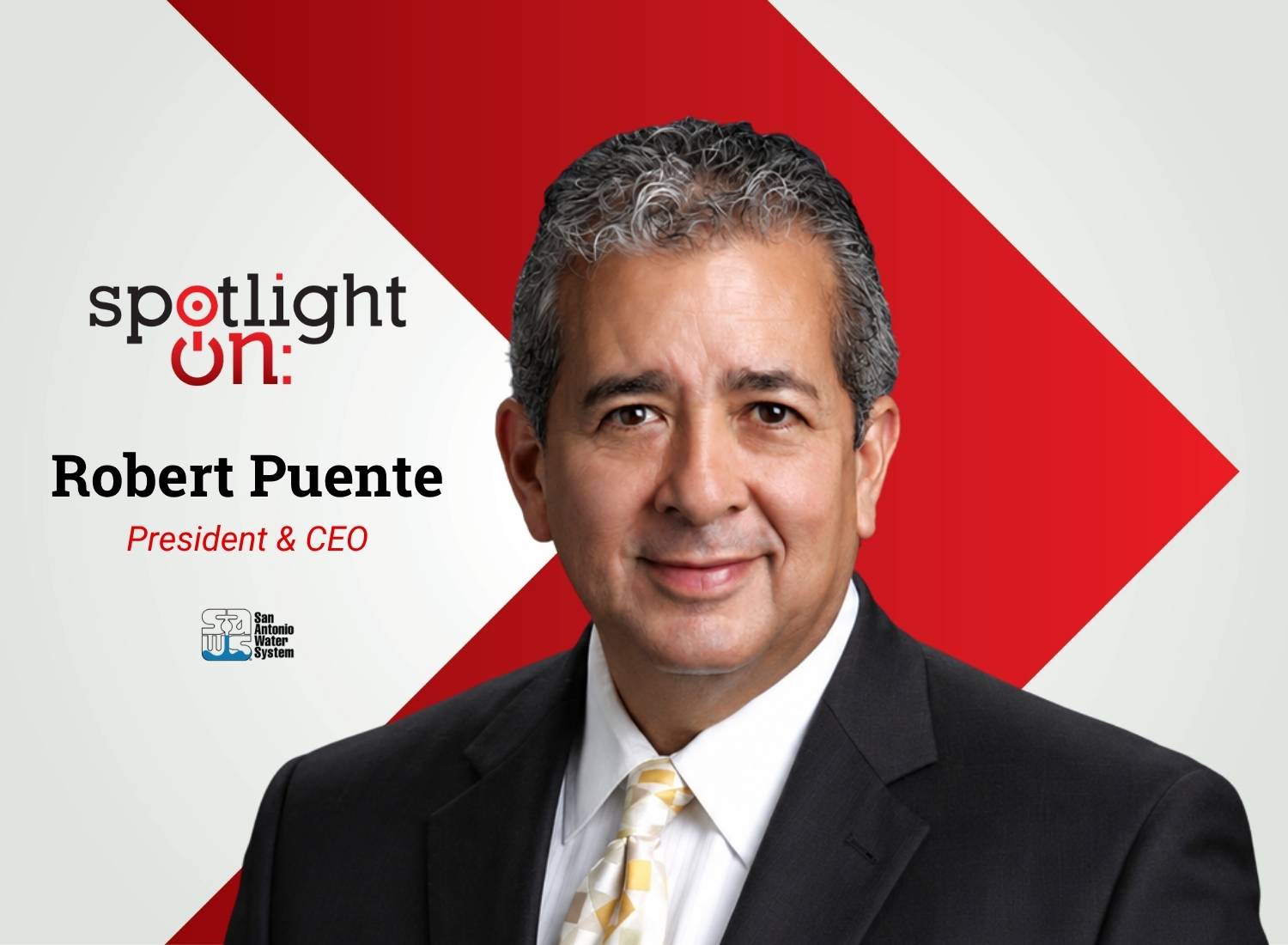 July 2026 —Invest: spoke with Robert Puente, president and CEO of San Antonio Water System, about drought resilience, infrastructure investment, affordability, and long-term water planning. “We have water security through multiple decades because of the planning we did 10 years ago,” Puente said.
Join us at caa’s upcoming leadership summits! These premier events bring together hundreds of public and private sector leaders to discuss the challenges and opportunities for businesses and investors. Find the next summit in a city near you!
How has the past year been for San Antonio Water System, and what accomplishments are you most proud to share?
The biggest difference over the past year has been the weather. Until the beginning of this year, we had been in a serious drought, probably the worst drought we have had since the 1950s. It has lasted six years, so we’ve been hoping for some relief.
Luckily this spring, rain has been more plentiful. We have had good rains, and they have come gradually enough for the ground to absorb the water rather than having it run off. We do not know if we are completely out of the drought yet, but we have had some relief.
What we are most proud of is that during an intense drought, our community did not stop growing, and we were able to meet all of its water demands. We were able to put our water management plans into practice and continue providing the water services the community needed.
How is SAWS balancing growth with long-term water reliability?
Those are two distinct responsibilities that must be managed together. Expanding infrastructure is driven by growth and development, while our responsibility is making sure water and wastewater capacity are available to support that growth.
San Antonio’s philosophy is that growth should pay for itself. Developers are required to build the infrastructure associated with new developments, while we ensure the system has the capacity to support them.
Planning is critical because water projects often take 10 to 15 years to develop. We have a 50-year water management plan that is updated every five years. We monitor growth indicators throughout the region, including school districts and major employers, to understand future demand.
We have water security through multiple decades because of the planning we did 10 years ago. Long-term planning and growth management have to happen simultaneously to maintain a reliable system.
How has the economic environment changed, and what challenges remain?
The supply chain and inflation issues peaked in the years following the COVID pandemic. Conditions have improved, but costs remain much higher than historical norms.
Material and labor costs continue to be elevated, and utilities have had to adapt. On the supply chain side, we now understand much better how long it takes to obtain equipment, chemicals, and other necessary materials. As a result, we plan further ahead and place orders earlier than we once did.
While inflation has come down from its peak, costs remain high. The challenge is continuing to adjust to those conditions while meeting the day-to-day needs of the utility.
Why are infrastructure investments necessary, and how do you communicate their value to residents?
These are investments in assets that have to be maintained and eventually replaced. We operate wastewater treatment plants, water mains, and sewer mains, and those systems age over time.
We have more than 7,000 miles of water mains and 7,000 miles of sewer mains underground. Some of our water mains are more than 100 years old and still functioning, but we continuously monitor them to determine when they need to be replaced.
The major investments over the next several years will be in our wastewater treatment plants. Over the last decade, we concentrated on water supply and wastewater collection infrastructure. Now, the treatment plants require significant upgrades.
Communicating those needs is important. We have met with more than 60 neighborhood associations, held town halls throughout the city, and used media, billboards, and social media to explain why continued investment in the system is necessary.
How are you balancing the need for rate increases with keeping service affordable?
Our goal is to keep rates as affordable as possible for everyone. We currently have the lowest rates among major cities in Texas and some of the lowest rates among major cities in the United States.
At the same time, some residents still struggle to pay utility bills. For those customers, we offer assistance through our Uplift program. Participants pay roughly a third of what a typical customer would pay.
Our proposed rate increase does not affect customers in that program. In addition, it would allow us to expand eligibility from 125% of the poverty level to 150% of the poverty level, which would nearly double the number of families that can receive assistance.
Our objective is to continue investing in the system while protecting those residents who need help the most.
What role do conservation and supply diversification play in your strategy?
For us, these are not new concepts. We have been focused on them for decades.
Even though San Antonio’s population has grown significantly, we use roughly the same amount of water today as we did 25 years ago because per-capita consumption has continued to decline. In fact, in 2025 we achieved a record low of 111 gallons per capita per day (GPCD). Conservation has allowed us to delay major water projects that would otherwise have cost billions of dollars.
Conservation also reduces wastewater treatment requirements. In fact, we once operated four wastewater treatment plants and now operate three because conservation reduced demand.
Supply diversification has been equally important. About 20 years ago, we relied on a single water source, the Edwards Aquifer. Today, we have 13 water projects drawing from seven different water sources.
That diversification provides flexibility. If one source is stressed by drought conditions, we have other sources available to support the system.
How are you using data, innovation, and AI to improve operations?
One of the biggest advancements has been the implementation of automated meters. We now have more than 640,000 automated meters in service, making it the largest implementation of its kind in North America.
Those meters provide valuable information. For example, we can notify customers if continuous usage indicates a possible leak long before they receive a monthly bill. The data also helps us understand usage patterns throughout the system and identify operational needs.
We also use data to evaluate our infrastructure. Information about pipe materials, age, and operating conditions helps us prioritize replacements and focus resources where they are needed most.
Artificial intelligence is becoming an important tool as well. For example, sewer inspection data that once required extensive manual review can now be analyzed much more efficiently. AI helps us identify infrastructure needs, allocate resources, and improve operational decision-making.
As a public utility, we have to be careful and responsible in how we use these tools, but they are already providing significant value.
What are your top priorities for the coming decade?
We expect San Antonio to continue growing, so our primary focus is ensuring that water supplies remain adequate to support that growth.
Right now, we are analyzing usage trends, evaluating our existing supplies, and comparing them against projected growth patterns. That information helps us determine whether future projects need to be accelerated or delayed.
In the near term, we have to begin funding and designing projects that may not be constructed for another five to 10 years.
Want more? Read the Invest: San Antonio report.