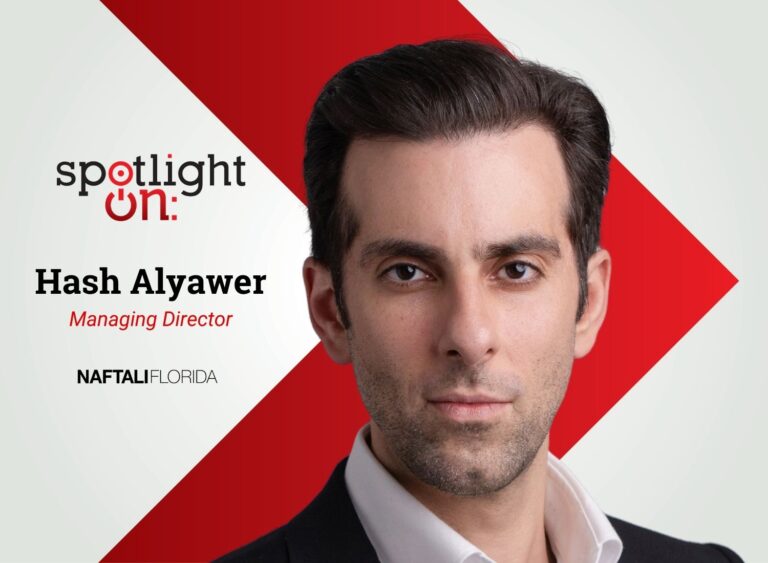

Spotlight On: Eugene Collings-Bonfill, Civil/Site Department Manager, Colliers Engineering & Design
Key points:
- • Colliers Engineering & Design is helping South Florida grow through integrated engineering, permitting, and infrastructure expertise.
- • Resilience, stormwater management, and early planning are central to delivering sustainable development.
- • The firm is balancing rapid growth with mobility, quality of life, and long-term community needs.
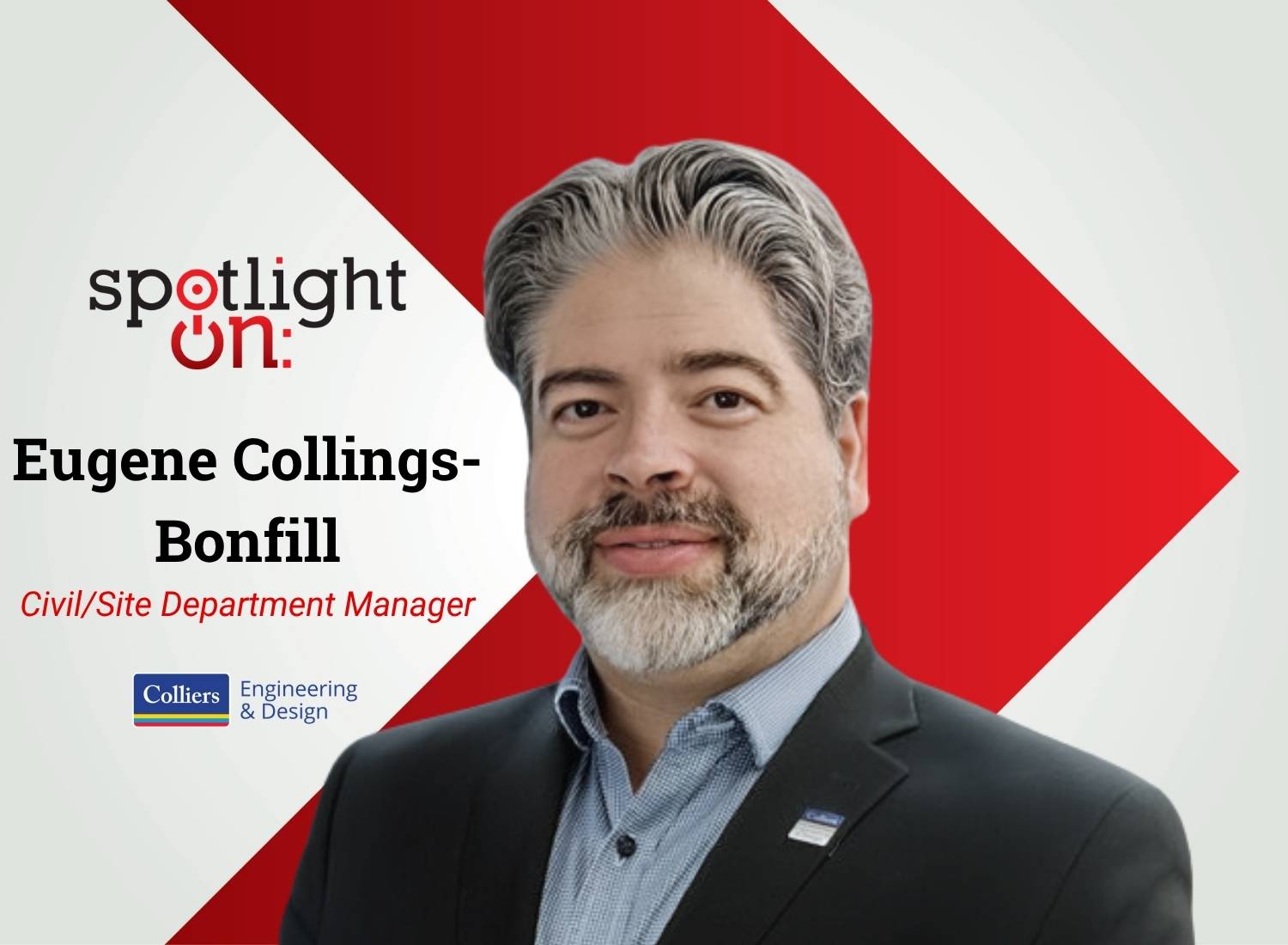 July 2026 — Eugene Collings-Bonfill, civil & site department manager at Colliers Engineering & Design, spoke with Invest: about infrastructure planning, permitting, and resilience in South Florida’s fast-growing market. “Ultimately, growth is not just about increasing volume. You also have to maintain quality of life while expanding capacity,” Collings-Bonfill said.
Join us at the Invest: Miami 11th Edition Leadership Summit! This premier event brings together hundreds of Miami’s business and regional leaders to discuss the challenges and opportunities for businesses and investors. Buy your ticket now!
How is Colliers Engineering & Design’s civil and site practice supporting South Florida’s rapid growth?
At Colliers Engineering & Design, our civil and site practice supports South Florida’s rapid growth by delivering integrated, full-service solutions for clients. We can take a project from early feasibility and conception through construction plans and construction administration.
One of the things that differentiates our company is the ability to align technical execution with real-world development and municipal processes. That drives efficiency and reduces risk for our clients. My background is in both the municipal and private sectors, and it is the same for most of my team. That allows us to bridge the gap between what clients need, how projects must be designed, and what agencies require for approvals.
We are heavily involved in residential, including single-family, multifamily, mixed-use, commercial, industrial, and infrastructure projects. The key is understanding how all the moving parts connect, including stakeholders, permitting, utilities, environmental constraints, resilience, and constructability.
Within Colliers Engineering & Design, we offer various services and disciplines, so we can perform the majority of the upfront engineering in-house. That helps bring the required disciplines together early in the project life cycle, reduces risk, and identifies issues that may be harder to catch when firms coordinate with outside consultants.
How important is local expertise in navigating Florida’s permitting and municipal coordination challenges?
Local expertise is everything. Permitting is not something that is purely a technical exercise; it is procedural, relationship-driven, and highly specific to each jurisdiction. One city can be next to another city, and the permitting process can be completely different. Even the way regulations are interpreted can vary.
We understand how different agencies think, how they review projects, and their land development codes. Every municipality has a different variation of the code. Being able to proactively address those concerns is what makes the process smoother while helping to reduce risk
Our team has municipal experience, so we have those relationships. We regularly coordinate with municipalities in South Florida, water management districts, and utility agencies. Each one has its own standards and expectations. The advantage comes from anticipating those requirements early so they do not become comments later in the process.
How do engineering teams balance growth with community priorities such as mobility, livability, and resilience?
Today’s development has to go beyond simply delivering more density. It is not just about packing more density into a smaller area. It has to contribute meaningfully to the surrounding communities. It has to integrate and make sense.
Our approach focuses on mobility, resiliency in drainage and stormwater, accessibility, and overall functionality to ensure projects not only meet regulatory requirements but also enhance the way the community functions.
We look carefully at traffic flow because traffic in South Florida is a major concern. Increases in density creates additional traffic, so we want to make sure there is appropriate infrastructure. Pedestrian connectivity is also important as South Florida looks to improve mobility and public transportation.
Resiliency and stormwater performance are major priorities as well. Many areas are prone to flooding. I came from the city of Doral, where flooding has always been an issue, and the city has done an amazing job upgrading its stormwater system. Water may still accumulate during major events, but it dissipates much faster, allowing the city to return to normal operations quickly.
Those factors influence how a project is experienced, how it performs over time, and how it is accepted by surrounding communities and permitting agencies.
How are stormwater management and climate resilience strategies evolving within your projects?
Those are key factors in everything we design, especially with the latest state regulations in Florida regarding stormwater, water quality, and nutrient removal. Resilience is one of the core drivers of everything we design here.
Every project we touch has to address flood risk, hurricane emergencies, stormwater capacity, and long-term environmental performance from the onset. We align with FEMA criteria and local flooding criteria because every jurisdiction has its own standards.
We want to design for adequate on-site storage and make sure sites do not flood. We also account for future conditions, including sea level rise, to understand where conditions may be in five to 10 years. We do not just design based on current requirements. We look toward the future to make sure what is being built will still perform decades from now.
There is an increased expectation from both the public and private sectors around how projects manage water. It is not just about one site. These issues affect the region more broadly.
How does integrating surveying, geospatial, geotechnical, and engineering services improve project outcomes?
I started my career in surveying with my family’s business, and I have also worked in design, construction, and the public sector. I have been able to see how each area works independently and how putting them together makes a difference.
At Colliers Engineering & Design, we can perform all of those services in-house which is a significant advantage. When surveying, geotechnical, environmental, and civil teams are aligned early, it creates a more efficient and coordinated process throughout the project life cycle.
Integrating these services early establishes a stronger technical foundation. It allows us to identify constraints sooner and make more informed engineering decisions before those constraints become costly issues.
Colliers Engineering & Design is fully equipped to manage both site design and architectural aspects, ensuring comprehensive and fully integrated design solutions for any project whether only site or infrastructure related or fully integrated design of a building from the bottom up.
This approach reduces design conflicts, improves data accuracy, accelerates permitting, and enhances constructability. One of the things I learned going from design to construction is that engineers often design based on standards, but many have not been in the field. You can design something that works on paper, but then a contractor may ask how are they supposed to build it.
Having these services in-house helps our team design with a different mindset: not only designing something that works, but something that can actually be built properly.
How critical are early-stage planning and site feasibility analysis?
Early-stage feasibility is one of the most important aspects of the process. We do that for many clients. We also work with the Colliers International brokerage team, which may bring us several sites for a client and ask us to provide a test fit.
We dig into the land development codes, put together a test fit that meets the client’s requirements, and determine which site best fits those needs. It is not just about the client’s requirements but also the municipality’s requirements and the agencies they will have to permit with.
This stage is where key constraints are identified, entitlement risks are evaluated, and a clear understanding is developed around what the site can realistically support. A client may want to build something specific, but the question is whether that is genuinely allowed.
Addressing these factors early brings clarity, enables smarter investment decisions, and reduces uncertainty. We can never remove 100% of the risk, but this phase allows us to reduce as much risk as possible.
What trends are you seeing in residential, mixed-use, and infrastructure development across South Florida?
Infrastructure in South Florida is incredibly important. Municipalities are trying to meet increased demands from population growth and tourism. Traffic, transportation, roadway infrastructure, stormwater, and resiliency are all priorities.
South Florida continues to experience strong demand. I have not seen a slowdown. Things keep getting built, and people keep wanting to come to South Florida.
This is driven by population growth and economic expansion. FIFA 2026 has its headquarters here, and Miami is hosting games, so there is ongoing investment in infrastructure and continued private-sector development. Residential and mixed-use development remain primary drivers of activity.
The momentum is going to continue as the region evolves. It may slow down or speed up, but I do not think it is going to stop anytime soon.
One of the things we have done to meet this demand is focus on scaling our team strategically. Our Miami team has grown in the last year, and we also use cross-collaboration with our other offices. Having seven offices in Florida helps us meet demand and continue delivering projects efficiently.
Ultimately, growth is not just about increasing volume. You also have to maintain quality of life while expanding capacity. That balance is essential for South Florida to continue growing in a market where expectations are high and the pace of development requires efficiency and precision.
Want more? Read the Invest: Miami report.