
Spotlight On: Chris Boleman, President & CEO, Rodeo Houston
Key points:
- • RodeoHouston is expanding its economic and cultural impact while preserving its traditions.
- • Education, workforce development, and community investment remain central to its mission.
- • The organization is focused on enhancing the visitor experience as it continues to grow.
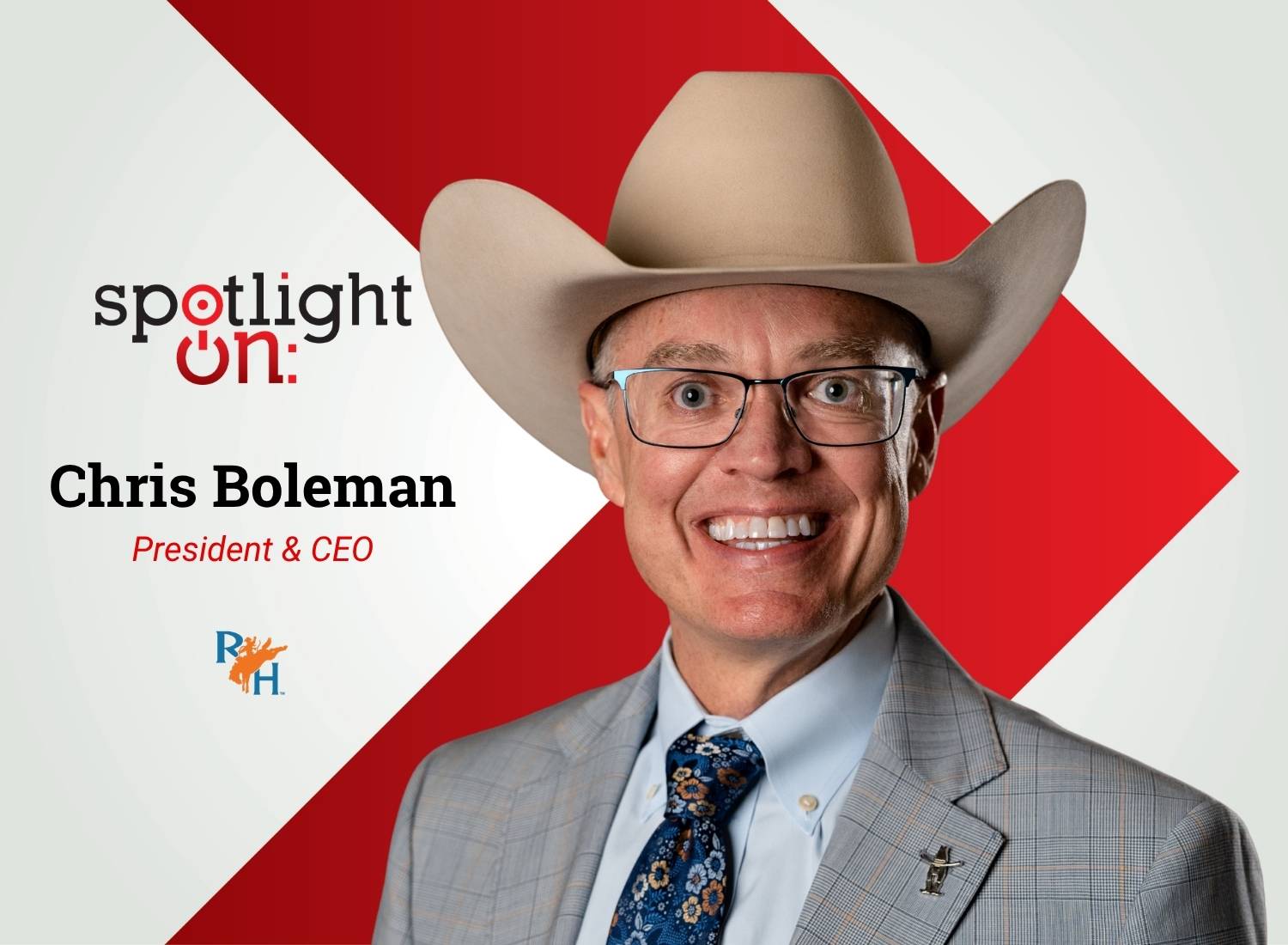 July 2026 — Invest: spoke with Chris Boleman, president and CEO of RodeoHouston, about how the event continues to grow its economic and cultural impact while staying true to its mission. “It’s much more about the quality experience of our customers than it is the quantity,” Boleman said.
Join us at the Invest: Houston 3rd Edition Leadership Summit! This premier event brings together hundreds of Houston’s business and regional leaders to discuss the challenges and opportunities for businesses and investors. Buy your ticket now!
How does the rodeo position itself within Houston’s growing event ecosystem, especially as the city hosts more large-scale events and gains more global attention?
What makes the Houston Livestock Show and Rodeo unique in Houston is that we are here every year. We are always excited to see events come to town, whether it is a Super Bowl, a Final Four, or, of course, the FIFA World Cup, because it puts Houston on the international stage. However, the Rodeo does that every year, and we are proud of that.
The growth of our event is about engaging the community. This year, we had 2.6 million people attend over the 24-day season, including the World Championship Barbecue Contest, presented by Cotton Holdings. A lot of those people are local, so it is a regional event, but we are also seeing traction from a national and international perspective. We had thousands of international guests this year, and more than 90 countries were represented at the event.
Because we are here every year, we have to make sure the event stays relevant and that we are offering unique reasons for people to come while still doing the tradition-rich things we know work well. A lot of it is about telling the story of agriculture and promoting agriculture. As we look to 2027, which will be our 95th anniversary, it is about continuing to do what we do well while making the right tweaks to keep it fresh.
With record attendance, more activity on the grounds, and a broader entertainment mix, how are you managing evolving visitor expectations?
Like any successful organization, you have to pay attention, adapt, and be ready to pivot based on what people want to see. We keep a strong traditional base to what we do, which is about promoting agriculture and celebrating Western heritage, but we also look at how entertainment is evolving.
It was a heavy country lineup this year, but country music itself is more diverse. Bringing Kelly Clarkson back after more than 20 years gave us a crossover act. Creed is not country, but it is an act we knew the audience wanted to see. We also had Forrest Frank and Lizzo. Those were all sellouts for us. We had nine sellouts in total, with a mix of country acts and other artists.
That draws a lot of first-timers. Someone may come for an artist, but once they get here and see everything happening across the grounds, from livestock shows to shopping, AgVenture presented by Oxy, Fun on the Farm, and the Carnival, presented by First Community, they realize it is much bigger than one concert. That is why we end the night with a rodeo and a concert, but it is really about spending the entire day here and engaging in what we are offering to the community.
The rodeo has a unique economic footprint for a nonprofit event. Where do you see the biggest opportunities to continue growing that impact on the community?
You cannot do it the way we do it without acknowledging our 36,000 volunteers and what they do across 109 committees. As a nonprofit, partnering with them is essential to making sure people get the world-class experience they should have when they come here.
A deeper part of that is what those committees do around fundraising. Our donor and auction committees are the lifeblood of generating the dollars needed to meet our annual educational commitment. We talk about promoting agriculture and Western heritage, but we also have to talk about supporting education. We are now over $660 million committed to the youth of Texas. This year is our highest commitment ever, at over $30 million.
That reflects what our donors believe in and how they support our 4-H and FFA exhibitors, our scholarship fund and our scholarship students. One of the biggest growth areas is vocational workforce development. We are putting more resources into supporting students who may not be interested in a four-year institution but are interested in learning a trade. We know that is important in Houston, especially for jobs such as welders, pipefitters, and electricians.
As the event grows, what becomes harder to manage operationally, and where are you investing to stay ahead of that growth?
A lot of it is how we manage the number of people coming here. It is constantly about making sure we have a safe environment. That means a lot of resources and partnerships with local authorities, local law enforcement, and state and national support for an event of this size and scope spread across NRG Park.
It is also not just about what people can see across the grounds. It includes cybersecurity and making sure we have the right partners with our ticketing company and through our applications. As the world continues to move more to the phone, we have to make sure we have the right environment from a technology point of view.
The other piece is maintaining relevance to the community. Houston is one of the most diverse communities in the country, and more people are moving here every day. A lot of people still do not understand the full breadth of the organization if they have never experienced the Rodeo. First-time attendees are an important part of our strategic plan because we know that if we get them here once, they are far more likely to come again.
What infrastructure needs do you see as most important to support the rodeo’s long-term growth?
We are here at NRG Park, which is a county-owned facility, and we work in partnership with the Houston Texans and Harris County. Like any building, these facilities need ongoing investment. NRG Center and NRG Stadium are both more than 20 years old now, and there is a lot of wear and tear.
We need to continue investing in these facilities to keep them world-class and first-class. That is a big issue for us moving forward. Our lease for both us and the Texans expires in 2032, so we are working every day to ensure our future is bright here. This is our home, and making sure we have what we need to be successful here is a big part of our future.
Are you seeing any shifts in how people are spending or engaging once they are on-site?
On the mission side, we have seen significant growth in our donor base, particularly through our auctions. There is strong interest in the philanthropic piece of the organization. We are also seeing more corporations want to partner with us from a sponsorship point of view because they align with our mission and values.
In terms of consumer spending on-site, with 2.6 million people, we are seeing per-person spending stay about the same over the last couple of years. It is something we concentrate on because we know inflation happens and things get more expensive. One of the things we have done is add more family-friendly pricing items and special days such as Value Wednesdays. If families want to come out, we try to give them incentives so they can save money.
We take pride in the fact that our pricing can still support a family-friendly experience, but we also have to monitor the cost of things once people get here. That is something we take seriously.
What are your top priorities for the next two to three years, and what will define success at this stage of growth?
Success starts with making sure we can continue our educational commitment. Two areas within that are continuing to see where we can have an impact on non-college-bound students from a vocational workforce point of view, and our new Hildebrand Rural Scholarship Program. That supports students from smaller communities that may not have the same resources or access as others.
In addition to that, it’s much more about the quality experience of our customers than it is the quantity. It is easy to look at attendance and daily numbers, but for us, as we look to the future, it is important that we continue to trend in the right direction on quality of experience. That is why we do surveys for people who come on-site and follow up afterwards. We want to make sure we are world-class at what we do.
You cannot take that for granted. You have to continue to focus on it, make the right tweaks, and make the right improvements where they need to be made. During the 2026 event, we already had the folder for 2027, because we are making notes in real time about what needs to change. That is one of the things that is unique about us. We only get 20 days to do it, so while we are making changes in the moment, we are also planning the next year in the middle of the current.
Is there anything else you would like to add?
We talk about tourism, agriculture, entertainment and philanthropy, but we can never lose sight of the economic impact of this event. The last time we did that study was in 2024, and we now have a $326 million annual economic impact. There are so many providers we work with, whether it is food companies, tent companies, transportation companies, hotels, or restaurants. It has a huge impact on the Houston economy.
We learned a lot from the period when we did not have the event, and it reinforced how much it means not only from a culture point of view, but also from a financial and economic point of view. It is a big driver in Houston, and we recognize the importance of that.
Want more? Read the Invest: Houston report.