
Face Off: San Antonio utilities build for growth and reliability

Key points:
- • SAWS cut water use to a record 111 gallons per capita per day in 2025, even as San Antonio’s population has grown 8% since 2020.
- • CPS Energy must plan for generation and transmission despite uncertainty over how much proposed large-load demand will materialize.
- • Both utilities face major long-term infrastructure needs: SAWS is advancing a $2.6 billion capital plan, while CPS Energy plans generation and transmission for future demand.
 September 2026 — San Antonio Water System (SAWS) cut water use to a record-low 111 gallons per capita per day in 2025, yet it still must spend billions on aging infrastructure. CPS Energy, meanwhile, is planning for large-load demand whose ultimate scale remains uncertain. San Antonio utilities must commit to long-lived infrastructure before the full scale of future demand is known.
Join us at caa’s upcoming leadership summits! These premier events bring together hundreds of public and private sector leaders to discuss the challenges and opportunities for businesses and investors. Find the next summit in a city near you!
San Antonio added 115,074 residents between April 2020 and July 2025, an 8% gain that lifted its population to 1,548,422. That growth presents distinct planning challenges for the city’s water and power utilities. In 2024, SAWS reported 114 gallons per capita per day, compared with 133 in Austin, 142 in Houston, and 170 in Dallas. SAWS still lost an estimated 15.85 billion gallons in 2025 to main breaks, leaks, inaccurate metering, theft, and other causes, its water loss audit shows. Water loss fell 26% from 2023, a reduction of 5.4 billion gallons over two years. SAWS targets a 50% cut in water loss per connection per day by 2035.
On the power side, the central question is how much proposed large-load demand will materialize. ERCOT’s April monthly report listed 445.8 GW, or 445,800 MW, of large-load applications through 2033, more than five times the grid’s record peak demand of 85,508 MW. Most applications remained at early stages: 321 GW had not submitted studies to ERCOT, while 22 GW had met the applicable interconnection requirements. The grid operator reported 5.9 GW of observed energized large load and another 3.2 GW approved to energize but not yet operating.
ERCOT’s Batch Zero process took effect July 11, replacing project-by-project reviews for proposed loads of at least 75 MW with a coordinated study. The grid operator has also paused energization approvals for new large-load data centers and crypto facilities as it verifies projects and reviews certain data centers’ state and community impacts. Those processes leave the scale and timing of new demand uncertain, but CPS Energy still must plan generation and transmission years in advance. SAWS faces a parallel challenge: sustaining conservation gains while investing in system capacity and repairs.
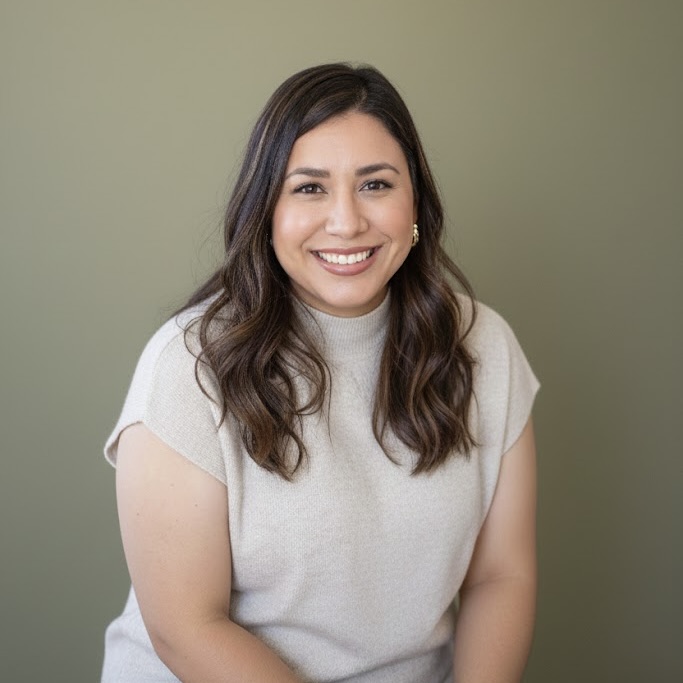
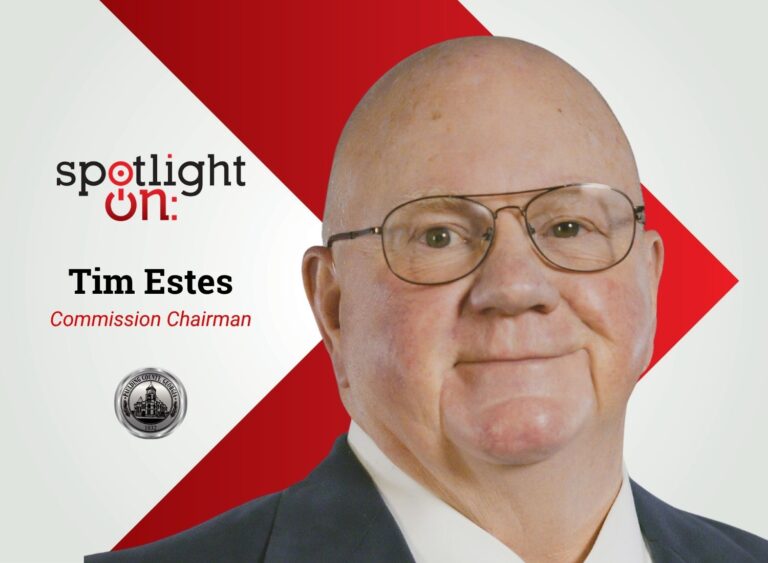
Invest: spoke with Robert Puente, president and CEO of SAWS, and Frank Almaraz, interim president and CEO of CPS Energy, about their utilities’ approaches to growth, affordability and long-term planning.
How are you balancing regional growth with long-term reliability?
 Robert Puente: Those are two distinct responsibilities that must be managed together. Expanding infrastructure is driven by growth and development, while our responsibility is making sure water and wastewater capacity are available to support that growth.
San Antonio’s philosophy is that growth should pay for itself. Developers are required to build the infrastructure associated with new developments, while we ensure the system has the capacity to support them.
Planning is critical because water projects often take 10 to 15 years to develop. We have a 50-year water management plan that is updated every five years. We have water security through multiple decades because of the planning we did 10 years ago.
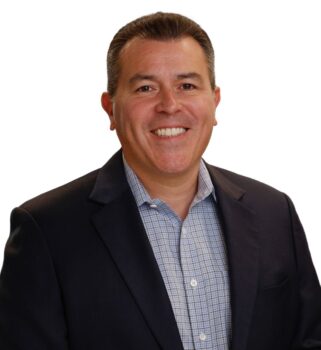 Frank Almaraz: More people are coming to Texas, and large energy loads such as data centers are growing. We need to review our strategy periodically, consider everything we are doing, and focus our efforts on what matters most.
We are also addressing major policy questions, including how to accommodate large loads and data centers coming to Texas without disadvantaging existing customers. CPS Energy has an obligation to serve, and we want to serve both current and future customers well. Our long-term plan, Horizon 2050, is a roadmap for the next 25 years to guide CPS Energy through the rapidly evolving utility industry.
How are you balancing investment needs with affordability?
Puente: Our goal is to keep rates as affordable as possible for everyone. We currently have the lowest rates among major cities in Texas and some of the lowest rates among major cities in the United States.
At the same time, some residents still struggle to pay utility bills. For those customers, we offer assistance through our Uplift program. Participants pay roughly a third of what a typical customer would pay. Our proposed rate increase does not affect customers in that program. In addition, it would allow us to expand eligibility from 125% of the poverty level to 150% of the poverty level, which would nearly double the number of families that can receive assistance.
The major investments over the next several years will be in our wastewater treatment plants.
Almaraz: We’re here for the long run, serving customers in good weather and bad, and the most affordable long-term solution requires balance, which is why a diverse portfolio matters.
We are in a period of extraordinary investment. We need power supply to meet demand that could become several times our current forecast once large loads in the queue are considered. We also need transmission investment to move power from where it is produced to where it will be consumed.
CPS Energy has some of the lowest rates in the United States and the lowest combined electric and gas bill in Texas. Its strong credit rating and lower cost of capital as a municipally owned utility benefit the state.
How does your supply strategy keep the system reliable?
Puente: Even though San Antonio’s population has grown significantly, we use roughly the same amount of water today as we did 25 years ago because per-capita consumption has continued to decline. Conservation has allowed us to delay major water projects that would otherwise have cost billions of dollars.
Supply diversification has been equally important. About 20 years ago, we relied on a single water source, the Edwards Aquifer. Today, we have 13 water projects drawing from seven different water sources. If one source is stressed by drought conditions, we have other sources available to support the system.
Almaraz: We listen carefully and focus on reliability, affordability, and cleaner energy as our three objectives. We remain technology-agnostic and believe in a balanced, all-of-the-above approach.
CPS Energy is No. 1 in solar purchasing in Texas and No. 2 in wind. We also recently purchased a significant amount of natural gas generation capacity through two rounds of transactions. We are not pursuing reliability at the expense of our environmental commitments, nor are we pursuing greenhouse gas reductions at the expense of reliability.
What investments and tools will position your utility for its next phase?
Puente: We now have more than 640,000 automated meters in service, making it the largest implementation of its kind in North America. We can notify customers if continuous usage indicates a possible leak long before they receive a monthly bill.
Artificial intelligence is becoming an important tool as well. Sewer inspection data that once required extensive manual review can now be analyzed much more efficiently. In the near term, we have to begin funding and designing projects that may not be constructed for another five to 10 years.
Almaraz: A robust and thoughtful transmission strategy is essential. We are also undertaking a substantial enterprise resource planning implementation that involves many people and will change how we work. We view it as a once-in-a-generation opportunity to create value, improve operations, and prepare the next generation of workers who will support the community.
Executing the generation plan is another priority. The board recently approved the current update, and we have concrete steps we will take to ensure sufficient supply as CPS Energy transitions away from coal. Employees must be ready to use large language models, artificial intelligence, and other advanced tools and processes. That need is especially important as many experienced workers approach retirement age.
Want more? Read the Invest: San Antonio report.