
Spotlight On: Salvador Ochoa, President, Texas A&M University-San Antonio
Key points:
- • Texas A&M University-San Antonio is expanding programs to meet the region’s workforce needs.
- • New doctoral programs and research initiatives are fueling the university’s next phase of growth.
- • Community impact remains central as the university attracts students from across the country and beyond.
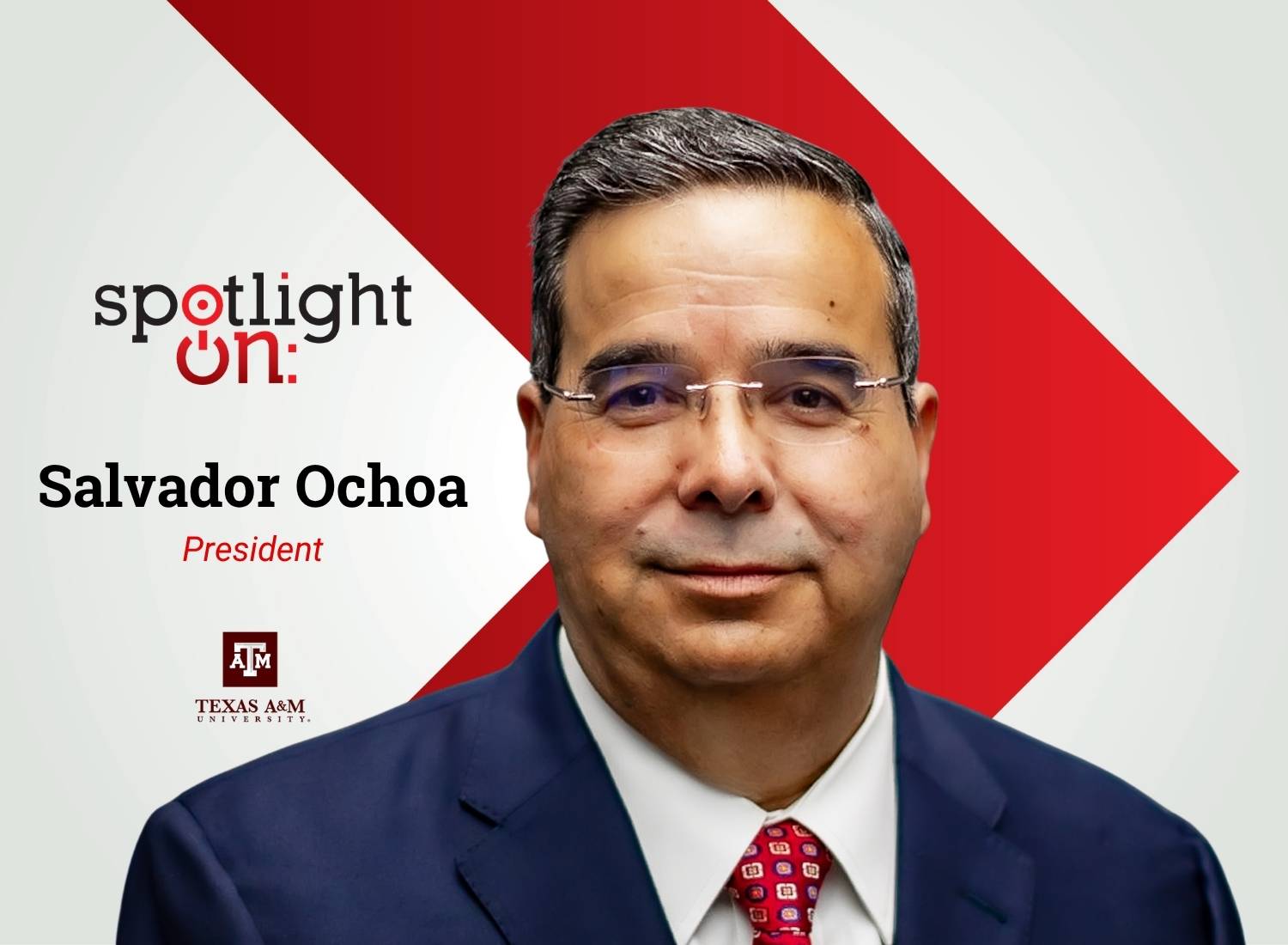 August 2026 — Invest: spoke with Salvador Hector Ochoa, president of Texas A&M University-San Antonio, about aligning academic programs with workforce demand, expanding research capacity, and deepening the university’s community impact. “We are becoming more of a destination campus. We now have students from 30 states, Puerto Rico, and 32 countries, and we are seeing more students from across Texas and beyond,” he said.
Join us at caa’s upcoming leadership summits! These premier events bring together hundreds of public and private sector leaders to discuss the challenges and opportunities for businesses and investors. Find the next summit in a city near you!
What have been the most important developments for Texas A&M University-San Antonio over the past year, and how are they influencing your priorities?
We are looking at industry trends and asking how we expand our programs to align with the emerging needs of the economy and workforce in this area. Earlier this year, we proposed two new undergraduate programs to the Texas A&M System Board of Regents: biomedical sciences and electrical engineering. The Board of Regents approved both, and they now move to the Texas Higher Education Coordinating Board.
This coming year, we also plan to submit undergraduate degree programs in healthcare administration and construction engineering technology. These align directly with workforce needs in San Antonio and Bexar County. Biomedical sciences, engineering, and healthcare are all critical sectors for this region.
Our location on the south side of San Antonio is important. We are right in the heart of an emerging manufacturing hub, with Toyota, JCB, and other employers nearby. There is also a University Health hospital under construction across the street that is expected to be completed in early 2027, and it opened a health clinic right in front of us. Looking at what is around us and across Bexar County is critical as we align programs with workforce needs.
Another important development is the memorandum of understanding between the Texas A&M Naresh K. Vashisht College of Medicine and University Health. Starting in fall 2027, 12 to 15 second-year medical students will take classes here and do clinical rotations at the hospital. Texas A&M College of Medicine faculty and an assistant dean will be on our campus to run that program. Over time, we anticipate that it will grow into a full program where students can spend their first year in College Station and complete the rest of their medical training here. That helps create the healthcare workforce San Antonio needs because many physicians stay where they complete their residency.
What does the launch of the university’s first doctoral program mean for the institution?
It is a huge milestone. The first doctoral program, which was just approved by the accrediting body Southern Association of Colleges and Schools Commission on Colleges (SACSCOC), will be in educational leadership. Training educational leaders at the doctoral level is important because these are the people who will run school systems, schools, and programs within schools. They will have specializations in areas such as bilingual education, early childhood, and special education.
What happens in K-12 has a major impact on what happens when students come to universities. Having strong leaders in that area is absolutely critical. The first doctoral program also enables us to take initial steps toward a different research classification. We have enough research funding to move toward R2, but we need doctoral programs.
We are also hoping to submit a second doctoral program in integrative genetics and genomics. That would align well with our new Public Health & Education building, the Texas A&M medical school presence here, and the areas of faculty expertise we already have.
How is AI changing higher education, and what skills do students need to succeed in an AI-driven economy?
When people look at AI, they often look at it from the student perspective, but what gets overlooked is how we use AI in our teaching. To me, that is putting the cart before the horse. We have spent a lot of time training our faculty on how to use AI as an appropriate pedagogical tool, including when it is appropriate to use and how those expectations should be communicated to students.
I think we are ahead of the game in that respect because people often think AI is only about the consumer. My question is how AI is being used in our classrooms so we can model that use for students. Faculty need to model how AI can be used appropriately in their respective disciplines and industries. It should be the faculty driving AI and its use, rather than students driving it.
How are you attracting, retaining, and developing faculty and staff talent?
One advantage we have is that this is an institution on an upward trajectory. Our enrollment is healthy, while many schools are struggling with that. When people see our facilities, they see new labs and current technology. Faculty see the conditions they will work in and know we have committed to building a first-class research infrastructure.
We also have the A&M name behind us, but a lot of people are attracted by the student population we serve. Many faculty come from San Antonio or South Texas and want to give back. They see themselves in our students and understand the power of education.
There is also a sense that we are building something together. In 17 years, what was once 700 acres of mesquite and cacti has become a thriving campus. Faculty are excited by the possibilities around us, including the hospital, the health clinic, and nearby neighborhoods. Some faculty are buying homes nearby because they feel part of the broader academic ecosystem.
Beyond earnings, how do you measure student success and community impact?
A college degree is still desperately needed. In the latest economic study we did, we found that students who come to A&M-San Antonio can earn $1.2 million more over their working lifetimes with a college degree than without one.
I worry a lot about the students who never get here. In a community where 66% of graduates are first-generation students, you have to create a college-going culture. Through our La Familia program, we provide “College 101” to parents in both English and Spanish. We explain what students need to know to navigate admissions and the university environment, how to navigate financial aid, and what steps families need to take. By empowering parents, we make them critical agents of support for their students.
I am also proud of our early college high school programs. Students come to our campus, sit in classes with college students, and have access to university resources. Some graduate high school with as many as 60 college credit hours. That builds confidence and saves families time and money.
We are also opening a new Educare childcare center this fall. It is the only one of its kind in Texas and will serve children from 6 weeks old through kindergarten. It will be a lab school for our students and a resource for the community. It addresses a childcare need in the community, supports working families, prepares early childhood teachers, and helps equip parents to be educators themselves. If we are going to change the economic landscape, we have to look at the entire ecosystem.
What are your top priorities for the next three to five years?
We want to build on our successes. In just over 16 years, we reached our 20,000th graduate. We want to grow that alumni base and continue improving our academic rankings. We were ranked 56th overall among Western regional universities and 29th among top public universities in that region.
We have just hired our inaugural vice president for research and are expanding our research enterprise. We have also expanded athletics. We have grown our number of sports programs from six to 12 this coming academic year by adding men’s and women’s indoor and outdoor track and field, as well as cross-country. This creates a pathway for us to move toward NCAA Division II.
A major priority is launching our strategic plan, which is built around the idea that we are all in: faculty, staff, students, and the community. The plan focuses on academic distinction, research growth, new programs, student success, community connection, and employee fulfillment and excellence.
We are becoming more of a destination campus. We now have students from 30 states, Puerto Rico, and 32 countries, and we are seeing more students from across Texas and beyond. At the same time, we remain deeply committed to serving our local community by preparing the workforce and building a college-going culture.
This university is on an upward trajectory and has not yet reached its full potential. People get excited with that energy here, that the best days are in front of us, and I really believe that.
Want more? Read the Invest: San Antonio report.