Toyota’s deal signals new era for San Antonio investment
Key points:
- • Toyota’s $3.6 billion San Antonio investment adds 2,000 jobs and strengthens the city’s role in the Texas-Mexico manufacturing corridor.
- • Port San Antonio and Port Laredo data show the region already anchors billions of dollars in trade and economic output.
- • USMCA negotiations add uncertainty, but San Antonio remains a key hub for North American manufacturing and nearshoring.
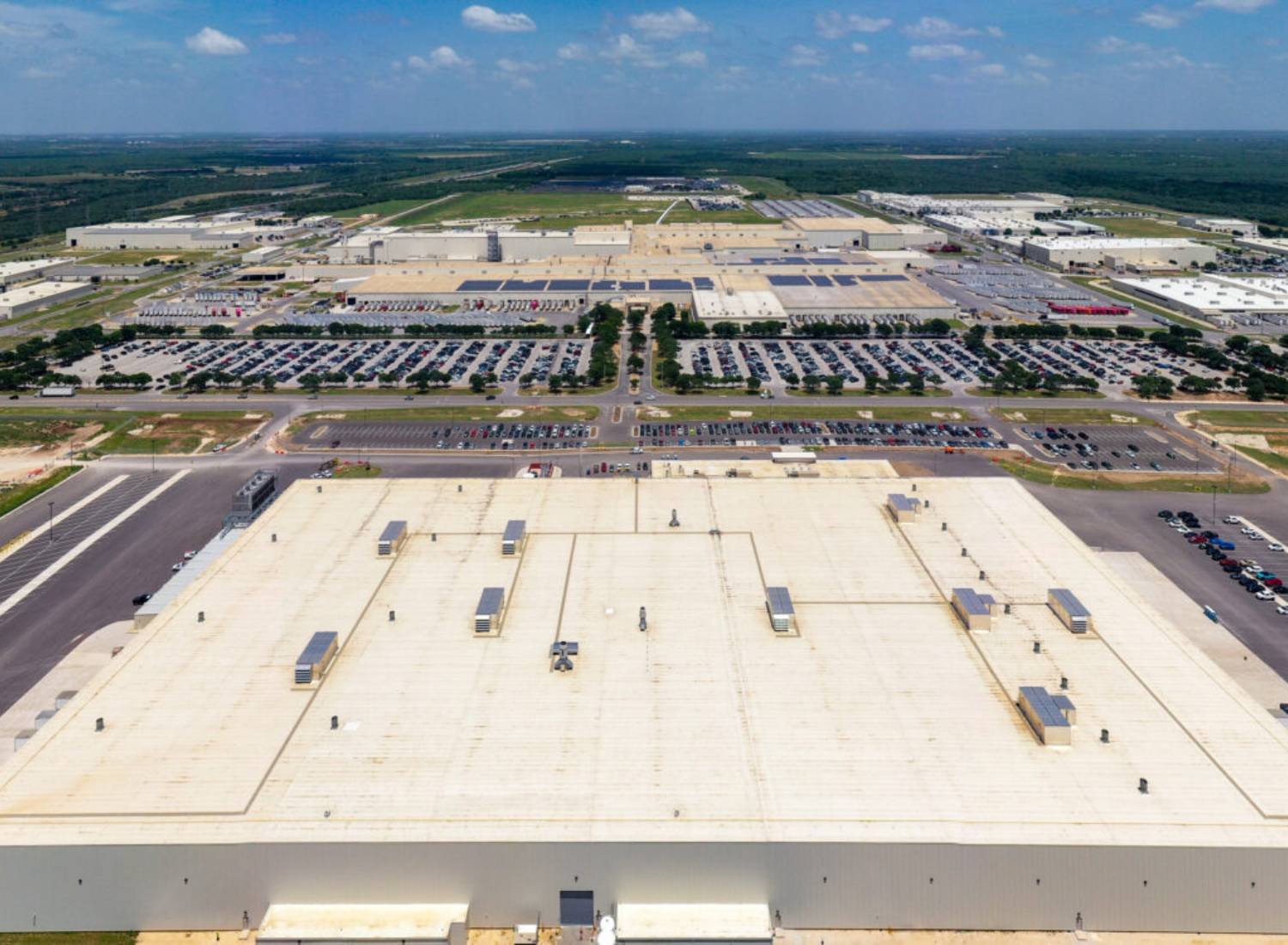 July 2026 — Toyota Motor Corp is making a $3.6 billion San Antonio investment to build a 2.5 million-square-foot plant on its existing campus, shifting Tacoma pickup production there from Mexico by 2030. The move creates 2,000 jobs and further strengthens San Antonio’s role in the Texas-Mexico trade corridor while nearly doubling the size of Toyota’s campus by the end of the decade.
Join us at caa’s upcoming leadership summits! These premier events bring together hundreds of public and private sector leaders to discuss the challenges and opportunities for businesses and investors. Find the next summit in a city near you!
A hub takes shape
Toyota already builds Tundra trucks and SUVs in San Antonio and will open a new 500,000-square-foot rear axle plant later this year. Tacoma production adds a third layer to that footprint, and it arrives as U.S.-Mexico trade data from the Office of the U.S. Trade Representative shows Mexico remained the top source of U.S. imports and the second-largest destination for U.S. exports in 2024. More than 80% of Mexico’s goods exports go to the United States, with South Texas serving as a primary gateway for that trade.
During a recent interview with Invest:, John Beckham, managing director of the North American Development Bank (NADBank), described San Antonio as the geographic center of a growing cross-border economy. “San Antonio sits at the top of a triangle formed by San Antonio, Houston, and Monterrey, which is a major hub of energy and manufacturing capacity. That is a strong advantage for the city.” Beckham said the city’s role extends beyond freight and manufacturing. “San Antonio is where Mexico and the United States come together to do business and engage socially. That ecosystem needs to be taken care of.”
Texas Gov. Greg Abbott confirmed Toyota’s project qualifies for a $20 million state grant. The White House credited tariff policy and deregulation for the decision. Whatever the mix of factors, the result is the same. Toyota will return Tacoma production to San Antonio after shifting it to Mexico in 2020.
The investment builds on decades of industrial and logistics infrastructure across San Antonio. One example is Port San Antonio, a 1,900-acre campus built on the former Kelly Air Force Base, that generated $7.9 billion in economic output within Bexar County in 2024 and supported more than 31,000 jobs, according to an economic impact study by Zenith Economics. Its tenants include Boeing and StandardAero, and the campus runs the longest runway in the region at 11,500 feet alongside direct rail access to BNSF and Union Pacific lines.
Supply chain backs investment
The region’s freight network is another factor supporting large-scale manufacturing and trade. Port Laredo moved $352 billion in total trade between November 2024 and October 2025, including $341 billion with Mexico, representing 40% of all U.S.-Mexico trade, according to Port Laredo trade data. One in four commercial trucks crossing any U.S. border now passes through Laredo, with Interstate 35 connecting the trade gateway to San Antonio.
The effects of nearshoring are already visible on the ground. “As manufacturing moves closer to San Antonio, we recognize the need to continue investing in our infrastructure and collection logistics so we can better serve our manufacturing partners. As their efficiency and productivity increase, ours does, too,” Jordan Vexler, CEO of Monterrey Metal Recycling Solutions, said in an interview with Invest:. From Port San Antonio’s Foreign Trade Zone, Monterrey Transloading Solutions provides rail-connected logistics support for companies moving products and bulk materials between Mexico, San Antonio, surrounding Texas markets, and destinations across the United States.
Toyota’s expansion adds to a broader pipeline of manufacturing investment across the San Antonio region. JCB expanded its planned San Antonio investment to $500 million while maintaining plans to create more than 1,500 jobs at its North American manufacturing plant. Manufacturing investment also extends beyond automotive, with XPEL announcing a $110 million expansion of its San Antonio operations and U.K.-based RGE Group opening a production facility in the region, adding to San Antonio’s growing advanced manufacturing base.
Not every signal points to an inevitable boom. A Federal Reserve Bank of Dallas analysis found that nearshoring to Mexico overall has produced more trade diversion than large-scale foreign capital relocation, with foreign direct investment as a share of Mexico’s GDP actually declining since 2022. Toyota’s decision to build in Texas rather than expand in Mexico fits that broader pattern, shifting production capacity north of the border instead of simply expanding manufacturing on both sides.
READ MORE: 2026 midyear review: AI and trade reset strategy
USMCA enters limbo
On July 1, the United States declined to extend the USMCA in its current form during the agreement’s mandatory six-year joint review, introducing new uncertainty into the North American trade framework, according to Reuters. U.S. Trade Representative Jamieson Greer said the country “did not agree to renew the USMCA in its current form.”
The agreement remains in force through July 1, 2036, with current tariff preferences, rules of origin, and dispute settlement mechanisms remaining fully operative. But the six-year extension option is now deferred rather than confirmed, and the Free Trade Commission will conduct a joint review every year until the parties agree to a 16-year renewal or the deal expires.
The next round of bilateral talks between the United States and Mexico begins the week of July 20 in Mexico City. Sticking points include automotive rules of origin and manufacturing requirements — the Trump administration has pushed for 50% U.S. content in North American-built vehicles, up from a regional total near 82%. Mexican Economy Minister Marcelo Ebrard has said Mexico will not accept terms that disadvantage its auto industry.
For San Antonio, this cuts two ways. Uncertainty over rules of origin gives automakers another reason to build capacity on the U.S. side of the border, reinforcing the Toyota logic. But a prolonged standoff or rules changes that raise costs across integrated supply chains could slow the flow of goods through Laredo and reduce investment across the region. Nissan CEO Ivan Espinosa has warned that stricter content rules could worsen affordability problems for U.S. car buyers without a supply chain built to support them.
“The geopolitical value of North America as a manufacturing and market hub is stronger than ever. That ties directly into nearshoring,” Beckham said, describing the long-term outlook for North American manufacturing as unchanged. “We see this through the infrastructure needs in Laredo, which connects San Antonio to Monterrey,” he added. “San Antonio relies on those relationships with South Texas and northern Mexico for its well-being, including in auto manufacturing, technology, energy, and cultural dynamism.”
Image via Toyota
For more information, please visit:
https://pressroom.toyota.com/toyota-announces-3-6b-expansion-2000-new-jobs-at-its-san-antonio-plant/
Want more? Read the Invest: San Antonio report.