Universal Slowdown highlights Orlando small business news
Key points:
- • Universal Orlando attendance softened starting in June 2026, Comcast told investors.
- • Epic Universe still drove Q2 parks revenue up 2.7% to $2.4 billion despite the dip.
- • Parks division earnings fell 5.1% to $609 million on higher operating costs.
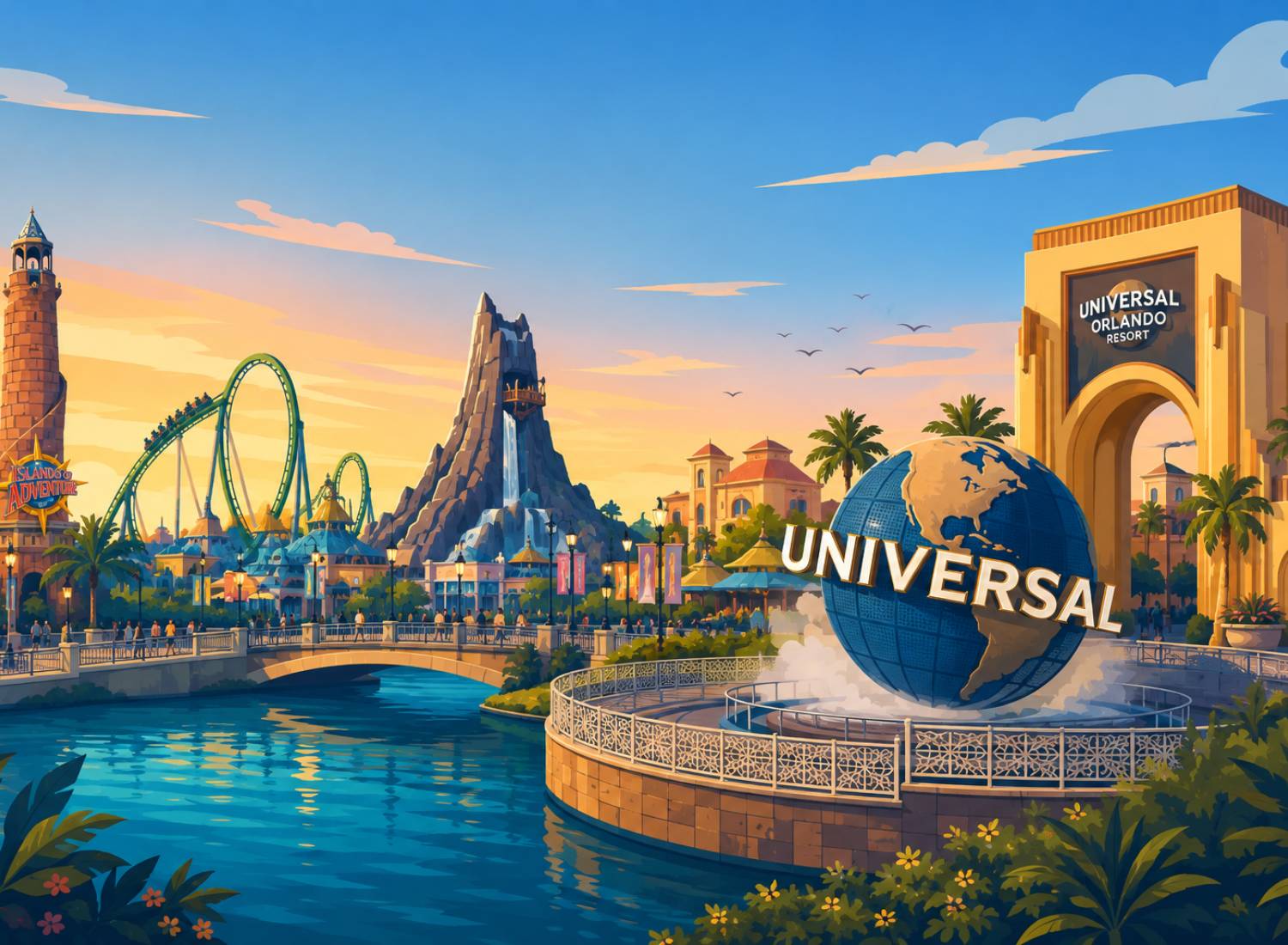 August 2026 — Orlando small business news this summer carries a warning sign for the region’s tourism economy. Comcast, Universal Orlando’s parent company, told investors on its second-quarter earnings call that theme park attendance began softening in June and stayed below expectations into the peak summer season. For the small hotels, restaurants and shops that ring the parks and live off visitor spending, that slowdown is the first hard signal that 2026’s tourist season is running cooler than planned.
Join us at the Invest: Greater Orlando 4th Edition Leadership Summit! This premier event brings together hundreds of Greater Orlando’s business and regional leaders to discuss the challenges and opportunities for businesses and investors. Buy your ticket now!
A cooling summer
Comcast delivered the news on July 23, walking investors through second-quarter results for its Content & Experiences division, which includes Universal Orlando. Attendance at the Orlando parks began softening in June, executives said, and the trend carried into the third quarter, below internal projections. They pointed to higher fuel prices and softer consumer sentiment as likely temporary drags on visitation, stopping short of releasing hard attendance figures. That admission is notable: Comcast rarely flags a demand problem at its flagship Orlando resort unless the drop-off is broad enough to matter to Wall Street.
For a metro economy built on tens of millions of annual visitors, even a soft summer ripples outward fast. Theme park gate traffic sets the pace for International Drive gift shops, breakfast spots, tour operators, rental car counters and small hospitality vendors that never appear on a Comcast earnings slide but depend on tourists having money left over after admission. When a corporation the size of Comcast says demand is running below plan, that is Orlando small business news well before it becomes a line in anyone’s quarterly filing. Fuel prices and consumer sentiment are national forces, which is why Orlando works as an early-warning gauge for discretionary spending nationwide.
The Epic exception
The picture is not uniformly weak. Epic Universe, the park that opened in May 2025, was singled out by Comcast leadership as still performing well and generating strong guest response in its second year, even as broader attendance cooled. Universal’s parks division posted second-quarter revenue of $2.4 billion, up 2.7% year-over-year, a gain attributed largely to higher Orlando revenue tied to Epic Universe’s continued draw. At the same time, total parks earnings fell to $609 million, down 5.1% from a year earlier, as operating expenses climbed. More people are spending inside Epic Universe’s gates, but it now costs more to run the expanded resort, and the older parks around it are pulling in fewer visitors than expected.
That nuance matters. A single blockbuster attraction can mask softness elsewhere in a portfolio the size of Universal’s, but small businesses do not have that luxury. A souvenir shop or breakfast counter near Universal Studios Florida or Islands of Adventure feels a traffic dip immediately, regardless of Epic Universe’s draw a few miles away, prompting operators to track occupancy and covers more closely than headline visitor totals.
Universal is not standing still. The company is demolishing the Lost Continent area at Islands of Adventure for an unrevealed new themed land. CityWalk is adding dining including Five Guys, Luke Combs’ Category 10 and Joey Fatone’s Fat One’s Hot Dogs and Italian Ice, additions that bring leasing activity, construction contracts and staffing needs for the small firms that build and supply Orlando’s entertainment district. Even during a soft stretch, the capital keeps flowing, and local vendors tied to CityWalk’s expansion stand to benefit regardless of the gate-count trend.
Why it matters beyond Orlando
Orlando’s experience fits inside a wider national story about discretionary travel spending in 2026. Comcast’s read on fuel costs and consumer sentiment echoes concerns other travel and leisure companies have raised this summer about households trimming vacation budgets. Orlando, drawing visitors from every region of the country and abroad, functions as one of the more reliable early barometers of that mood. When Comcast tells investors that demand for one of the most inelastic vacation products in America is running soft, it confirms what many small hospitality operators nationwide have suspected anecdotally for months, which is precisely why this round of Orlando small business news deserves attention well outside Central Florida.
Local officials have spent much of the past year framing Epic Universe as proof that Orlando’s visitor economy could keep expanding indefinitely. Comcast’s own earnings call complicates that framing without contradicting it: the new park is doing what it was built to do, while the market around it cools. For small operators, that distinction shapes staffing levels heading into the fall shoulder season, inventory orders for gift and specialty retail, and whether to bank on a holiday rebound or hedge against continued softness.
Want more? Read the Invest: Greater Orlando report.