
Spotlight On: Matthew Costigan, Principal & Senior Financial Advisor, HBKS Wealth Advisors
Key points:
- • HBKS integrates investments, tax strategy, and financial planning.
- • Long-term goals guide investment and retirement decisions.
- • Estate planning helps clients protect and transfer wealth efficiently.
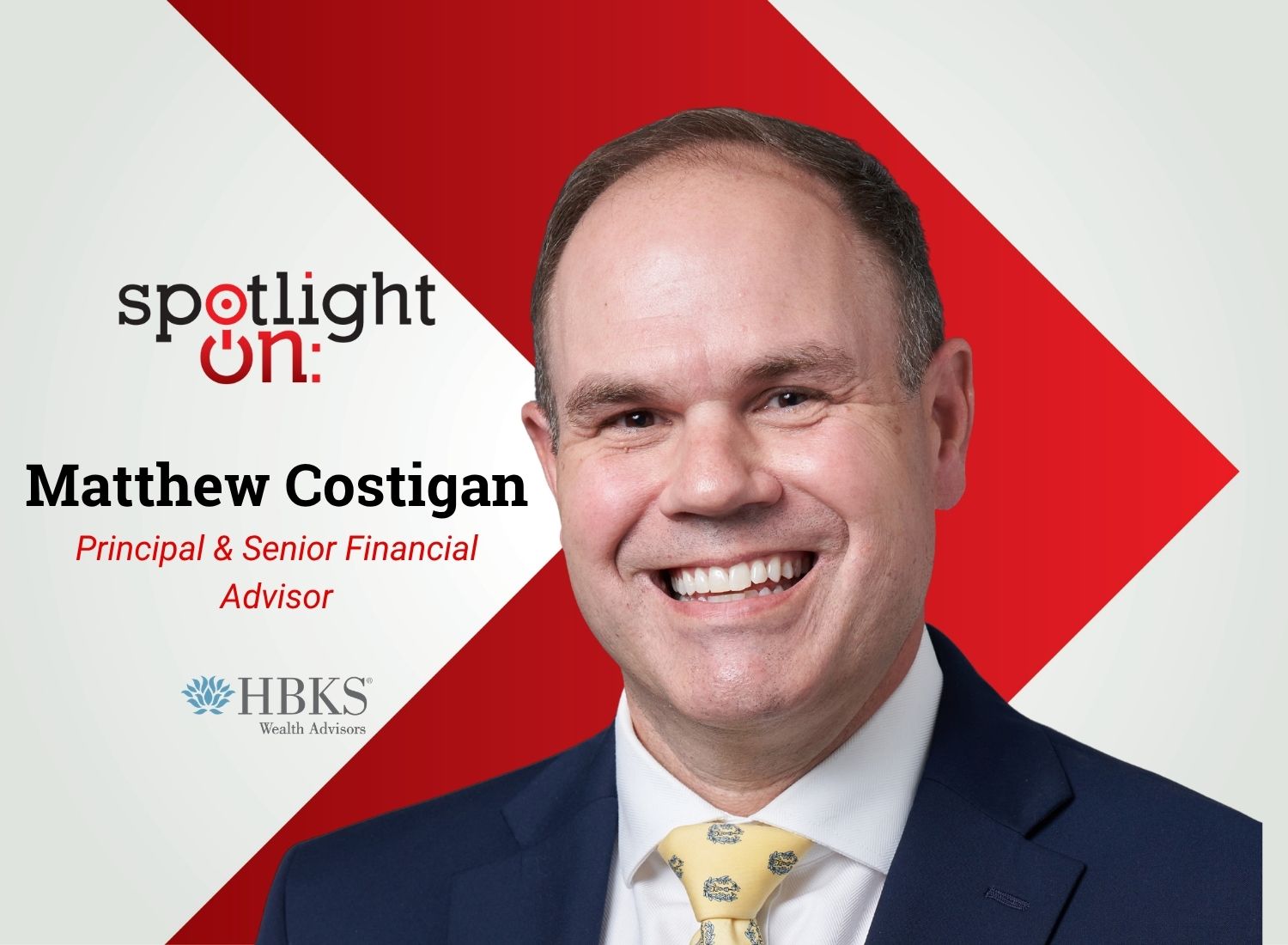 August 2026 — Invest: spoke with Matthew Costigan, principal and senior financial advisor at HBKS Wealth Advisors, about the firm’s planning-led approach to wealth management, tax strategy, risk, retirement, and estate planning. Costigan said clients increasingly want advice that goes beyond portfolio performance and connects their investments to broader life goals. “The money is there to serve your longer-term planning needs,” he said.
Join us at caa’s upcoming leadership summits! These premier events bring together hundreds of public and private sector leaders to discuss the challenges and opportunities for businesses and investors. Find the next summit in a city near you!
What does it mean in practice for HBKS Wealth Advisors to be a comprehensive wealth management firm rather than simply an investment manager?
We try to lead with financial planning. While most of our revenue comes from ongoing fee-based investment management, the service has become increasingly commoditized. Clients can go to many places to have someone manage their money.
You have to be competent at that, which is why we have a dedicated asset management group of chartered financial analysts whose full-time job is researching and building portfolios. Because our firm manages more than $8 billion, we have the resources to separate investment management from client advisory work.
What clients are really looking for is advice. They want financial planning, estate planning, guidance on major purchases, education funding, insurance, and other life decisions. They want a long-term relationship with someone who knows them and their family.
Because we are partnered with HBK CPAs & Consultants, we can integrate tax planning and tax compliance into that process. You cannot separate tax advice from long-term financial planning. That is what brings many clients to us.
When we meet with clients, we do not spend most of our time reviewing investment performance because they already receive statements. The money is there to serve your longer-term planning needs. That is what clients want help with.
What financial decisions tend to have the biggest long-term impact that people sometimes overlook?
People often become too focused on short-term market volatility. We do not make investment decisions based on where we think the market will be six months or a year from now because nobody consistently knows that.
Instead, we use financial planning to show clients why they need an appropriate level of long-term investment risk. Keeping everything in cash may feel safe, but after inflation and taxes, it often fails to preserve purchasing power.
We also separate short-term needs from long-term investments. If a client needs money within six months for something like a home purchase, that money belongs in cash equivalents, not the market.
For clients with larger portfolios, typically $5 million or more, we can also incorporate private equity and private credit. Those investments are less liquid, but they can make sense for clients who do not need immediate access to a portion of their assets.
How do you balance tax efficiency with long-term investment strategy without allowing taxes to dominate every decision?
That would be easy, and people sometimes call it the tax tail wagging the investment dog. Because we are affiliated with a CPA firm, we try to be efficient with tax consequences. Your after-tax rate of return is your real rate of return. Taxes are a major consideration, but we do not let them drive the overall conversation.
One strategy we use is asset location. If someone has different types of accounts, such as an IRA that is tax-deferred and a brokerage account where taxable income and gains are reported on their tax return, we try to put more tax-inefficient asset classes inside the IRA. That current income stays off the person’s tax return. Then we may put assets such as equities, which receive capital gains treatment, inside brokerage accounts where they are not generating as much current income. We view both accounts as one portfolio, maintaining the desired overall risk while placing assets in the most tax-efficient accounts.
We also use direct indexing, which is managed by a third party such as Vanguard. Rather than buying an S&P 500 index fund as one position, Vanguard can replicate that exposure through individual stocks. The goal is to generate a similar investment return and risk level while also managing tax losses that can offset gains elsewhere in the portfolio.
Another common situation is when clients come to us with existing portfolio positions that have large unrealized gains. That is common because capital markets have gone up a lot since 2020. Rather than selling everything and creating a large tax bill, we may hold certain positions and build around them. If someone already has significant exposure to technology stocks, for example, we may structure the rest of the portfolio to avoid adding more exposure while maintaining diversification.
How should individuals approach long-term financial planning to improve their chances of meeting retirement goals?
Number one is that they need a budget. They need to run their life, meet current expenses, and clean up any consumer debt, which is a fancy way of saying credit card debt, so they are not paying high interest rates.
Once they know what they can save, the next question is where to put that money to work most efficiently. If someone is employed at a large company and has access to an employer retirement plan, such as a 401(k) or 403(b), they should use that and take advantage of employer matching or profit-sharing contributions. Then we look at other tax-advantaged retirement vehicles and determine which options they are eligible to use.
Then it becomes a longer-term planning question: How much do you actually need to save to retire by the date you want? What does retirement look like? How do personal savings fit with Social Security income or, in some cases, a pension?
It is about working backward. If you do this for the next 20 or 30 years and you are consistent, here is where you are going to end up. People are often surprised by the impact of compound interest over time. If someone waits until their 30s or 40s to start, it will take a larger portion of their income to meet their retirement goals. But the math tells the story.
How is HBKS adapting its services to help high-net-worth clients protect their wealth as well as grow it?
From a federal estate tax perspective, the current exemption is generous. It is $15 million per person, so a married couple can exclude $30 million from federal estate tax. That covers a lot of people because many do not have $30 million of net worth, though some of our clients do.
We partner with HBK, and we have an internal tax advisory group made up of attorneys and tax specialists. Rather than simply handing a client off to an estate planning attorney, we develop an estate planning strategy based on their investment assets and, often, business assets.
We look at whether they are making gifts to the next generation, whether they have charitable intentions, how assets should be titled, whether irrevocable trusts make sense, and whether life insurance should be part of the plan. Our goal is to help clients understand what will happen and make thoughtful decisions before they become necessary.
Often, that adds complexity to a person’s financial life, but it is worthwhile. We may show clients what their estate tax exposure would be if they made no changes. From there, we can recommend steps to reduce estate taxes, preserve their investment strategy, and help them pass assets efficiently to future generations or support charitable goals.
Want more? Read the Invest: Pittsburgh report.