
Spotlight On: Stuart Butler, President, Visit Myrtle Beach
Key points:
- • Myrtle Beach is building new momentum through unprecedented regional collaboration.
- • Human-centered storytelling is reshaping how the destination attracts visitors.
- • New investment and young talent are driving Myrtle Beach’s next phase of growth.
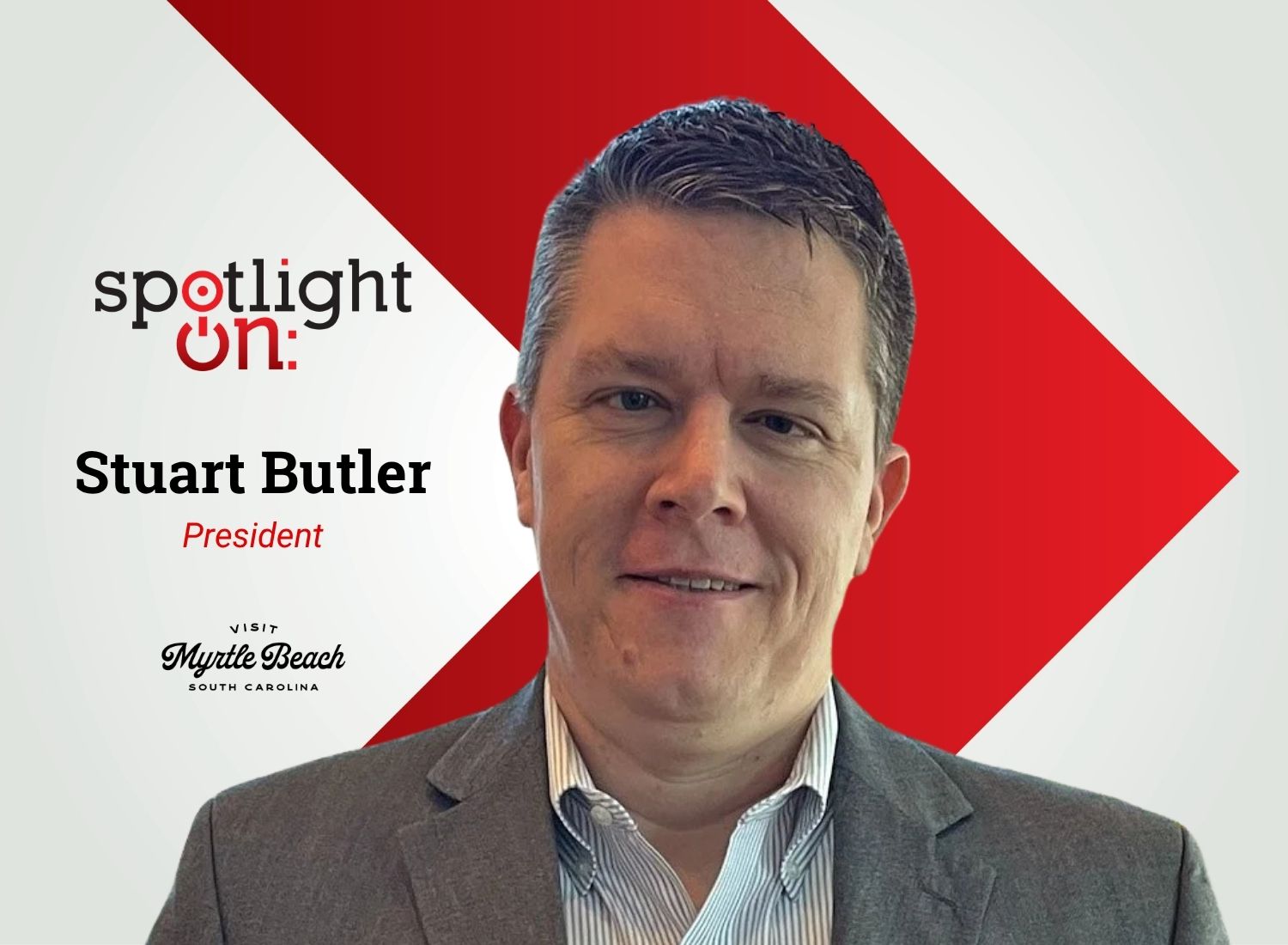 August 2026 — Invest: spoke with Stuart Butler, president of Visit Myrtle Beach, about the region’s collaborative momentum, evolving visitor experience, storytelling strategy, and long-term growth priorities. “There is a lot of optimism about the future because everyone is rowing in the same direction,” he said.
Join us at caa’s upcoming leadership summits! These premier events bring together hundreds of public and private sector leaders to discuss the challenges and opportunities for businesses and investors. Find the next summit in a city near you!
What key changes over the past year have impacted Visit Myrtle Beach, and in what ways?
Regionally, there is a new sense of community here. I have lived in the region for 25 years, and there has always been friendly cooperation between the 14 municipalities that make up our region. But over the last 12 months, we have had key leadership changes, including a new CEO for our parent organization, the Greater Myrtle Beach Collaborative, a new head of the school district, and a new president at the university. They all came from outside and brought fresh perspectives.
There is a sense of collaboration that I have never seen in the 25 years I have been here. Everyone is seeing the opportunity and is willing to work together to seize it. The first-ever communitywide strategy, Collaborate 2031, is bringing all municipalities together under one unified vision for the future.
On the perception side, TripAdvisor named Myrtle Beach the No. 1 searched destination for summer 2026 in the country for domestic travel, as well as No. 1 for the Fourth of July. More Americans want to spend the country’s 250th anniversary in Myrtle Beach than anywhere else, and that gave us a lot of pride. We were also named the No. 5 best small city in America by Resonance Consultancy’s 100 Best Cities list.
On a more micro level, the culinary scene has begun to take off. In the last 12 months, we received our first Michelin-recognized restaurant, our first James Beard finalist restaurant, and a local restaurant, Anto’s Pizza, won the World Cup of Pizza in Italy for a certain type of pizza. We can now claim we have the best pizza in the world in that category. There is a lot of optimism about the future because everyone is rowing in the same direction.
What sets Myrtle Beach apart from other markets?
It comes down to the people. Myrtle Beach is still quintessential Americana because it is a melting pot of people from all over. Few people grew up here and have lived here for generations. Most have come from other regions of the country or other countries, bringing a piece of those places with them, which is then combined with Southern charm and welcoming hospitality. The people are the biggest asset we have.
Our quality of life is also a major differentiator. Our county has about 400,000 people, and the city of Myrtle Beach itself has about 36,000 people, but we have 2,000 restaurants to choose from. That is more per capita than Paris. We have thousands of attractions, 60 miles of beautiful beaches, world-class live music, and more than 20,000 live music performances a year in the region, which is more than Nashville. We also have nine live theater shows that offer Broadway-quality experiences.
A new school superintendent recently said it is just a little bit nicer here: the people are nicer, the weather is nicer, and the things to do are nicer. Eighteen million vacationers a year agree because this is where they choose to spend their vacation time, and increasingly, more people are moving here, too.
There is a nostalgic quality to this place. It harkens to an era where things were more civil, people got along, and we celebrated our differences while realizing we were more similar than different. People get along a little better here. There is hospitality in our community and culture.
What marketing and outreach strategies have been most effective in reaching new visitor markets?
Traditionally, destination marketing organizations have been seen as investing community dollars, in the form of taxes, primarily in paid advertising. You can reach an audience that way, but it is not always the most effective way to communicate.
Throughout the history of humanity, the best way to communicate has been through storytelling. People no longer travel to destinations solely because of the place. They travel because of the experiences they can have, and increasingly those experiences involve not just things to do but interactions with other people.
We have been on a mission to tell deep, rich, human-based stories. We talk about the three P’s of storytelling: people, passion, and purpose. Every story we tell has to be rooted in one or more of those things.
For example, we have a restaurant downtown called Winna’s Kitchen, located in a newly renovated block of downtown that is seeing a resurgence. From a paid advertising standpoint, I could say it has great fresh food, seasonal local ingredients, and a downtown location. That sounds like every restaurant.
But if I tell you about Jess Sagun, the owner and chef, and how she overcame a troubled past, addiction, homelessness, and difficult times, and then found a church family that helped her get back on her feet, that connects differently. She wanted to give back, so at Winna’s Kitchen, guests can order a No. 1 for $5, which pays for a meal for someone in need. Community members who need a meal can come in because someone else has provided it.
Now you connect to Jess, her struggle, her overcoming, her joy for the community, and her desire to give back. The power of storytelling is limitless. Our job is partly economic development. That is the outcome. But the way we do economic development is through storytelling. We are the storytellers for the destination.
How do you balance increasing visitation with preserving the qualities that make Myrtle Beach unique?
We look at sustainability through two lenses: resource sustainability and human sustainability. We have seen places, especially in Europe, struggle with overtourism. We try to make sure we are dispersing visitors around the region.
There are areas in Myrtle Beach where people can have a busy experience surrounded by thousands of others if they want that. But we are blessed with 60 miles of coastline, so there is a lot of space for people to spread out. We also have many municipalities and neighborhoods within those cities that offer distinct experiences.
Part of our job is not just to tell the core story of coming to Myrtle Beach to visit the SkyWheel, Ripley’s Aquarium, or the Boulevard. It is also telling smaller regional stories. For example, during October, the city of Conway renames itself the City of Halloween and decorates the entire city, from jack-o’-lanterns in the trees to major downtown activations. Our job is to tell those stories and disperse people beyond the core visitor areas.
We also need to communicate with residents to foster appreciation, not just community pride. Tourism connects directly to quality of life. Even if someone does not work in tourism, visitors contribute to reduced taxes, 2,000 restaurants, nine live theaters, and clean beaches that are maintained every day. We have to tie tourism to quality of life through local media, social media, ambassadors, and storytellers. Then the community becomes part of the solution.
What opportunities are you most excited about, and what are your key goals for the next two to three years?
Myrtle Beach is seeing a massive resurgence. It is already popular, but certain areas are receiving significant investment. We are tracking more than 50 major hotel renovations or new-build hotel projects, so accommodations are elevating. Three years from now, that product will be at another level.
There are also major projects that will transform what a Myrtle Beach vacation can be in terms of access to amenities. A lot of it comes back to regionalism, with the entire community coming together to support one another and look for opportunities.
What will come out of Collaborate 2031 and this new sense of regionalism is a major effort to attract and retain young talent. That is important to our future and to driving class-A office space and bringing national companies here to be headquartered.
We are the fastest-growing region in the country over the last couple of years. Much of that has been retirees, but increasingly we are seeing younger families who visited here and now want to put down roots, build businesses, and attract employees because the quality of life and cost of living are so good. Three years from now, Myrtle Beach will be a different place. It will be bigger, but I think there will be even more opportunities here than people can begin to imagine.
Want more? Read the Invest: South Carolina report.