

Spotlight On: Keagan Lee, CEO, Sagis
Key points:
- • Sagis is scaling its multispecialty pathology services while moving toward nearly 100% digital pathology.
- • AI is supporting diagnostics, operations, and revenue cycle management while keeping physicians central to clinical decisions.
- • Houston’s healthcare ecosystem, physician-owned model, and education initiatives are strengthening Sagis’ growth and collaboration.
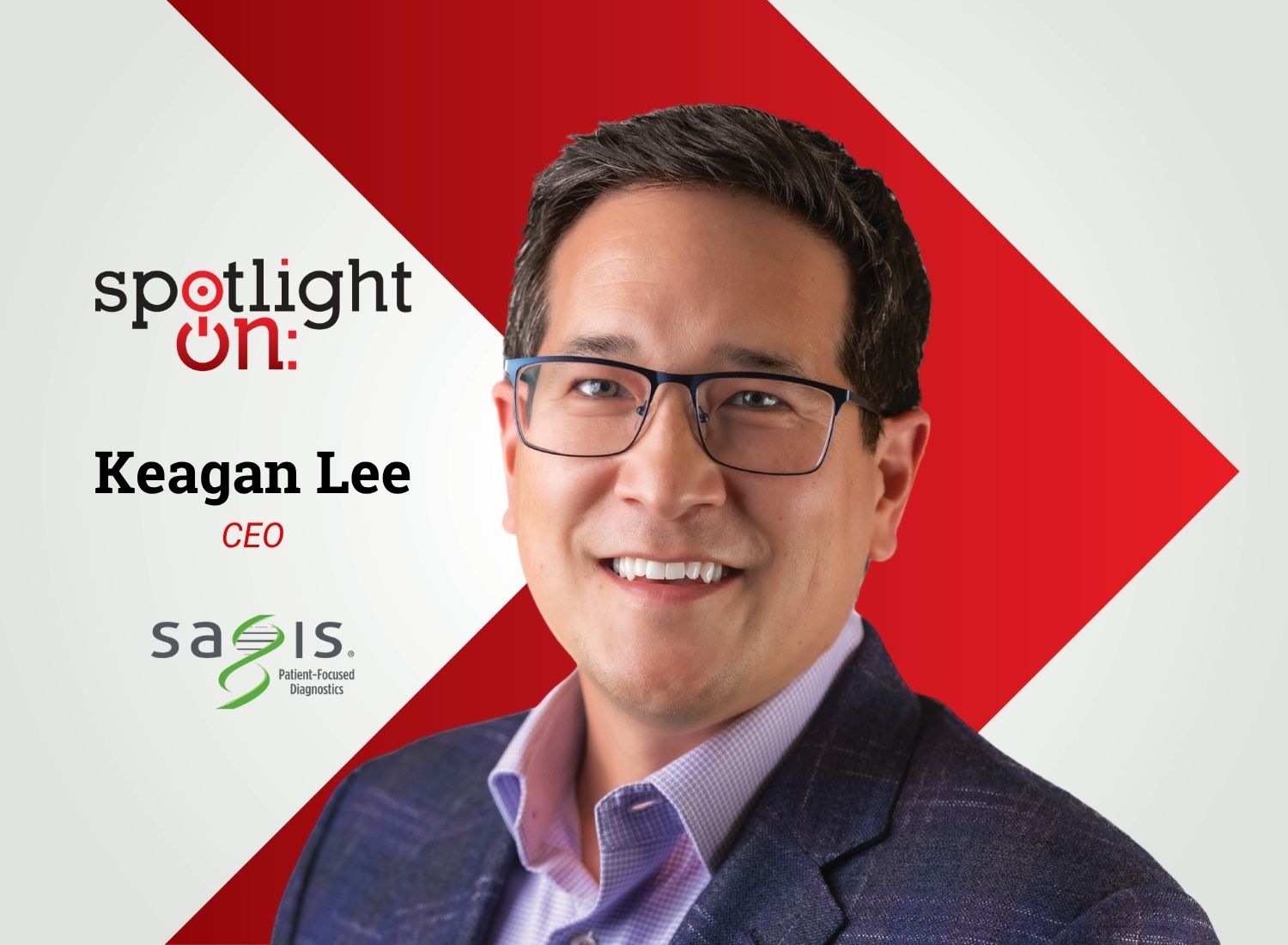 August 2026 — In an interview with Invest:, Keagan Lee, CEO and co-founder of diagnostic pathology lab Sagis, discussed the company’s growth, its physician-owned model and adoption of digital pathology, and AI. “AI in diagnostics is still in its infancy, but it will continue to expand,” Lee said.
Join us at the Invest: Houston 3rd Edition Leadership Summit! This premier event brings together hundreds of Houston’s business and regional leaders to discuss the challenges and opportunities for businesses and investors. Buy your ticket now!
What have been the biggest milestones for Sagis over the past year, and what priorities are guiding the organization today?
We continue to have strong growth across our company. We are now a multispecialty laboratory, and one of our biggest accomplishments over the past year was implementing digital pathology, which is starting to reshape our profession.
What differentiates Sagis’ physician-owned model, and how does it benefit clinicians and patients?
Dr. Trey Martin and I own the company together, and we’re both actively practicing pathologists within it every day. That keeps us in tune with what needs improvement, what is working, and what is not.
That allows us to provide the quality of service our clients expect and translates into a personal level of service that may be harder to find at laboratories that are not physician-owned.
How are the needs of physicians and healthcare providers evolving, and how is Sagis adapting to meet those expectations?
People expect more communication, quicker responses, and faster results. Meeting those expectations from physicians, healthcare providers, and patients is challenging because you never want to compromise quality by rushing the process in any way. You want to be efficient while communicating effectively in a timely manner (we call that turnaround time). Our laboratory operates 24/7, with people working around the clock. Our pathologists give our clients their cell phone numbers, and we expect a phone call if something needs immediate attention.
How are digital pathology, AI, and other emerging technologies changing the way Sagis delivers services?
Most of our work is in anatomic pathology and molecular pathology. We primarily examine tissue under the microscope and then perform ancillary testing, including molecular, genetic, and specialized laboratory testing, if needed.
Those fields have advanced tremendously, and incorporating that technology has become essential to better diagnostics and prognostics. Several years ago, we acquired a molecular laboratory specifically to expand those capabilities.
AI and digital pathology go hand in hand because AI requires digital images rather than glass slides viewed through a microscope. Although AI has not yet been widely adopted for diagnostic purposes, it can greatly assist pathologists by quantifying and measuring certain findings. Ultimately, however, the diagnosis is still made by the pathologist.
Where AI has made the biggest difference for us is on the administrative side. We are exploring AI for revenue cycle management, and our leadership team uses AI tools to support day-to-day planning and operations.
A few years ago, we established an innovation department headed by our chief innovation officer. We hired data scientists, software engineers, and automation experts whose role is to continually explore and implement new technologies and solutions. If you walk through our laboratory, you may see robotics companies testing their latest product or an AI startup co-developing solutions alongside our team. We have a lot of exciting things happening at Sagis.
How does being part of the Houston region create opportunities for collaboration, innovation, and growth?
Houston provides outstanding access to workforce talent, especially from its medical schools and healthcare training programs. The ability to recruit laboratory technicians, pathologists, and other highly skilled professionals is a real advantage.
We also collaborate closely with major institutions in the Texas Medical Center, including MD Anderson, UTHealth Houston, and Baylor College of Medicine. Many patients begin with a community physician, have their biopsy processed by us, and later receive treatment at one of those institutions. We work closely with them throughout that process.
What trends do you believe will have the greatest impact on pathology in the coming years, and how is Sagis preparing for them?
Digital pathology and AI will continue to have a tremendous impact on our specialty. Adoption is still expensive, especially for smaller laboratories, but I expect costs to decrease as technology matures and adoption grows.
AI in diagnostics is still in its infancy, but it will continue to expand. Right now it can help pathologists quantify and measure certain findings, but the diagnosis itself stays with the physician. It’s also now becoming possible to combine information from pathology slides with historical medical records in ways that weren’t possible before, and that has huge potential for new insights and innovation, not just in pathology, but across medicine. It’s one of the most exciting frontiers in the field. Another major trend is reimbursement, and probably the one keeping most lab leaders up at night.
CMS recently launched a new anti-fraud initiative aimed specifically at molecular and genetic diagnostic billing, and there’s growing evidence that both government and commercial payers are using AI to drive faster, higher-volume denials. Several states, including Texas, have already passed laws requiring physician review before an AI-generated denial can stand. Pathology practices have to build real sophistication into their billing and compliance operations to keep up. AI can perform certain tasks in minutes that once required hours. That can make healthcare more efficient, but it also requires thoughtful oversight to ensure it is used appropriately.
What are Sagis’ key goals and priorities for the coming years?
Reimbursement is one of our biggest priorities. We previously outsourced all of our billing, but we are now bringing more of our revenue cycle management in-house so we can build that capability internally and use technology to improve performance.
We also aim to become nearly 100% digital pathology within the next year. That is an ambitious goal because it requires additional investment and laboratory space. We will be expanding into a larger facility, which should allow us to reach that objective.
We will also continue expanding AI use across the company. We hold a weekly AI session where employees share practical applications so others can learn from them. Our goal is to become AI literate across the organization.
A lot of people are wary of AI for good reasons, but I believe it can empower us to accomplish more, spend less time on routine, mundane work, and put more energy toward the kind of expertise that only people can provide.
Is there anything else you would like to add?
One of our core values is giving back through education. We have invested heavily in educating the next generation of physicians. We operate a national dermatopathology education platform that helps dermatologists prepare for their board examinations. When we teach residents pathology, it helps them become better clinicians and allows us to build relationships with them early in their careers.
We also provide education for podiatry students and practicing podiatrists nationwide. Many of them later become our clients, and that educational foundation leads to better communication, stronger trust, and ultimately better patient care down the line.
We are proud of what our educational efforts have contributed to the profession.
Want more? Read the Invest: Houston report.