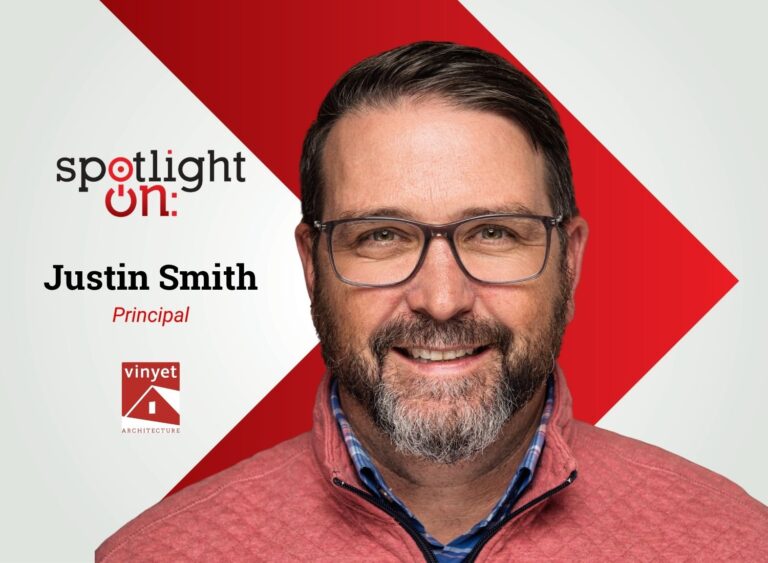


Spotlight On: Justin Smith, Principal, Vinyet Architecture
Key points:
- • Adaptive reuse and build-to-rent are driving regional development activity.
- • AI is helping architects accelerate design and identify problems earlier.
- • Vinyet Architecture is expanding its Charlotte presence as the region grows.
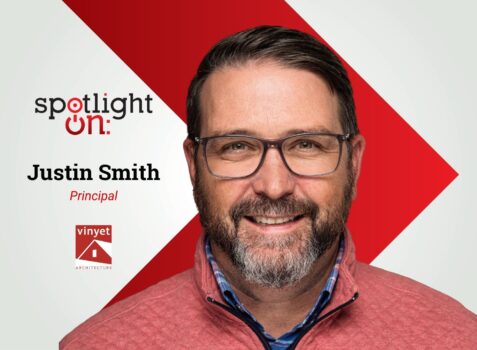 September 2026 — In an interview with Invest:, Justin Smith, principal at Vinyet Architecture, discussed development trends, adaptive reuse, affordability challenges, and the firm’s growing presence in Charlotte. “Charlotte is a newer big city, and I appreciate that the city has been intentional about many of its development projects,” Smith said.
Join us at the Invest: Charlotte 6th Edition Leadership Summit! This premier event brings together hundreds of Charlotte’s business and regional leaders to discuss the challenges and opportunities for businesses and investors. Buy your ticket now!
How would you describe the development climate in Charlotte and the broader region?
The development climate has been active. We are well positioned because we are diversified across project types, so we get calls for a little bit of everything. The number of people moving to this region is also surprising. We rarely have clients who are originally from here. It is usually people relocating here or relocating within the region, so it has been a busy period for us.
What trends are having the biggest impact on architecture, real estate, and development projects right now?
There is a lot of adaptive reuse, especially in South Carolina. We have strong tax credit incentives in the state, and those incentives help make development projects financially viable. When state and federal historic tax credits are available, they can make project cash flow correctly and make it advantageous for developers to undertake.
Things in South Carolina are also generally more affordable than in North Carolina or other parts of the country. What may feel expensive to us locally often looks affordable to outside developers and prospective homeowners.
What is behind the interest in adaptive reuse and repositioning existing buildings instead of new ground-up projects?
It is directly tied to the cost of new construction. If a developer can find a historically designated building, an abandoned building, or a property within a textile corridor that qualifies for state or federal historic tax credits, that offset can make the project work. New construction is difficult to pencil right now unless it is owner-occupied or has another strong financial driver behind it.
Which sectors overall are generating the most activity for Vinyet Architecture?
Multifamily and build-to-rent have been active over the past two to three years. That sector has grown as the cost of homeownership has become more difficult for many people. Build-to-rent, including single-family attached homes, has become a busy area for us.
Our primary focus remains single-family detached homes and high-end custom homes. Even in that space, the price per square foot here is still relatively low compared with other parts of the country.
How have client priorities changed, especially with higher construction costs and financing challenges?
You have to go into every project prepared with answers to the key questions. Costs have increased significantly, and the financial side of projects continues to shift. But compared with the rest of the country, and even compared with other parts of the Southeast where we work, South Carolina and this region remain among the most affordable places to build while still delivering strong design and strong results.
What advantages make Rock Hill and the Greater Charlotte region stand out?
Rock Hill has done a good job planning infrastructure for the future. The capacity of the city’s utilities and water and sewer systems has been planned 10 to 20 years ahead, and that foresight has enabled the community to pursue larger projects.
Housing affordability remains a major issue across the region. What role can architects and developers play in creating more attainable communities?
It is difficult because land costs are so high right now. Whether someone is building a $300,000 house or a $10 million house, budget is always part of the conversation. Our role is to help clients manage expectations and align their vision with their budget.
After doing this for many years, you learn approaches that can help with affordability, but it remains a challenge. As a company, we are also engaged with Habitat for Humanity of York County. I sit on that board and help with projects where I can. We try to plug in philanthropically where we can, but affordability is still difficult.
How has technology changed the way your team collaborates with clients and approaches design?
It has been both good and bad. AI has become important to what we do. The presentations we can produce quickly have changed dramatically over the past two years. What once might have taken six weeks and thousands of dollars can now take minutes at a fraction of the cost.
We have started implementing AI, and we hope to start doing more with virtual reality. Our job is to help clients get answers to their questions before those questions become problems. The more we can make a project feel real to them earlier in the process, the easier it is to find mistakes and save money.
How are architecture firms adapting their talent and workforce strategies to meet the needs of a changing industry?
We are hiring younger people and bringing in new talent. We’re pulling talent from local universities as well as from places like Miami, New York City, and Atlanta. The hope is that they come in with a strong understanding of the tools and communication methods that shape the world today, including AI.
In 2012, we were one of the first residential firms using Revit as a design tool. That was not common in residential architecture at the time. We were also using 3D modeling early, and that helped set us apart. Now, we need to take the next step. We have become used to the way we operate, and younger professionals can help us keep improving and stay current with the tools that are out there.
As a leader, what kind of culture are you trying to build at Vinyet Architecture?
Who I am is who I want the firm to be. We are honest people who work hard and like to have fun when we are not working. At the end of the day, it is a job, and we want our employees to know their personal lives and home lives matter just as much as what happens inside the office.
We try to create a sense of family. We have around 17 people right now, and when someone comes to work for us, my goal is for that person to be here until the end of their career. I never hire someone thinking they will only be here for a short time. We want to grow together, get better together, and create opportunities for people to develop into leaders as they advance.
What opportunities are you most optimistic about in Charlotte over the next few years?
I began my career in Charlotte in 2003, working for a firm in Dilworth. I left that firm in 2008. After that, I put Charlotte on the back burner because it was not my hometown, but I am a big believer in not burning bridges or stepping on toes.
About five years ago, we made a connection with Copper Builders, and that became a driving force behind our return to the Charlotte market. We now have a physical office there with four people, and next year, we plan to move into a larger space that can accommodate around eight people. I am excited to have more visibility in Charlotte. We have strong connections and contacts built over the years, and we pride ourselves on being accessible and responsive.
When you look ahead 10 years, what do you hope the region’s growth and built environment will look like?
Charlotte is a newer big city, and I appreciate that the city has been intentional about many of its development projects. We have done work on the west side with minority developers and in areas that needed reinvestment, and it has been meaningful to be part of that growth.
For Rock Hill, city leadership needs to continue focusing on growth and managing it properly. A lot of people are moving here, and a lot of people come in and tell us what they think we need. But at the end of the day, it is our town, and we need to be smart about the direction we take with development.
The Marlie Center is a huge project for Rock Hill. How will the completion of this project impact not only quality of life, but also tourism and the regional economy?
Downtown Rock Hill has been poised for growth for quite some time. Since relocating my office to Main Street in 2012, I’ve felt that we were always on the verge of something special. Through consistent leadership, thoughtful planning, and a clear long-term vision, the foundation has been established for Rock Hill to take the next step toward becoming a true regional destination.
Marlie Center represents the natural next chapter in that evolution. Honoring the life and legacy of Marlie Dru Sullivan, the new performing arts center will serve as an inclusive cultural beacon for the region. Also, the continued growth of Main Street, including a new boutique hotel, exceptional restaurants and coffee shops, and expanded retail offerings, will further support the vibrant economy and high-quality employers our city continues to attract.
Want more? Read the Invest: Charlotte report.